
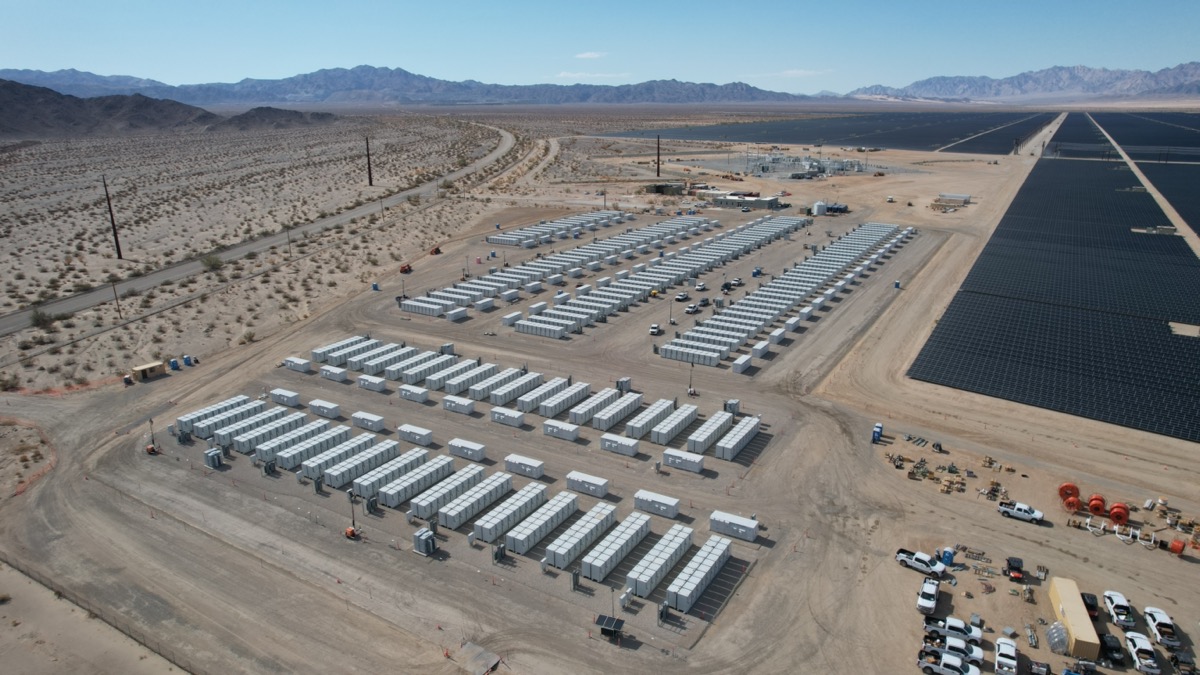
The Solar Energy Industries Association and Benchmark Mineral Intelligence released their Q2 2026 Energy Storage Market Outlook on May 21, and the headline number is the strongest first quarter the US storage market has posted: 9.7 GWh of new battery energy storage capacity deployed, up 32% year over year. SEIA pushed its five-year deployment forecast above 610 GWh by 2030, a meaningful upward revision from the prior outlook.
The Q1 mix tracks the same pattern that has defined the last four quarters. Utility-scale accounted for 7.8 GWh (roughly 1.5 GW). Commercial and industrial added 648 MWh. Residential came in at 515 MWh, down 28% from Q1 2025 after the residential 25D tax credit expired. Texas, Arizona, and California held the top three state slots, the same lineup that has led utility-scale deployment for two years running.
The more interesting data point sits underneath the headline: the chemistry mix in the forward pipeline is loosening. SEIA flags that hyperscaler procurement is no longer defaulting to lithium-iron-phosphate. Google’s 30 GWh iron-air contract with Form Energy and Meta’s 100 GWh reversible solid-oxide fuel cell reservation with Noon Energy are both multi-year, multi-gigawatt commitments to non-lithium chemistries, sized for data-center load profiles rather than four-hour grid arbitrage. That is the first time the hyperscaler tier has shown up in a SEIA outlook as a distinct demand vector with its own chemistry preference.
The policy side of the report is where the optimism gets qualified. SEIA’s own analysis counts 467 solar and storage projects with permits pending that are exposed to what the report calls politically motivated delays. The Q1 deployment number reflects projects that cleared interconnection and permitting in 2023 and 2024. The 2030 forecast assumes the back half of the decade clears at a similar rate, which the 467-project backlog calls into question.
For positioning purposes, the report cuts two ways. It is thesis-confirm on the demand vector: grid-scale plus data-center backup is scaling faster than the residential rooftop story is contracting, and the structural drivers have not softened. It is also a reminder that the marginal demand dollar is moving up the stack toward longer-duration and non-lithium chemistries faster than the LFP-dominated US manufacturing buildout was sized for. Domestic LFP capacity is being added at pace, but the buyers writing the largest checks in 2026 are not all buying LFP.
The next data point to watch: how many of those 467 stalled projects clear in Q2 and Q3, and whether the hyperscaler procurement that SEIA called out lands additional megadeals in the same chemistries or pivots back toward conventional lithium when the iron-air and SOFC delivery timelines slip.
Source: Energy-Storage.News coverage, SEIA Energy Storage Market Outlook Q2 2026, SEIA press release.