
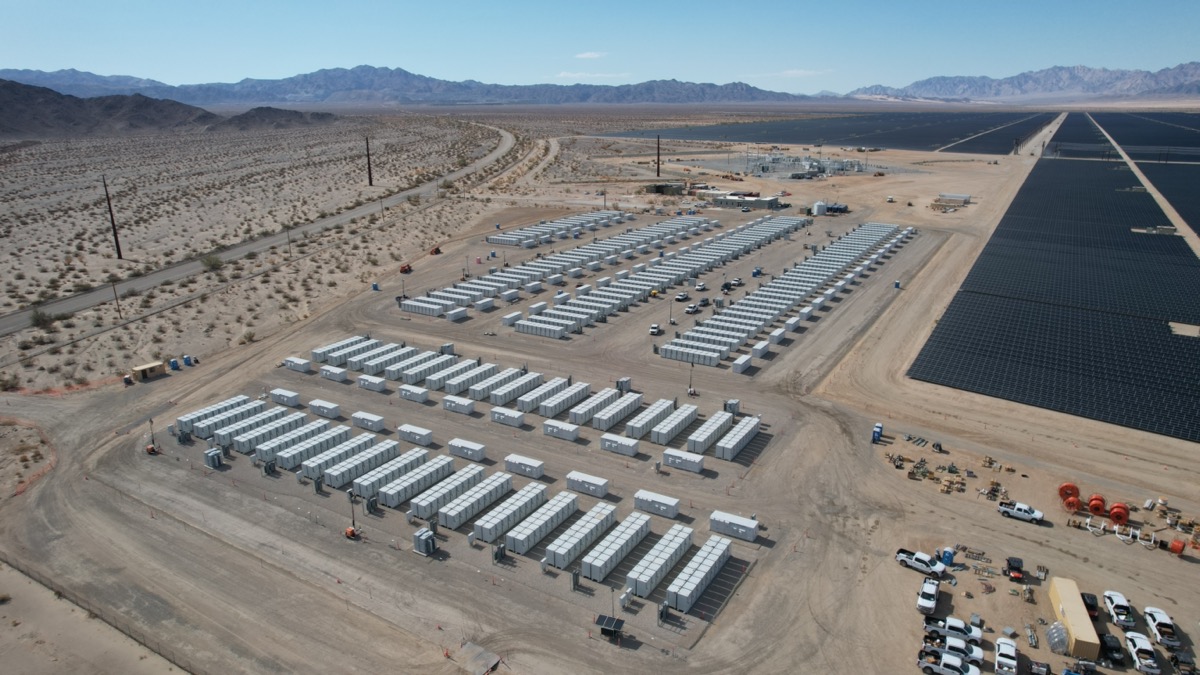
Nextpower (Nasdaq: NXT) disclosed a definitive agreement on May 28 to acquire Prevalon Energy for total consideration of up to $365 million. The structure: roughly $150 million in cash at closing, $50 million in Class A stock issued one year after closing (priced on a 60-day VWAP through May 27), and up to $165 million of contingent cash. Closing is targeted for the company’s fiscal Q2 2027, subject to antitrust review.
Prevalon is a US-headquartered joint venture between Mitsubishi Power Americas and EES. The acquired footprint: over 6 GWh of battery energy storage systems deployed globally and 1.3 GW of firm supply contracts. Nextpower’s release singles out the customer mix, noting the contracted book supports “AI and hyperscaler data center infrastructure deployments” alongside utility-grid and industrial use.
Two things make this deal worth tracking past the headline.
First, the buyer. NXT has been the dominant US utility-scale solar tracker supplier. Trackers are a commoditizing piece of the PV stack with limited margin expansion left. Adding a BESS integrator with hyperscaler offtake reframes the company as a firm-power platform, not a tracker pure-play. The 8-K positions Prevalon as extending NXT’s “technology platform across BESS and intelligent controls for critical power infrastructure,” targeting what the company sizes as a $35 billion ex-China BESS market by 2030.
Second, the guide raise. Nextpower lifted fiscal 2027 revenue guidance to $4.0 to $4.4 billion from $3.8 to $4.1 billion, and adjusted EBITDA to $845 to $930 million from $825 to $900 million. Both new ranges absorb roughly $50 million in incremental costs the company flagged for power conversion buildout. That is a real number tied to a contracted backlog, not a soft projection.
The thesis-confirm read: hyperscaler load is now large enough to pull a tracker incumbent into a $365 million strategic acquisition to capture it. The chemistry-agnostic, long-cycle procurement pattern SEIA flagged in the Q1 outlook is showing up as enterprise M&A. The deal joins last week’s Enbridge-Meta 8-hour Cowboy project and Tesla’s Robstown refinery as examples of AI-adjacent power demand reshaping the supply side, not just the demand side.
The risks the filing flags directly: antitrust review on a deal that consolidates BESS integration capacity inside a leading PV-stack supplier, integration of a JV target across two parent companies, and the standard contingent-consideration overhang from the $165 million earnout. Watch the Q3 print for the first signal of how the contracted GW is converting to recognized revenue.
Source: Nextpower Form 8-K, May 28 2026 (CIK 1852131).