
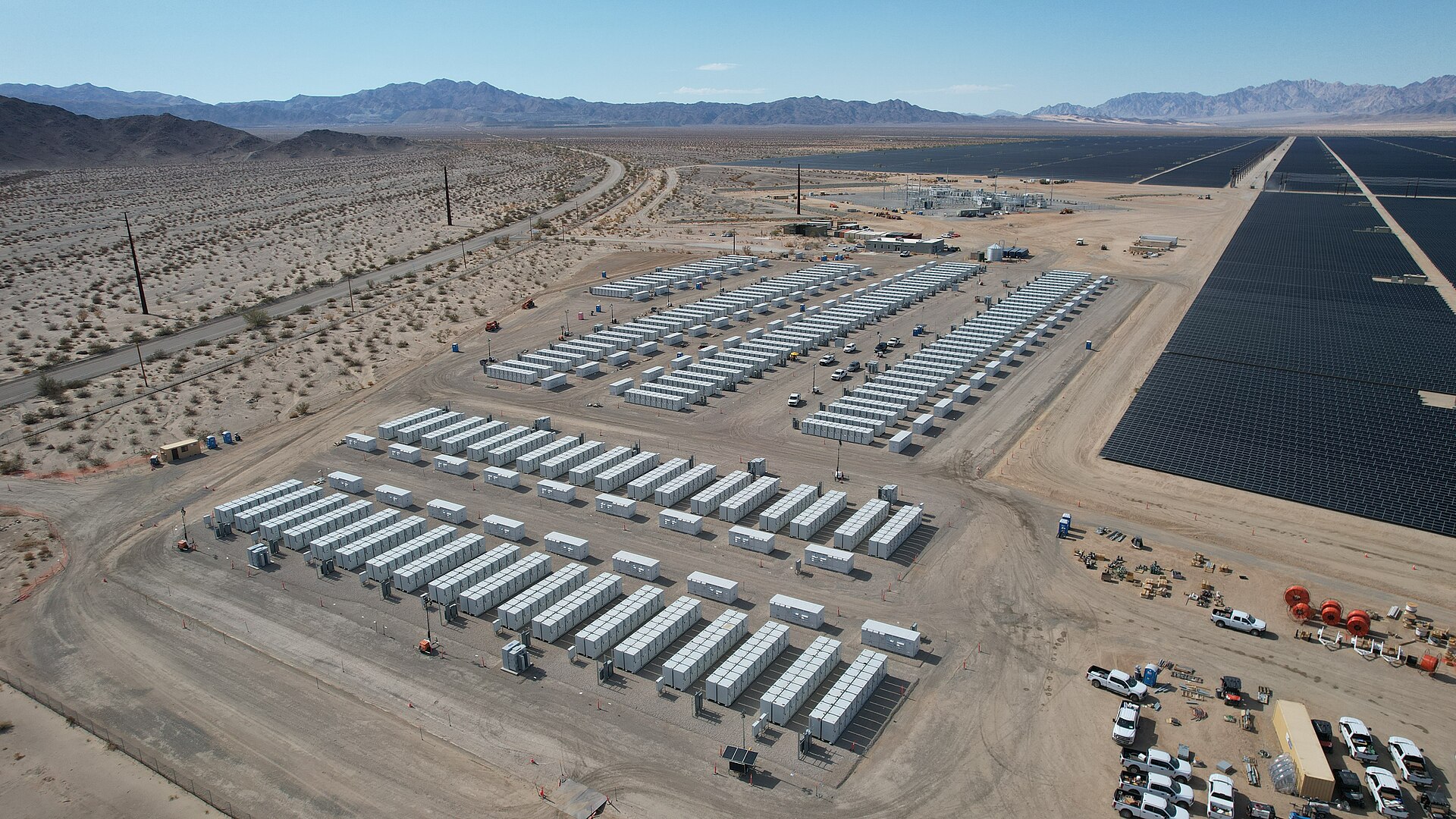
T1 Energy (NYSE: TE), a US-domiciled solar manufacturer, announced on June 3 that it has agreed to acquire KORE Power for approximately $32 million in equity, cash, and assumption of debt. Closing is targeted for the second quarter of 2026, after which KORE will be rebranded T1 NRI.
The headline number is small. The positioning is not.
What T1 is actually buying
The strategic core of the deal is KORE’s NRI division: an engineering and integration team that has delivered roughly 1,100 battery energy storage system projects over a 50-year operating history. Its customer book includes the US Government, National Laboratories, regulated utilities, and independent developers. That is a federal-eligible, US-track-record bench that is difficult to assemble from scratch and increasingly expensive to rent.
For a solar producer that needs to credibly bid solar-plus-storage projects to hyperscalers and utilities, buying an integrator with a 1,100-project install base is a faster path to a credible BESS resume than internal build.
T1 said it expects the transaction to generate positive EBITDA in 2026 and to contribute $15 million to $20 million of EBITDA in 2027. That is order-of-magnitude check, not a transformational acquisition. The strategic value sits in the customer relationships and the federal-customer eligibility profile, not in the run-rate earnings.
Why it fits the moment
Three threads make this deal larger than its $32 million sticker.
First, grid-scale storage demand is now growing faster than EV battery demand. Q1 2026 US energy-storage installations hit 9.7 GWh, the largest first quarter on record, per industry tracking. Hyperscaler procurement of storage-backed power is a growing share of that pipeline.
Second, the IRA and the foreign-entity-of-concern rules continue to advantage US-domiciled, non-FEOC supply chains for storage components and integration. A US solar producer pairing with a US integrator strengthens the eligibility story for offtake and tax-credit transfers.
Third, FERC’s expected end-of-June action on the large-load interconnection docket (RM26-4-000) is the regulatory backdrop. Whatever the Commission lands on, the next twelve months will favor developers who can present integrated solar, storage, and interconnection-ready engineering as one offer rather than three.
What to watch
Watch closing terms in late Q2: any change to the $32 million enterprise value or to the targeted EBITDA contribution will indicate how much of the deal’s value is the customer book versus the engineering team. Watch for early T1 NRI bid activity in PJM and ERCOT storage queues, where hyperscaler-aligned co-located projects are the live testing ground. Watch whether other US solar manufacturers follow with similar integrator tuck-ins; small acquisitions like this often arrive in clusters when the underlying logic is structural.