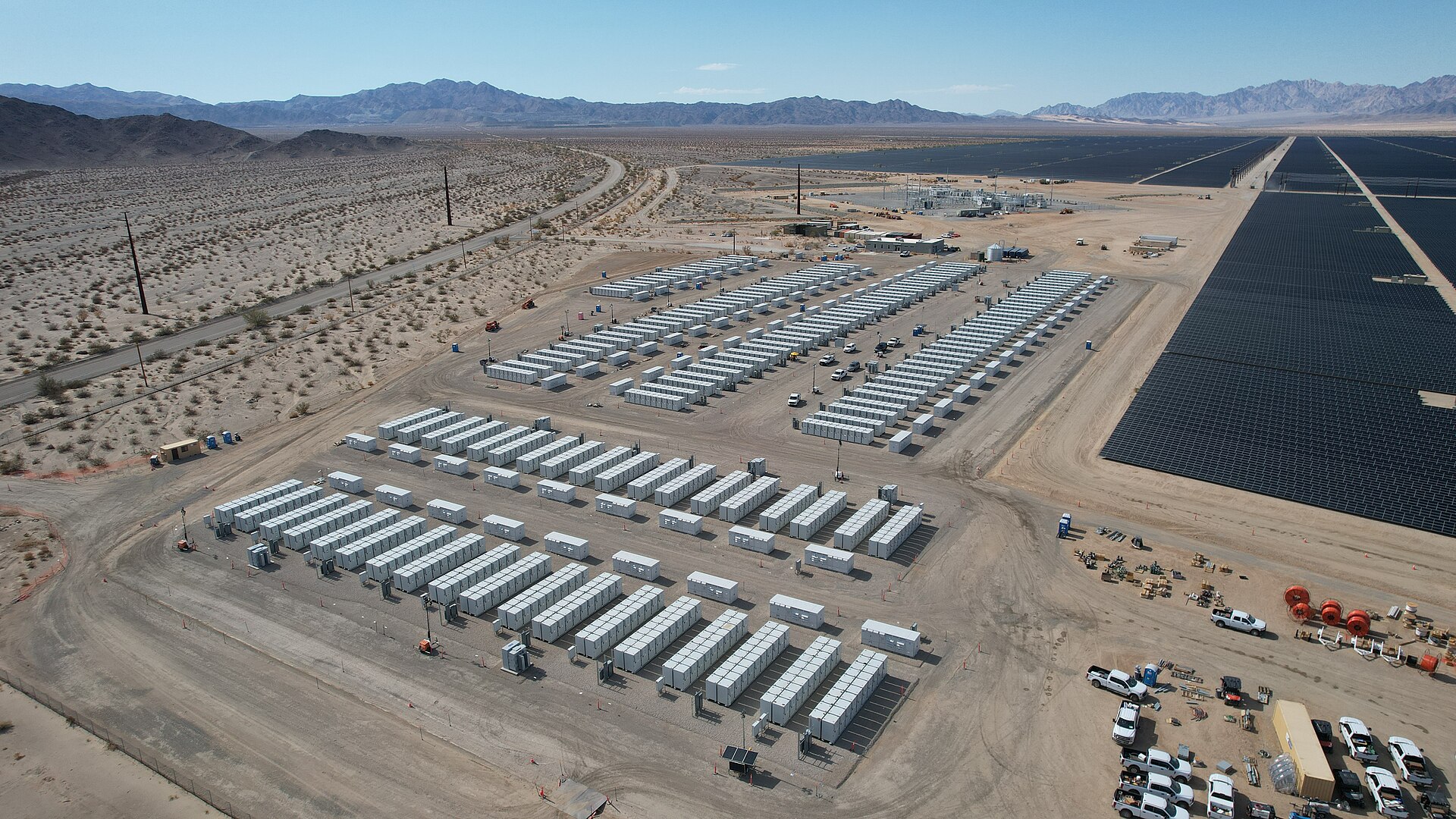
CATL, the world’s largest lithium battery manufacturer, has agreed to supply 60 GWh of sodium-ion cells to HyperStrong, China’s largest battery energy storage integrator. The deal followed CATL’s unveiling of its sodium-ion BESS cell at the ESIE 2026 exhibition in Beijing in early April. Industry analysts now describe it as the first commercial-scale offtake commitment for grid-storage sodium-ion.
The headline framing in the trade press: a threshold crossed, but not a silver bullet.
What the deal does
A 60 GWh offtake is the volume sodium-ion needed to justify dedicated manufacturing lines and pass-through component supply. Without a commitment of that size, sodium-ion has been stuck in a chicken-and-egg loop: raw material cost advantage on paper, but no manufacturing scale to make it real. One analyst quoted in the trade coverage said the deal finally gives sodium-ion “the manufacturing scale that makes its theoretical raw-material cost advantage real.”
What the deal does not do is undercut LFP on price today. Sodium-ion cells are currently priced around $70 per kWh versus roughly $40 to $50 per kWh for LFP, per industry estimates cited in the same coverage. Energy density is roughly half that of LFP, which means a sodium-ion project needs about twice the container count for the same MWh, eroding some of the cell-level cost saving at the system level.
Why it matters for the lithium thesis
The Clean Power Press lithium thesis lists sodium-ion taking grid-storage share faster than expected as a medium-probability, large-impact risk. This deal is the first hard data point that the optionality is real, not just slideware.
Three things to watch from here:
First, where does the 60 GWh actually land. Chinese domestic grid-storage tenders have been the most price-sensitive segment of global BESS demand and the most willing to accept lower-density chemistries to capture lower upfront capex. If the volume goes to standalone four-hour systems for renewable firming, that is a substitution story against LFP at the margin. If it goes to long-duration or specialty applications, the lithium chain is less exposed.
Second, how fast does the $70 per kWh figure compress. Sodium-ion economics improve with scale faster than LFP does at this point in the cost curve. A $70 to $50 per kWh path over 24 months would change the calculus; a $70 to $60 path would not.
Third, whether non-Chinese cell makers commit. Sodium-ion’s strategic appeal outside China is a supply chain that does not require lithium carbonate, spodumene, or Chinese refining concentration. A US or European cell maker announcing a comparable offtake would convert this from a China-only manufacturing story into a global chemistry diversification story.
What it does not change
Grid-scale storage demand is still the structural driver, and the demand curve is steep enough to absorb both chemistries at scale. US lithium demand for storage applications grew roughly 71% in 2025 and is forecast to grow another 55% in 2026 per J.P. Morgan Global Research. A sodium-ion share gain of even 10 to 15 percentage points of new global BESS over the next three years still leaves lithium-based chemistries on a strong absolute growth path.
The investment frame: marginal sodium-ion deployment is a headwind to lithium price upside, not a thesis-killer for US-supply lithium and refining names. The case for IRA-eligible, non-FEOC lithium production capacity rests on policy and geography, not on lithium being the only chemistry in town.
Watch CATL’s next sodium-ion customer announcement. A second 30 GWh-plus deal in 2026 would be the data point that moves this from a single threshold into a trend.