
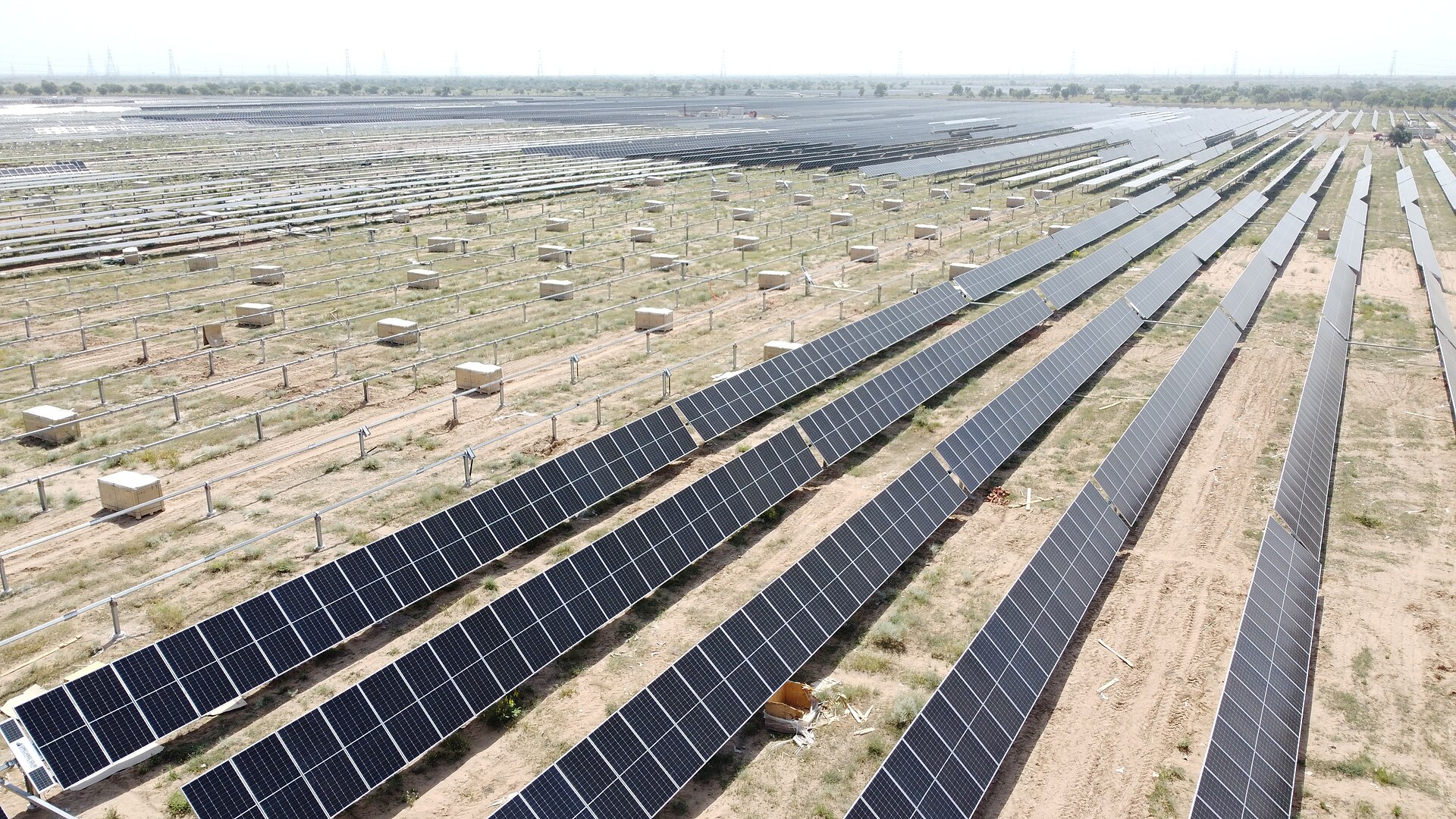
The American Clean Power Association’s Q1 2026 Clean Power Quarterly Market Report, released June 3, puts utility-scale clean energy additions at 6.4 GW for the quarter. Solar contributed roughly 3.6 GW (56%) and battery storage 2.4 GW (37%), together accounting for about 93% of the new megawatts. Wind picked up the remainder, and ACP cited “regulatory delays” as the binding constraint on new wind starts.
Total operational clean capacity in the US is now over 370 GW. Texas leads with 96.4 GW and is closing on the 100 GW mark; California is second at 46.4 GW, Oklahoma third at just over 15 GW. The top state alone exceeds the next four combined.
For storage specifically, the state ranking inverts: California led new Q1 commissioning with 1.1 GW, Texas added 900 MW, Arizona 500 MW, with Nevada rounding out the top four. Texas remains the largest operational storage market on a cumulative basis, but California’s quarterly pace reflects CAISO’s continued reliance on four-hour batteries to firm afternoon solar.
Quarterly volume was down 17% versus Q1 2025 and 66% versus Q4 2025, which ACP attributes to seasonal patterning after a strong year-end push. The more durable signal is mix, not magnitude: solar pipeline up 13% year-over-year, storage pipeline up 8%, wind shrinking. That mix shift is what the IRA construction-start clock is now sorting on, with the July 5 physical-work cutoff bearing down on developers who have not begun work, and FEOC material-assistance rules from Notice 2026-15 layering on for projects starting after January 1, 2026.
For the supply chain, the read-through is straightforward. The marginal megawatt is increasingly a solar panel plus a lithium-iron-phosphate rack, and Texas’s interconnection regime is doing as much of the work as federal credits are. Storage demand is no longer a forecast line; it is showing up as commissioned nameplate in the quarterly numbers, ahead of where most generalist coverage placed it eighteen months ago.