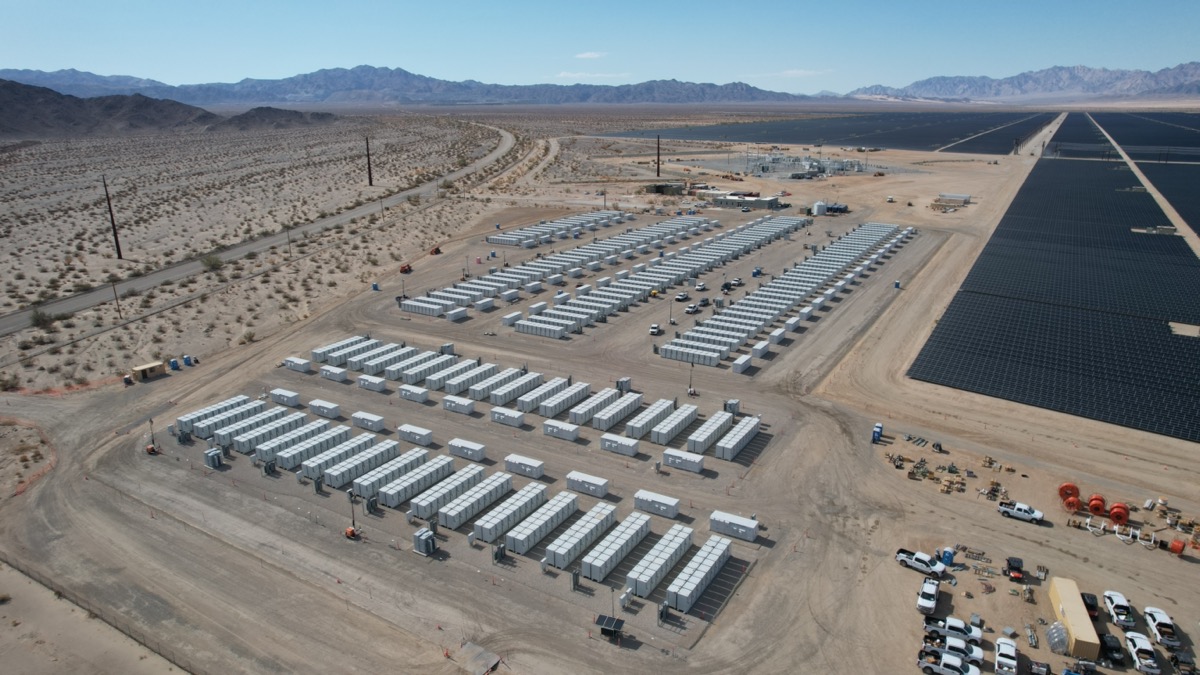
Battery manufacturer AESC has signed a three-year, 10 GWh cell and module supply agreement with US system integrator Prevalon Energy, with deliveries sourced from AESC’s lithium iron phosphate plant in Smyrna, Tennessee. The cells will feed Prevalon’s HD5 DC, HD5 AC, and Hybrid Power Stabiliser BESS platforms, with stated end markets including renewables integration and data-center power.
The compliance scaffolding matters more than the volume
The interesting piece is not the 10 GWh headline. It is the structure that lets a US integrator put these cells into IRA-credit-eligible projects.
AESC was founded in Japan and is majority-owned by China’s Envision Energy. Under the One Big Beautiful Bill Act, projects beginning construction after December 31, 2025 lose investment and production tax credits if they receive “material assistance” from a prohibited foreign entity, with the rule extending to Chinese-controlled component suppliers. To clear that bar, Envision sold the Smyrna factory to US startup Fixx Energy in March 2026, retaining only a technology licensing arrangement. AESC’s cell output from Tennessee now flows through a US-domiciled operator, which is what the credit eligibility analysis turns on.
Prevalon itself is in the middle of being acquired by Nextpower (the renamed Nextracker) in a $365 million transaction expected to close in Q3 2026. That pairing puts a publicly traded US tracker and storage platform on top of a domestic-content BESS supply chain, with cells coming from a plant that has been deliberately restructured for FEOC compliance.
Why this is a thesis-confirm
Three reads.
First, the FEOC rules are not theoretical. They are forcing visible ownership changes in the cell supply chain, and the rebalancing is happening on the timeline the OBBBA set. The Smyrna sale is the proof point.
Second, the unit of analysis for US battery supply is shifting from “where are the cells made” to “who owns the cells when they leave the gate.” Tennessee output owned by a Chinese parent does not solve the policy problem. Tennessee output owned by a US entity, with licensed Chinese technology behind it, does.
Third, 10 GWh over three years is roughly 3.3 GWh per year of incremental committed US-eligible BESS supply, against a 2026 US deployment outlook of roughly 70 GWh per Energy-Storage.News and SEIA. Material, but not large enough to relieve domestic-content tightness on its own. The marginal eligible cell is still scarce.
Source: Energy-Storage.News, June 13, 2026.