
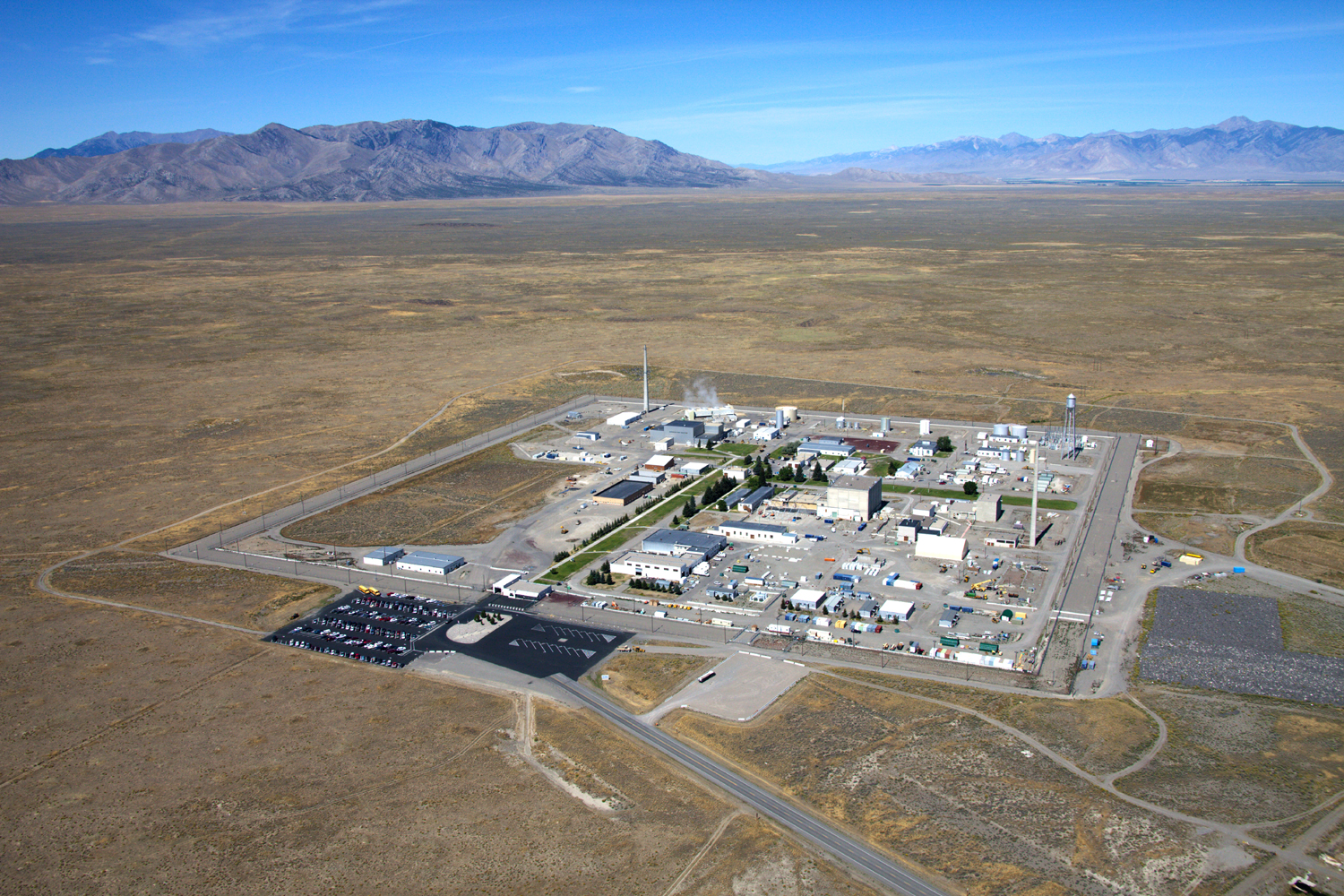
The Department of Energy hit the criticality target President Trump set in Executive Order 14301 last May. As of this week, three advanced reactors authorized under the DOE Reactor Pilot Program have gone critical at Idaho National Laboratory, clearing the July 4, 2026 deadline for demonstrating at least three non-national-lab reactor concepts.
The three: Antares Nuclear’s Mark-0, a 500 kilowatt-thermal sodium heat-pipe microreactor, which reached first criticality in early June and became the first privately developed non-light-water reactor to go critical on US soil in more than four decades. Valar Atomics’ Ward 250, a 100 kilowatt-thermal helium-cooled unit, followed in late June. Deployable Energy’s Unity, a 1 megawatt-electric water-moderated gas-cooled “nuclear battery,” achieved zero-power fueled criticality in the first days of July at the National Reactor Innovation Center. INL Director John Wagner called the Unity timeline (roughly 150 days from selection to criticality) “a remarkable accomplishment.” Energy Secretary Chris Wright framed the milestone as “a significant milestone on a timeline many thought was unachievable.”
What matters here is not the megawatts. The three reactors that got across the line are collectively rated below two megawatts electric. Nothing about this week’s news changes the near-term generation mix. What it does change is the licensing question that has anchored every advanced-reactor timeline conversation for the last decade.
Executive Order 14301 stood up a DOE-authorization pathway that runs parallel to the Nuclear Regulatory Commission’s Part 50 and Part 53 licensing processes, using DOE’s existing authority over test and demonstration reactors sited on federal facilities. The pilot was designed to validate that path. It has. Three private developers ran through DOE authorization, sited hardware at INL, and reached criticality on a compressed schedule that would have been implausible under a conventional NRC review. Antares went from selection to criticality inside a calendar year.
Second-order signals to watch as this reads through to commercial deployment. First, the remaining seven pilot developers, including Oklo (Aurora-INL, 75 megawatt-electric), Terrestrial Energy (Project Tetra, 195 megawatt-electric), Aalo Atomics, Atomic Alchemy, Deep Fission, Last Energy, and Natura Resources. Their schedules now sit inside a program the White House and DOE will point to as a success template, which raises the political cost of delay and increases the odds of subsequent authorizations moving faster. Second, whether Congress or the executive branch extends the DOE-authorization frame beyond the pilot to a durable statutory pathway for commercial deployment. The pilot is a test-reactor program by design. Its scaling requires either NRC licensing on the back end or a legislative extension of DOE’s authority to authorize non-test units, and both routes are now in play in a way they were not before Antares and Valar and Unity reached criticality.
Third, and closest to the demand thesis: hyperscaler procurement contracts already signed against future advanced-reactor output (the Amazon/X-energy, Microsoft/Kairos, and Google/Kairos frames) depend on a credible near-term deployment path. The pilot outcome does not directly move any of those developers’ schedules. It does move the base rate at which counterparties, insurers, and utility offtakers underwrite advanced-reactor completion risk. That is the read-through worth tracking as the next round of PPAs and tolling agreements price.
The pilot program was capital-light and technically narrow, and it does nothing to solve the fuel supply, refueling logistics, or post-criticality operating envelope questions that any commercial deployment will run into. It also does nothing to change the NRC’s Part 53 timelines, which remain the binding constraint for anything sited outside a federal lab. But the counterfactual mattered. If the DOE-authorization pathway had failed to produce a single criticality by July 4, the advanced-reactor deployment thesis would have taken a real credibility hit going into the second half of 2026. It did not fail. The pathway now has three data points and a public political win attached to it.