
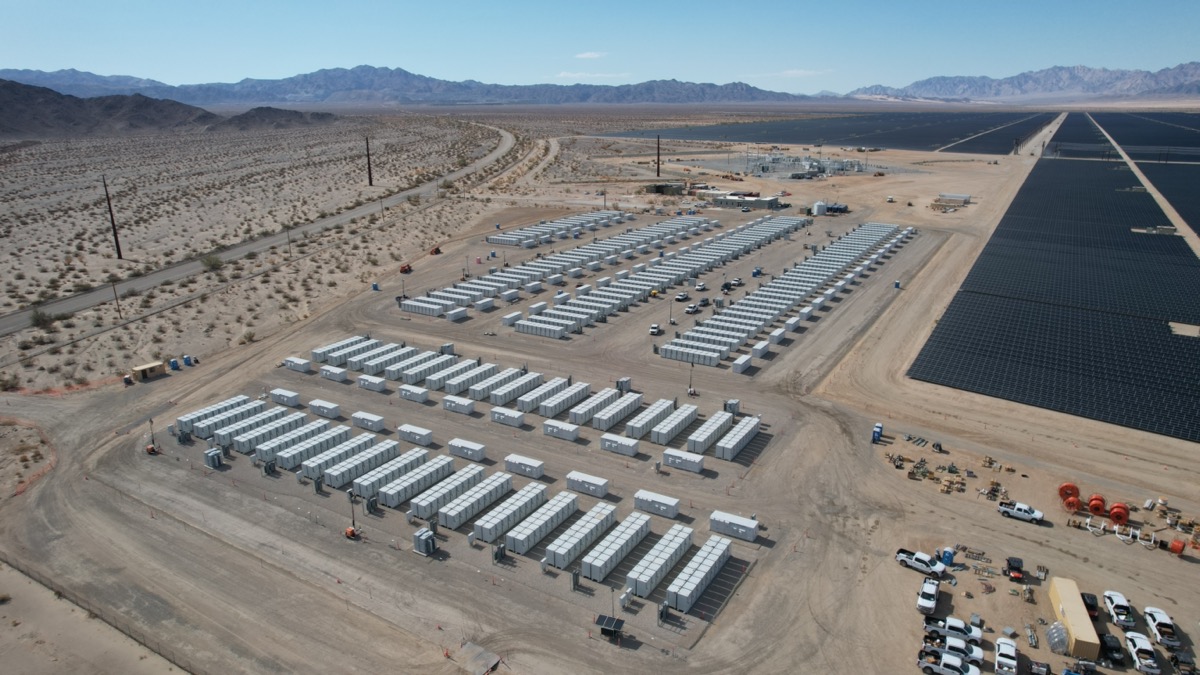
L-H Battery Company, the joint venture between Honda and LG Energy Solution set up in 2023, announced on July 1 that its Jeffersonville, Ohio plant has begun lithium-ion cell production. The facility was originally scoped for automotive cells destined for Honda EV programs. First cells off the line will now feed stationary energy storage systems built by LG ES Vertech, LG’s US system integrator.
Two things about this are worth flagging.
First, the retooling is explicit, not incidental. L-H Battery CEO Chahun Ku called out storage’s structural growth as the reason for the shift, contrasting it against near-term EV demand volatility. A spokesperson separately denied earlier reports framing the pivot as an AI data-center play. The company’s stated frame is a broader stationary market: grid-connected, behind-the-meter, and integration-driven demand tied to renewables build-out. That aligns with the pattern already visible at the utility layer, where developers are on track to install roughly 24 GW of US battery storage in 2026 versus 15 GW in 2025, per EIA planning data.
Second, the domestic-content posture is deliberate. Product coming out of Jeffersonville is being positioned as compliant with the Inflation Reduction Act’s domestic-content requirements for the 48E investment tax credit, and structurally outside the tariff wall on Chinese-origin cells. That is a meaningful piece of the bid stack for utility and commercial storage buyers assembling ITC-adder-eligible projects, where domestic cells still carry a scarcity premium relative to imported alternatives. LG ES has been one of the larger US-side beneficiaries of the 45X advanced-manufacturing production credit, and a retooled Ohio plant preserves that basis.
What this changes: an EV-cell plant flipping to ESS cells is a supply-side response to a specific demand mix, not a walk-back from lithium. The cell chemistry, the manufacturing base, and the workforce all carry over. What shifts is the customer stack, from automotive OEMs on multi-year platform contracts to storage integrators on shorter, project-linked orders. It also removes one line of the “EV slowdown kills cell demand” argument that has been overweighted in generalist coverage. When idled EV-cell capacity gets rerouted to stationary applications, marginal lithium demand does not disappear; it moves.
The signal to track: whether other announced-but-delayed US EV cell projects (there are several sitting in various stages of pause or renegotiation) follow the same repivot. If Ford, Stellantis, or Toyota JVs make similar public shifts on their US cell footprint, the read-through is that domestic cell capacity converges on stationary storage faster than the IRA drafters expected, and that US-sited storage integrators pick up incremental cell supply without waiting on new greenfield builds.