
Three US sodium-ion companies posted commercial milestones inside a single week, per Energy-Storage.News on July 10. The individual scales are small. The pattern is the story.
The three announcements
Peak Energy disclosed a Sacramento manufacturing facility on July 8, backed by a $71 million capital investment and scoped for 4 GWh of annual production capacity. The company has previously signed a multi-year agreement covering up to 4.75 GWh with Jupiter Power, a 1.5 GWh strategic development agreement with Energy Vault, a 3.1 MWh pilot at an RWE Americas site in Wisconsin, and a prototype cell partnership with General Motors. Peak positions its passive-cooling design as a 20-year, maintenance-light grid product with lower fire risk than lithium-ion.
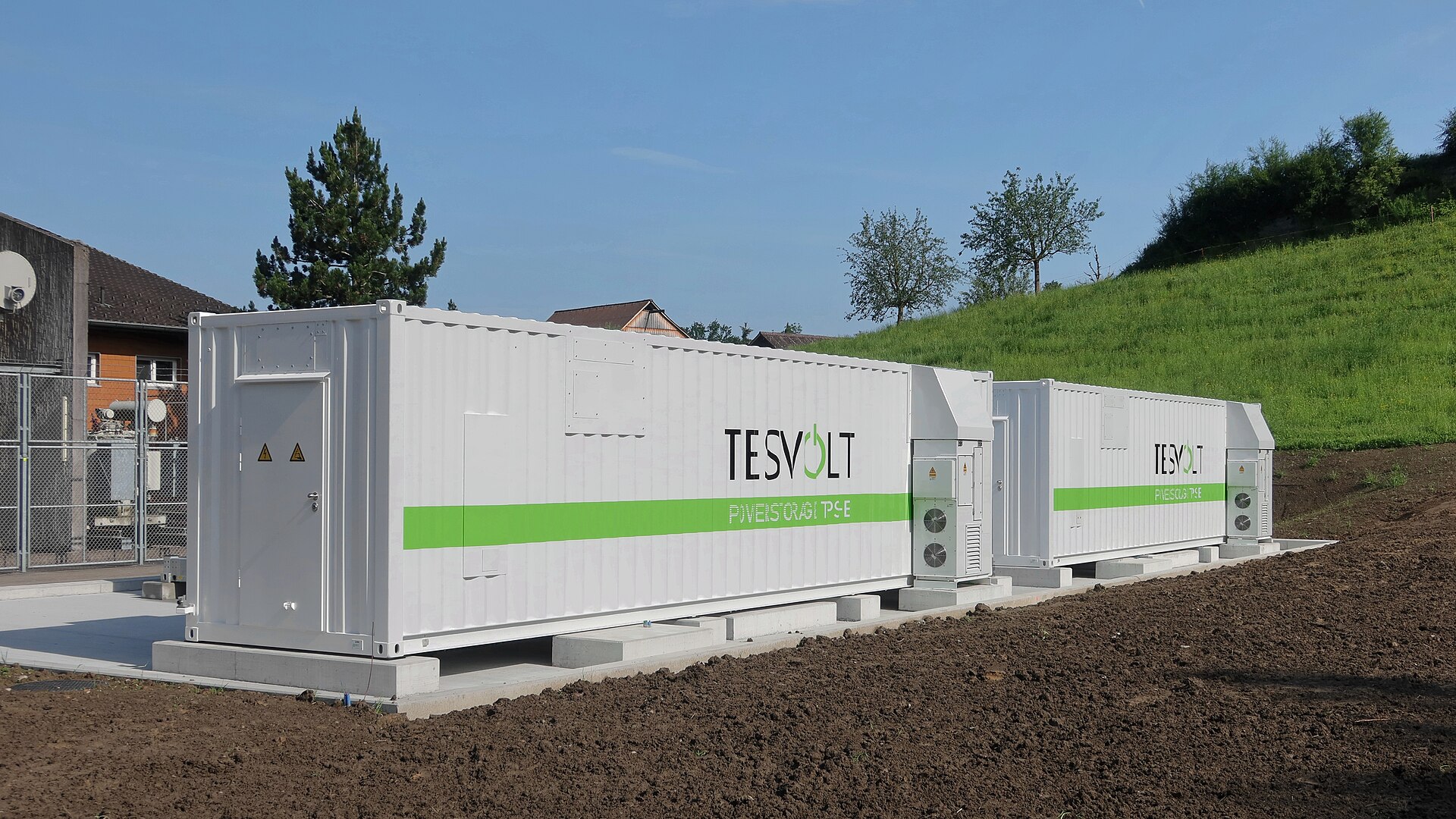
ESS Tech launched ESS Bridge on July 8, a modular 10-foot container-format sodium-ion BESS scoped in 1.2 MWh blocks and stackable to 4.8 MWh in a 20-foot footprint. The target customers named are utilities, data centers, and commercial and industrial buyers. The product frame stresses no complex HVAC, no liquid cooling, and reduced dependence on constrained critical minerals.
Unigrid delivered first-generation Na+Casa residential units on July 8, a 9.25 kWh product built on sodium chromium oxide chemistry. Current manufacturing output is 200 MWh per year, with a planned ramp to 2 GWh per year in 2027. European installations are the first customer base, with US residential expected by year-end.
Why it matters in our frame
The published Clean Power Press thesis names sodium-ion taking share in grid storage as a medium-probability, large-impact risk to the lithium demand curve. Two prior data points sit on that vector inside the last sixty days: the Alsym-Juniper 500 MWh California integration deal (May 12) and CATL’s 60 GWh offtake commitment to HyperStrong in China (June 8). The July 8 to 10 cluster is the US-manufacturing counterpart to CATL’s Chinese scale-up signal, and it is the first week where three separate US firms have crossed from pilot into commercial delivery on the same chemistry.
The scale still sits below the lithium noise line. Peak’s 4 GWh of planned annual output is meaningful next to the 9.7 GWh of quarterly US BESS deployments SEIA reported for Q1 2026, but the plant is not yet operating at nameplate, and ESS Tech and Unigrid combined are an order of magnitude smaller. On price, sodium-ion at commercial scale is still roughly $70 per kWh versus $40 to $50 per kWh for LFP, per industry estimates cited in the June coverage of CATL. Energy density remains roughly half of LFP, which erodes the cell-level cost advantage at the system level.
What we are watching
- Whether Peak’s Sacramento line hits nameplate throughput on the announced timeline, and whether any of the named offtake commitments (Jupiter, Energy Vault) convert into disclosed delivery volumes in Q3 or Q4.
- Whether a US utility or hyperscaler names sodium-ion in a procurement RFP or long-term supply agreement disclosed in 8-K or 10-Q filings this quarter.
- Whether IRA 45X credit language and Treasury guidance treat sodium-ion cells on parity with lithium-ion for domestic-content and manufacturing credits. That determines whether US sodium-ion competes on tax-adjusted price against imported LFP.
The frame does not change on this week’s announcements. The counting does. Two data points became five. The niche is booking manufacturing.