
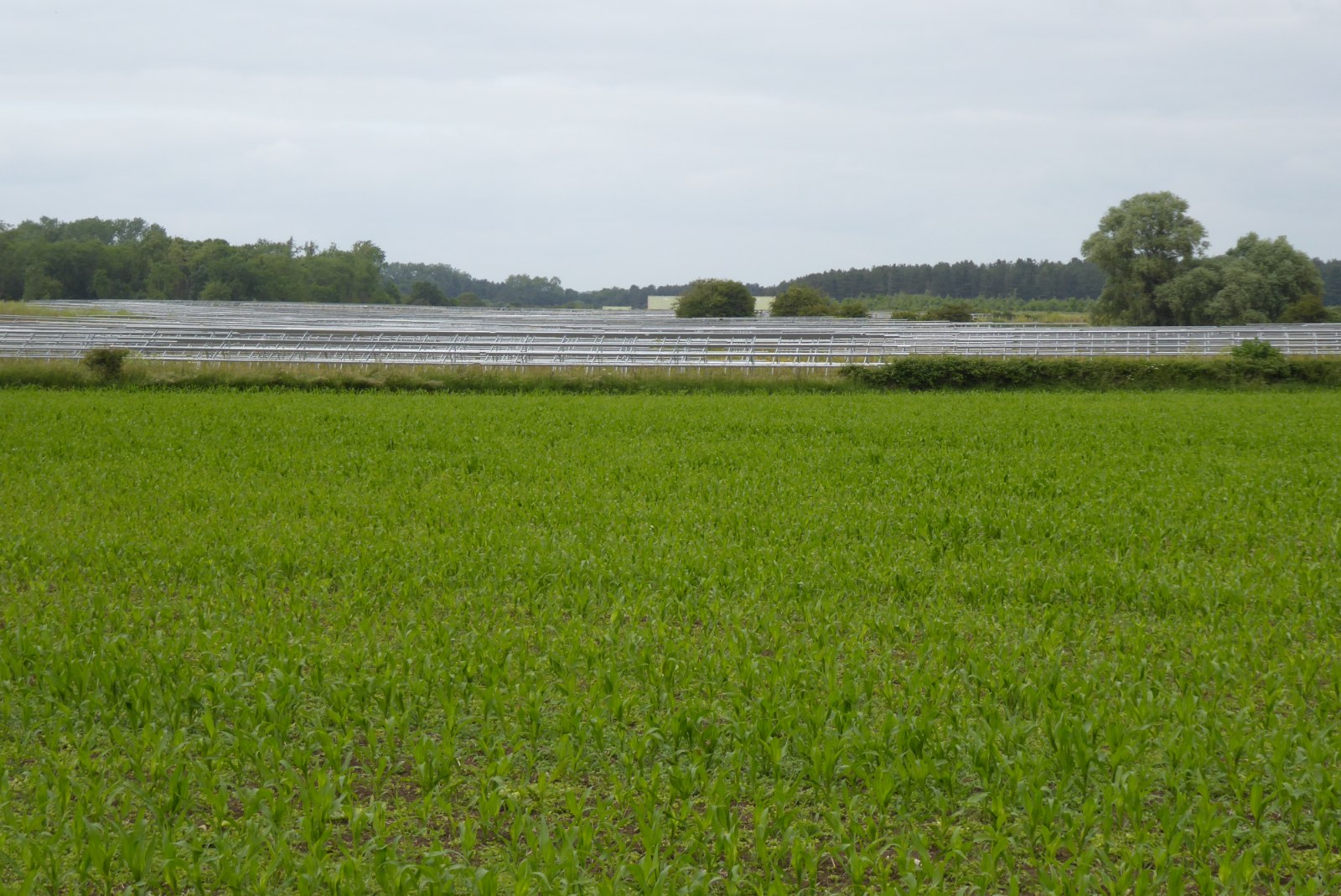
Cypress Creek Energy and Google broke ground July 14 on Steel River Energy Center in Mississippi County, Arkansas. At full buildout the project is 2.5 GWdc of solar and 2.9 GWh of battery storage across three phases running through 2029, which would make it the largest solar plus storage facility ever built in the United States. Google has signed a power purchase agreement for phases one and two, covering 1.6 GWdc of solar and 1.9 GWh of storage. The company calls it the largest solar and storage project in its global portfolio to date.
What is actually being built
Phases one and two are the ones under construction now. The 1.6 GWdc of DC solar is expected to pair with roughly 1.2 GWac of point-of-interconnection capacity once trackers and inverters are commissioned, with 1.9 GWh of battery storage co-located behind the meter. Cypress Creek says annual output from the completed project will be sufficient to serve about 315,000 Arkansas homes. Phase three, adding a further 0.9 GWdc and 1.0 GWh, is scheduled to complete by 2029.
The supply chain detail
The signal in this project is not the megawatt count. It is the bill of materials. Every major structural and generating component is US-sourced:
- Solar modules: 100% First Solar (US thin-film manufacturing).
- Structural steel: over 142,000 tons from U.S. Steel’s Big River facility in Osceola, Arkansas, roughly 30 miles from the site.
- Steel piles: 400,000-plus units from PACO Steel for phases one and two.
- Trackers: Nextpower units built on domestically produced steel.
- Battery storage: LG Energy Solution Vertech systems assembled in the US with North American cells.
Cypress Creek also cites 700 construction jobs per phase and roughly $300 million in local tax revenue over the project life, with an $8 million combined community investment from Google and Cypress Creek.
Why it matters
Two thesis threads converge here. First, hyperscaler PPAs continue to underwrite utility-scale solar plus storage at scales the merchant market alone would not support. Google’s willingness to anchor a project of this size confirms the demand-vector call: AI capex is pulling forward clean firm supply, and storage is being procured alongside solar at close to a one-to-one ratio on an energy basis (1.9 GWh against 1.6 GWdc). Second, the domestic-content stack shows the IRA-era supply chain is now deep enough to build at unprecedented scale without offshore modules or foreign steel. First Solar as sole module supplier, Big River as regional steel supplier, and LG Vertech as North American storage integrator collectively map the near-complete US bill of materials for utility-scale solar plus storage in 2026.
Watch for the phase-one commissioning window, the FEOC / domestic-content adder claim in Cypress Creek’s tax equity structure, and whether follow-on hyperscaler projects in MISO South start pulling structural steel from the same Osceola mill.