
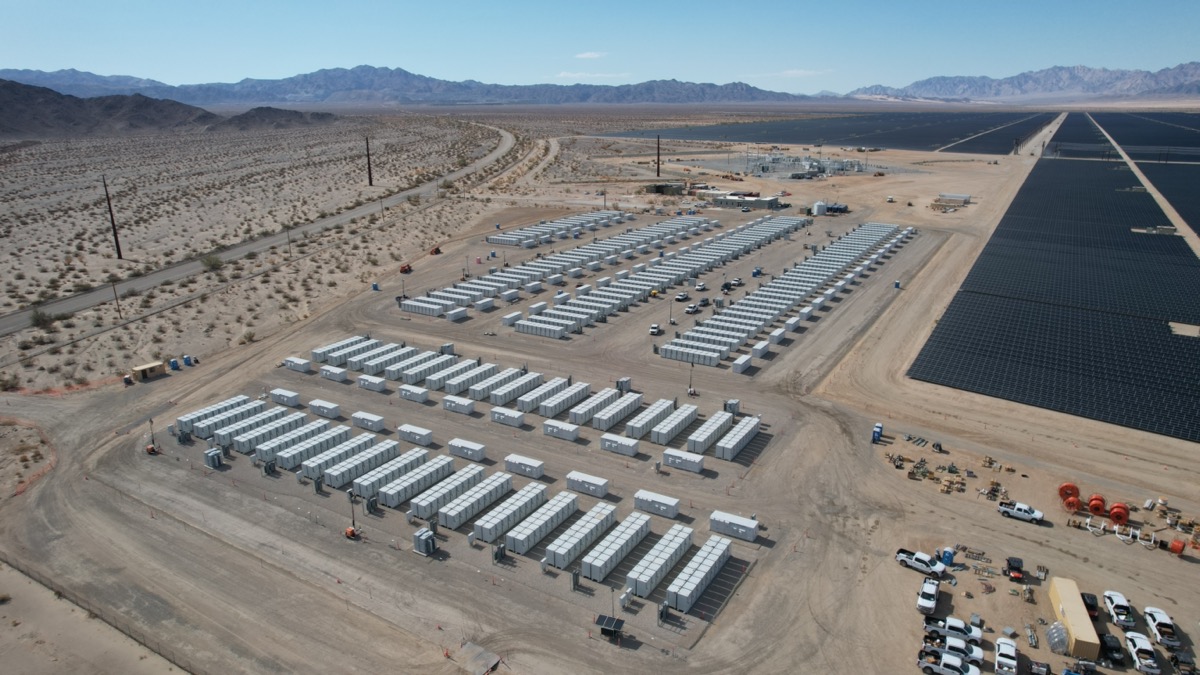
US battery-storage installations hit a record 9.7 GWh in Q1 2026, with utility-scale alone at 7.8 GWh, and the SEIA/Benchmark full-year outlook for 2026 is roughly 70 GWh of new US deployment. The supply-side question that matters for H2 2026 deal flow is not whether enough nameplate cell capacity is sited inside the US to cover that demand. On paper, it is. The question is how many of those nameplate gigawatt-hours can flow into IRA-credit-eligible projects under the One Big Beautiful Bill Act’s material-assistance rules. Three deals in the last twelve days, paired with the Pentagon’s June 8 Section 1260H expansion, show how the eligible-supply curve is being built. Run the math and the binding constraint through end-2026 is ownership and FEOC compliance, not capacity.
What the OBBBA test actually does
Begin with what the policy stack is doing to the supply curve. The One Big Beautiful Bill Act kept both of the IRA’s storage safe-harbor paths (physical-work test and 5 percent cost-incurred test) at any project size, and it left the Section 48E technology-neutral credit and the 2027 placed-in-service backstop intact for energy storage. (For solar above 1.5 MW, both paths and the backstop are gone, which is what is driving the July 4 cliff in the news desk’s countdown.) Storage came out of the OBBBA negotiation with the cleanest set of options of any IRA-eligible technology, but with a new constraint layered on top: projects beginning construction after December 31, 2025 lose the credits if they receive “material assistance” from a prohibited foreign entity, and the rule extends to Chinese-controlled component suppliers, with a 55 percent domestic-content threshold for 2026 starts that ramps to 75 percent by 2029.
That ramp is the eligible-supply curve’s slope. A US-sited cell plant majority-owned by a Chinese parent does not, by itself, count toward the 55 percent threshold. A US-sited cell plant owned by a US entity, even one operating Chinese-licensed technology, does. That distinction is what the June news items are quietly working out in practice.
What the three June deals add
The AESC-Prevalon agreement (announced June 13, covered here June 18) commits AESC’s Smyrna, Tennessee plant to a three-year, 10 GWh cell and module supply to Prevalon Energy. The headline volume is roughly 3.3 GWh per year of incremental eligible BESS supply. The structural piece, and the reason the deal matters past its sticker, is the March 2026 sale of the Smyrna factory by AESC’s Chinese parent Envision Energy to US startup Fixx Energy, with Envision retaining a technology licensing arrangement. That sale is what lets Prevalon route Smyrna output into IRA-credit-eligible projects. (See: news/2026-06-18-aesc-prevalon-10gwh-domestic-bess.) Prevalon itself is being acquired by Nextpower (the renamed Nextracker) for $365 million, closing targeted Q3 2026, which puts a public US tracker and storage platform on top of the restructured supply chain. The compliance scaffolding, not the GWh, is the deal.
The Panasonic De Soto pivot (announced June 12, covered here June 14) is the larger structural data point. The De Soto, Kansas plant is sized for 32 GWh of annual cell output at full ramp, is currently running at roughly half capacity with four of eight planned production lines installed, and is wholly Panasonic-owned (Japanese parent, IRA-eligible from day one). Panasonic confirmed it is exploring converting part of the line capacity from EV cells to stationary cells aimed at data-center BESS customers, with first sample conversion cells in late 2028 or early 2029 and full conversion targeted Q3 2029. (See: news/2026-06-14-panasonic-de-soto-data-center-pivot.) The trigger is two-sided: EV offtake has come in below the plant’s underwritten volumes, and OBBBA’s FEOC rules limit which competitors can chase the IRA-eligible US pool. Panasonic has capacity, a clean ownership structure, and softer-than-modeled EV pull. The conversion fills the gap.
The T1 Energy-KORE Power transaction (announced June 3, covered here June 7) is the third leg. T1 is buying KORE Power for roughly $32 million in equity, cash, and assumed debt, closing Q2 2026. The strategic core is KORE’s NRI integration division: a 50-year operating history, around 1,100 utility-scale BESS deployments, and a federal-customer book that includes the US Government, National Laboratories, and regulated utilities. (See: news/2026-06-07-t1-energy-kore-power-bess-acquisition.) The structural piece is that this gives a US-domiciled solar manufacturer (T1) a federal-eligible BESS resume without an internal multi-year build. The acquisition is small in dollars and large in positioning. The combined entity can bid integrated US-domiciled solar-plus-storage to hyperscaler and federal customers, which is the buyer pool that pays the eligibility premium.
Behind the three deals, the Pentagon’s June 8 Section 1260H update added JA Solar, Trina Solar, EVE Energy, and CALB to the roster of Chinese military companies, growing the list from roughly 130 to 188 entities. The direct DoD contracting ban starts at the end of June 2026 and the indirect ban (DoD purchases of listed products through third parties) layers in June 2027. (See: news/2026-06-12-pentagon-1260h-solar-battery-additions.) Section 1260H is not, on its face, a credit-eligibility rule. It is a federal-procurement bright line. The reason it belongs in the eligible-supply curve discussion is that 1260H designation has historically functioned as a recurring reference point in federal grant conditions, capital-markets disclosure, and (importantly) Treasury’s FEOC implementation guidance. If IRS or Treasury cross-references the 1260H list in the next round of OBBBA material-assistance guidance, a soft procurement signal hardens into a credit test. That is the carry trade the Pentagon list is setting up.
Running the eligible-cell math through end-2026
Stack the announced US-sited cell capacity and the announced ownership-rebalanced supply against the demand pool, and the H2 2026 picture sharpens.
On the nameplate side, US lithium-ion cell capacity for stationary storage entering 2026 includes the AESC Smyrna plant (the published incremental from the Prevalon contract is 3.3 GWh per year, against a higher Tennessee-site nameplate not all of which is BESS-pointed), the Panasonic De Soto plant at roughly 16 GWh of cells running today scaling toward 32 GWh, and partial output from Ultium Cells, Samsung SDI, SK On, and LG Energy Solution lines that have been signaling EV-to-stationary repointing (none yet at the publicly committed scale of De Soto). On paper, the US has more than 100 GWh of cell capacity that can be pointed at stationary applications by end-2027.
On the eligible side, the H2 2026 picture is materially smaller. The supply that can flow into IRA-credit projects under the OBBBA 55 percent threshold has to clear two filters. First, the cell maker has to be either non-FEOC or restructured through US-domiciled ownership (the AESC-Fixx Energy model). Second, the integrated project pack has to satisfy the broader 55 percent domestic-content calculation across cells, modules, racks, and BMS hardware. The second filter is where most of the slippage happens, because cell content alone is not enough.
Concretely, the eligible incremental cell pool for H2 2026 grid-storage developers looks something like this. AESC Smyrna (via Prevalon, post-Fixx restructure) contributes roughly 1.5 GWh in the back half of 2026 against a 3.3 GWh annualized run rate. Panasonic De Soto contributes its current ~16 GWh of installed line capacity, most of which is still pointed at EV offtake commitments through 2027, with conversion cells not arriving in volume until late 2028. Ultium, LG Energy Solution, Samsung SDI, and SK On contribute partial stationary output, but published commitments to US grid-storage offtake are well below their nameplate. The Korean and Japanese cell incumbents are the structurally cleanest suppliers, but their stationary-cell allocation is still being negotiated quarter by quarter against EV contracts.
Net of EV commitments, the H2 2026 eligible incremental cell supply available to US grid-storage developers is probably in the 10 to 15 GWh range, against a half-year deployment outlook of roughly 35 GWh (half of the 70 GWh full-year SEIA/Benchmark forecast). That gap closes through three channels: domestic-content carve-outs and adders that let some non-FEOC imported cell go into eligible projects without breaching the threshold (this is what the Treasury guidance is still being parsed for), inventory drawdown from the 2025 build-ahead that several integrators pulled forward, and projects accepting a partial-credit outcome where the developer takes a lower ITC rate in exchange for using non-eligible cell.
The single number worth holding from this exercise: the marginal eligible cell for a 2026-start US storage project is scarce, and the price of that scarcity is showing up in module-pricing trade-press reports as a 6 to 9 percent premium for IRA-eligible cell over Chinese-sourced equivalents at the same chemistry. That premium is the supply curve’s read.
What this means for H2 2026 deal flow
Three reads for developers, integrators, and the data-center buyer pool.
First, the integrator with a locked-in domestic-content cell book wins H2 2026 deal flow over the integrator with the lowest landed cost. That is the gravity behind the T1-KORE deal, the Nextpower-Prevalon deal, and the AESC restructure. The hyperscaler procurement teams have decided that credit certainty is worth more than incremental capex savings, because the credit drives the project pro forma return more than the cell price does. Watch for additional small-dollar acquisitions of US-domiciled integrator and engineering resumes by US and Korean cell or solar majors over the next two quarters. The logic is structural, and acquisitions like this tend to arrive in clusters when the logic is structural.
Second, the timing of the Panasonic De Soto conversion (volume cells in late 2028 or early 2029) is the lock on when the eligible curve genuinely loosens. Through the back half of 2026 and all of 2027, the eligible cell market stays tight. From early 2029 onward, if De Soto converts on schedule and one or two of the Korean lines follow, the binding constraint on US storage deal flow shifts from cell eligibility back to interconnection queue position. That shift is what every developer pro forma should be modeling: tight eligible-cell market for 18 to 30 months, then meaningful loosening if (and only if) the announced conversions execute. Slip on the conversion timeline is the dominant supply-side risk to the 2029 storage curve.
Third, the 1260H lever is the policy stack’s option value. Treasury is still finalizing the FEOC material-assistance test for stationary storage cell suppliers. If the next round of guidance cross-references Section 1260H, the eligible-cell pool tightens further, and the Korean and Japanese cell incumbents pick up the procurement moat that AESC’s restructuring is trying to underwrite. If the guidance keeps a narrower test that does not pull in 1260H, the eligible pool stays at roughly the curve laid out above, and the AESC-style ownership restructures continue to be the most efficient route for Chinese-parent capacity to clear the bar. Either outcome favors US-domiciled integration. The difference is which cell suppliers capture the rent.
What to watch into Q3 2026
Four datapoints from the next sixty days will calibrate the curve.
The first FEOC implementation guidance round from Treasury. The cross-reference question is the one to watch. Cross-reference to 1260H tightens the curve, no cross-reference holds it where it is.
The PJM 2028/2029 BRA result, closing July 7. The capacity-payment number itself is largely priced (consensus at the $325 cap), but the megawatt count of storage that cleared at current ELCC accreditation, and the share of that storage with disclosed domestic-content paperwork, is a read on how many H2 2026 and 2027 projects have the eligibility scaffolding in place.
The next two or three US cell-deal announcements. After AESC-Prevalon and the Panasonic confirmation, the trade press should produce one or two additional deals along the same template in July and August. Watch the structural piece (ownership, license arrangement, US-domiciled offtake) more closely than the GWh. The pattern is what tells you whether the FEOC-restructure model is becoming the standard route or staying a one-off.
The first named hyperscaler or utility BESS contract attached to Panasonic De Soto output. That contract is the marker that the EV-to-stationary pivot is moving past the press-release phase and pulling commercial deal flow. Until the De Soto contract surfaces, the conversion remains an option Panasonic is holding rather than a commitment the company has structurally taken.
The thesis stays intact across the verticals already tracked here: the US lithium-supply story is rebalancing through ownership and integration, not through new gigafactory announcements, and the binding constraint on H2 2026 and 2027 deal flow is the eligible cell, not the nameplate cell. The three June deals are the proof points. The Q3 datapoints will tell us how steep the eligible-supply curve actually is.