
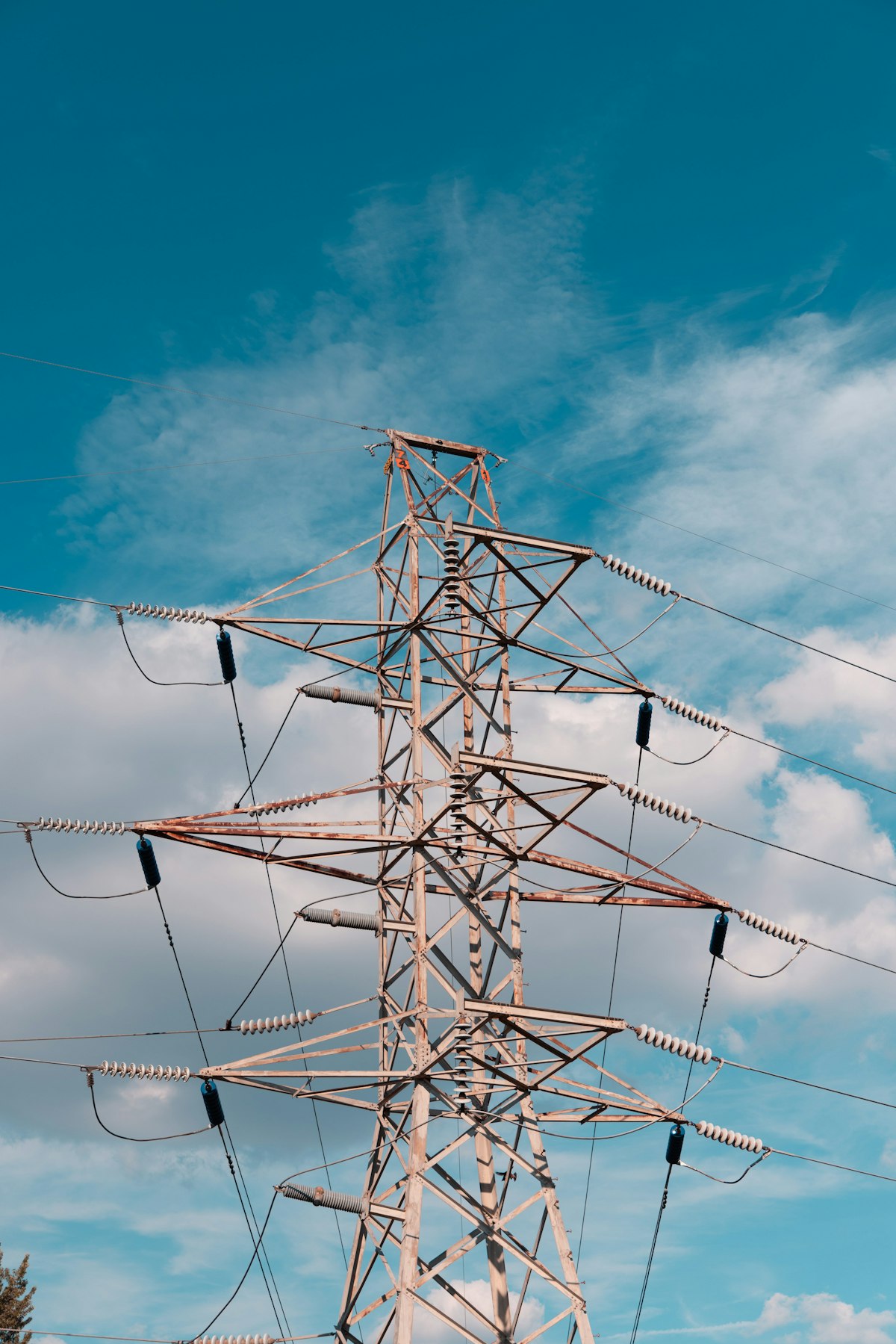
The transformer story is well understood now. Lead times for grid-scale step-up units have stretched into the 24 to 36 month range, the orderbook is full, and the supply response will take years. What has had much less attention, but is about to matter at least as much for 2028 to 2031 reliability planning, is the heavy-duty gas turbine orderbook.
Industry reporting from GE Vernova’s investor day, Siemens Energy’s H1 2026 results, and Mitsubishi Power’s annual technical briefing all confirm the same shape. Delivery slots for new F-class and H-class frame gas turbines are now quoting 48 to 60 month windows, with the largest J-class units pushing into 2030 and 2031. The pre-2022 baseline for the same equipment was 18 to 24 months. The orderbook backlog has roughly tripled over four years.
This matters because the integrated resource plans driving new generation procurement across the major US ISOs have been leaning, often heavily, on new gas capacity to meet the load curve that data center growth implies. When the OEMs say “first available slot is 2030,” they are setting a binding outer constraint on what every PJM, MISO, ERCOT, and SPP capacity expectation can actually deliver.
The three OEM realities
Heavy-duty gas turbine production globally is concentrated among three vendors. The North American market is functionally a three-supplier oligopoly with no meaningful second tier.
GE Vernova services North America from Greenville, South Carolina and from a global supply footprint built around the former GE Power business. The 7HA.03 and 9HA.03 platforms are the workhorses for new combined-cycle builds. CEO Scott Strazik used the December 2025 investor day to publicly characterize the F-class and H-class orderbook as “essentially sold out through 2028” with new orders entering 2029 and beyond. Backlog growth in the Power segment has been the primary driver of GE Vernova’s earnings revision pattern across 2025 and into 2026.
Siemens Energy operates the SGT-8000H platform with assembly in Berlin and Charlotte, North Carolina, with a heavy fabrication supply chain across Germany, Sweden, and the Czech Republic. The company’s H1 2026 results call confirmed gas turbine bookings ahead of plan and lead-time guidance consistent with the 48 to 60 month range. Charlotte capacity expansion announced in 2024 will not produce incremental units until 2027 at earliest.
Mitsubishi Power services the US through the Savannah Machinery Works facility in Georgia and through Japanese production at Takasago. The M501JAC platform is the highest-output single-shaft heavy-duty turbine available for combined-cycle service. Japanese press coverage and the company’s mid-term plan have signaled order intake at multi-year highs, with delivery slots for new utility customers running into the 2029 to 2031 window.
There is no fourth option at the scale that matters. Industrial-frame turbines from Ansaldo Energia and the Russian-origin platforms that historically competed at the margin are not viable substitutes for the large-frame capacity utilities are specifying.
What is actually constraining output
Three constraints stack on top of each other.
Casting and forging capacity for hot-section components. The single-crystal nickel superalloy castings that go into turbine blades and vanes, and the large forgings that go into rotors and casings, are produced by a small set of specialty suppliers. PCC Energy (the former Precision Castparts gas turbine business, now part of Berkshire Hathaway), Doncasters, and a handful of European foundries serve the market. Expansion of hot-section casting capacity is measured in years, not quarters, because the qualification process for new casting lines on flight-equivalent and power-equivalent components is itself multi-year. None of the three OEMs can produce more turbines than the upstream casting houses can produce hot sections.
Coatings and post-processing. Thermal barrier coatings and the ceramic matrix composite components that have entered production on the latest H-class and J-class platforms require specialized coating cells with restricted vendor counts. Throughput at these cells is the binding step for finished hot-section throughput, and expansion has been incremental.
Skilled assembly labor. Final assembly, balancing, and string-test capacity at the OEM facilities is sized for a different decade of demand. The Greenville, Berlin, Charlotte, and Savannah facilities are all running near nameplate. Capacity additions announced in 2024 and 2025 will materialize through 2027 and 2028, but the OEMs have been explicit that order intake is outrunning the ramp.
The capacity-market consequence
The capacity-market and IRP implications are what should worry planners.
PJM’s 2025/2026 Base Residual Auction cleared at $269.92 per MW-day, a record by a wide margin, and the 2026/2027 print published in late 2025 cleared materially higher. The auction prices have been doing exactly what economic theory says they should do when reserve margins tighten. The question is whether the new capacity that those prices are meant to signal into existence can actually be built on the timeline the auction assumes.
A combined-cycle gas plant ordered in mid-2026 with a 2030 commercial operation target needs the turbine slot secured before final EPC contracting, the air permit through state and federal review, and the gas pipeline and transmission interconnection studied and approved. The OEMs are not booking 2030 delivery slots without firm down-payments, and developers without committed offtake are not putting down firm down-payments. The result is a procurement deadlock that pushes the actual buildable window from 2030 to 2032 for most new projects.
PJM, MISO, and ERCOT planning processes all assume that capacity-market prices and IRP procurement signals translate into in-service generation on something like a four to five year cycle. The actual cycle for new heavy-duty gas combined-cycle is now closer to six to seven years from decision to commercial operation. The mismatch is structural and it is not being adjusted for in published planning documents.
Hyperscaler entry into the procurement market
The pattern that played out in the transformer market is now playing out for gas turbines. Google, Meta, Microsoft, and Amazon are all in direct conversations with the OEMs about dedicated turbine allocations to back specific data center campuses. Some of those conversations have produced announcements. Most have not. The competitive bidding for slots has the same effect that it had on transformer pricing, which is upward repricing per delivered MW for buyers who hold less leverage with the OEMs than the hyperscalers do.
The 2025 announcement of the Three Mile Island restart, the multiple hyperscaler PPAs signed against nuclear and behind-the-meter gas in 2025 and 2026, and the increasing pattern of hyperscaler equity investment in IPP projects all sit on top of the same underlying reality. The hyperscalers have decided that securing power is a strategic procurement function, and they have the balance-sheet capacity to outbid traditional utility buyers for the resources that need to be secured.
The follow-on consequence is that utility commissions in fast-growing load states are seeing IRP filings that assume gas turbine availability that the OEMs are not promising. The Texas PUC, the Arizona Corporation Commission, the Georgia PSC, and the Virginia SCC have all approved or are reviewing IRPs that include new gas additions in the 2028 to 2030 window. The realism of those COD targets is, in most cases, undertested.
Policy response, such as it is
There is no current federal program targeted at heavy-duty gas turbine manufacturing capacity expansion. The Defense Production Act Title III invocations of 2022 covered LPTs and select grid components, not gas turbines. The DOE Loan Programs Office has portfolio scope that could in principle support manufacturing buildout for power generation equipment, but historical LPO awards have not concentrated there.
State-level capacity revenue arrangements (capacity payments in PJM and ISO-NE, reliability-must-run agreements in CAISO and MISO, the Texas Performance Credit Mechanism debate) all assume that price signals will produce supply. They do produce supply, but only on the timeline that the equipment manufacturers can actually deliver.
The structural answer would be material federal investment in additional hot-section casting capacity, which is the upstream bottleneck. There is no such program currently proposed at the scale that would matter.
Positioning implications
- GE Vernova, Siemens Energy, Mitsubishi Heavy Industries are in multi-year backlog positions with strong pricing power. Equity exposure is direct in all three.
- PCC Energy and the specialty casting houses are positioned for sustained demand pull and limited near-term competition. Most are privately held or sit within larger industrial conglomerates.
- IPPs holding turbine reservations carry a project-completion advantage that does not show up in published project pipelines. Vistra, Constellation, NRG, Calpine, and a small set of PE-backed developers have been reported as active in the reservation market.
- Utilities with IRPs assuming 2028 to 2030 gas additions that have not secured turbine slots are likely overstating their own capacity plan deliverability.
- PJM, MISO, ERCOT, SPP capacity markets carry an embedded supply-side delivery risk that is not being explicitly priced.
Risks to the read
- A material slowdown in data center load growth would loosen the orderbook on a faster cycle than transformers, because gas turbine orders are more discretionary at the margin and developers can defer. The OEM ramp underway is sized for current trajectory, not for a higher one.
- A meaningful federal program targeted at gas turbine hot-section supply, at the scale of the CHIPS Act for semiconductors, could shift output over a five to seven year horizon. There is no such program currently proposed.
- A faster ramp of grid-scale battery storage paired with renewables, particularly in ERCOT and CAISO, could substitute for some new gas-fired capacity on the margin. The four to eight hour duration market is growing fast but the equivalence to firm dispatchable capacity is contested and capacity-market rules vary on how it counts.
- A nuclear restart and SMR commercialization curve that arrives faster than current expectation would substitute at the firm-capacity layer over the 2030s, but the gas turbine constraint binds before any plausible nuclear ramp resolves it.
The frame: heavy-duty gas turbine supply is now the second binding physical constraint on US grid expansion for the 2026 to 2030 window, sitting alongside large power transformer supply and ahead of solar module, battery cell, and wind turbine supply on the constraint stack. Unlike interconnection reform, the binding constraint is upstream of the policy levers the federal government has used so far. The IRP planning documents that have not adjusted for OEM lead-time reality are quietly accumulating a credibility problem that will surface in 2028 and 2029, when the COD slips start landing in commission filings and capacity auction true-ups.
The capital market signal is already visible in GE Vernova, Siemens Energy, and Mitsubishi share prices and in the orderbook disclosure cadence. The regulatory acknowledgement is still a chapter behind.
Sources
- GE Vernova Investor Day, December 10, 2025, Power segment backlog and orderbook disclosure.
- Siemens Energy H1 FY2026 results call and transcript, May 2026.
- Mitsubishi Power technical briefing and Mitsubishi Heavy Industries mid-term plan disclosures, 2025 and 2026.
- PJM Interconnection, 2025/2026 and 2026/2027 Base Residual Auction results posts.
- DOE Office of Manufacturing and Energy Supply Chains, America’s Strategy to Secure the Supply Chain for a Robust Clean Energy Transition, 2022 and subsequent updates.
- Edison Electric Institute, Power Equipment Lead Time Tracker, 2025 industry briefings.
- Wood Mackenzie, North American Gas Generation Outlook, 2026 series.
- Utility IRP filings, Texas PUC, Arizona Corporation Commission, Georgia PSC, Virginia SCC, 2025 and 2026 dockets.