
Two weight-bearing nuclear data points arrived in the same 24 hours. LevelTen’s Q2 2026 PPA index put hyperscaler-counterparty procurement at 9.4 GW signed, with nuclear at 3.9 GW (42 percent), the first quarter on record above 40 percent. The NRC’s mandatory-hearings policy statement (effective June 8, surfaced this week) pulls uncontested licensing hearings from the end of the staff review to roughly 30 days after docketing, the first concrete implementation of Section 207 of the 2024 ADVANCE Act. China’s Ministry of Commerce placed MP Materials and USA Rare Earth on its export-control list on June 22, a curb that bites no current orders but hardens the federal capital case for domestic heavy rare-earth separation. Tesla, Sunrun, and Renew Home announced a 16 GW VPP framework anchored at 300 MW in northern Virginia targeting PJM’s Reliability Backstop. The cross-vertical thread: the AI-demand supply chain is being sorted by federal procurement and permitting, not by price.
The lede
Two weeks since the last digest, and the headline rotation this week is nuclear. Both data points that landed (the LevelTen Q2 2026 PPA tracker and the NRC mandatory-hearings policy statement) move in the same direction, but they answer two different parts of the same question. LevelTen sizes the demand-side commitment: hyperscalers have now contracted nuclear at a 42 percent share of new firm-and-renewable PPA volume, the highest quarterly nuclear share on record. The NRC policy statement starts to compress the supply-side timeline that determines when those contracted MWh actually show up on the grid.
The two data points together sharpen, rather than resolve, the Carnegie gap thesis from earlier in the month. The Carnegie sizing of about 13 GW of announced hyperscaler nuclear (roughly 102 TWh per year if everything lands) against forecast US data-center demand through 2035 was the named ceiling. Q2 2026 alone added another 3.9 GW of nuclear PPA volume on top of that. Announcement velocity is now running ahead of the Carnegie inventory. The MWh-when-the-plants-actually-run question is what the NRC policy statement is pointed at.
Outside nuclear, the week broke into two clean stories. China’s June 22 Ministry of Commerce action on MP Materials and USA Rare Earth is the formal version of pressure that has been informal for two years. It changes very little in current physical supply (both firms are already decoupled from Chinese vendors) and changes the policy ceiling on what comes next quite a lot. The Tesla, Sunrun, and Renew Home VPP framework is the cleanest existence proof yet that distributed residential storage can be priced into wholesale capacity markets as a serious resource, with hundreds of MW deployable today in the load pocket that needs it most.
Solar and grid produced no new weight-bearing flash this week. The July 4 IRA safe-harbor cliff is six days away at this writing; the 8-K cadence on physical-work-of-significant-nature disclosures continues to be the leading indicator. Climate-policy implementation continues in the background but produced no headline. Four active verticals (nuclear, critical minerals, storage, plus the distributed-storage edge of solar via the VPP framework) and two quiet (utility-scale solar at the deployment level, grid at the FERC level).
Top stories by vertical
Nuclear: PPA share hits 42 percent on the quarter; NRC moves mandatory hearings to the front of the licensing sequence
Two stories in the same vertical inside 24 hours, both pulling in the same direction. LevelTen Energy’s Q2 2026 PPA price index, published Saturday morning, put US hyperscaler-counterparty corporate procurement at 9.4 GW of newly contracted firm and renewable capacity across April, May, and June, up from 7.1 GW in Q1. Nuclear PPAs (operating-asset offtake, restart offtake, and new-build framework agreements combined) accounted for 3.9 GW, or roughly 42 percent of the quarter. That is the first quarter on record where nuclear has cleared 40 percent of the hyperscaler PPA pool. The previous high was Q4 2025 at 31 percent, anchored by Microsoft’s Three Mile Island restart and the Meta-Constellation life-extension package. (See: news/2026-06-27-hyperscaler-firm-capacity-q2-2026-tracker.)
Inside the 3.9 GW nuclear figure, three signings drove the quarter: Alphabet’s 1.4 GW expanded Kairos/TVA framework (two 350 MW Hermes-2 follow-on units at Oak Ridge), an Amazon Web Services 1.1 GW framework extension with Energy Northwest (lifting the X-energy Xe-100 site-license target at Columbia Generating Station from four to five units), and Meta’s 1.0 GW PG&E Diablo Canyon offtake covering the proposed 20-year license extension. The other 5.5 GW of the quarter splits across solar plus storage (3.2 GW), standalone storage (1.4 GW), and geothermal plus enhanced geothermal (0.9 GW, the highest quarterly EGS share on the LevelTen series).
The structural read sharpens the Carnegie gap. Announcement velocity is accelerating, with Q2 running 32 percent above Q1 on signed volume. But the contracted MWh remains backloaded. LevelTen’s tracker shows weighted-average commercial-operation date for Q2 nuclear PPAs at 2031, versus 2027 for solar plus storage and 2028 for standalone storage. The MW signed in the contract year is no longer the binding constraint. The MWh that actually shows up on the grid in the load year is.
That sets up the second story. The NRC’s new policy statement on mandatory hearings, effective June 8 and surfaced in trade-press coverage this week, restructures the sequence of reactor licensing in a way that reads procedural and is not. Historically, the NRC held the required uncontested hearing at the end of a reactor licensing review, after the staff’s technical and environmental work was complete. The hearing functioned as a backstop check on the staff record. Under the new policy, the hearing moves to roughly 30 days after the agency dockets an application, takes the form of a public meeting closer to a town hall, and runs in parallel with the technical review rather than after it. (See: news/2026-06-27-nrc-mandatory-hearings-policy-shift.)
The change implements Section 207 of the Accelerating Deployment of Versatile, Advanced Nuclear for Clean Energy Act of 2024 (the ADVANCE Act), which directs the NRC to complete necessary public licensing hearings and related processes within two years of docketing for certain combined license applications. The June 8 policy statement is the first time the agency has translated that statutory deadline into a specific procedural redesign. The first application to run under the revised sequence is Holtec’s SMR-300 limited work authorization at Palisades, docketed February 27, for the dual-unit Pioneer 1 and Pioneer 2 review.
Against the nuclear thesis frame, both stories are thesis-confirm and move the priors. LevelTen sharpens the demand-side commitment that the Carnegie paper sized. The NRC policy statement is the cleanest first-mover implementation of the ADVANCE Act and pulls the most-cited timeline lever in the advanced reactor pipeline. A reform that takes even six to twelve months off the average license review compounds across the NuScale, X-energy, Kairos, TerraPower, Oklo, and Holtec cohort, which is the same cohort the Q2 PPA signings are anchored to. The supply and demand sides of the nuclear story moved in the same direction in the same week.
Critical Minerals: China places MP Materials and USA Rare Earth on export control list
China’s Ministry of Commerce on June 22 added 10 US firms to its export control list, barring shipments of dual-use items, the broad category that covers magnets, separation reagents, processing equipment, and the inputs that move through both civilian and defense supply chains. The list includes the two highest-profile US rare-earth names, MP Materials and USA Rare Earth, alongside Oshkosh Defense, Ball Aerospace, drone makers Teal Drones and Jaia Robotics, and electronics manufacturer Aveox. China’s Finance Ministry separately excluded 46 US firms, mostly defense contractors, from government procurement. (See: news/2026-06-26-china-export-controls-mp-usar.)
The action is retaliatory. Earlier in June the Pentagon expanded its Section 1260H list of Chinese military companies operating in the United States by roughly 80 entities, including Alibaba, Baidu, and BYD. Beijing’s response was timed and targeted at the rare-earth piece of the chain.
In direct supply terms, the curb lands soft. MP Materials and USA Rare Earth have spent the last two years rerouting equipment orders, magnetic-alloy precursors, and separation chemistry away from Chinese vendors, partly because of federal procurement rules tied to IRA eligibility and the DoD’s 2025 partnership with MP. That partnership (a $150 million Office of Strategic Capital loan, $400 million equity stake, 10-year NdPr price floor, and 10-year magnet offtake commitment) was explicitly designed so MP could operate without Chinese feedstock or Chinese-routed processing. USA Rare Earth has taken a parallel path with the Round Top heavy rare earths project and the Stillwater magnet facility, plus the Cherokee County, South Carolina sintered NdFeB plant committed in early June.
What the announcement does change is the policy ceiling. Beijing has now formalized what was previously informal pressure: any US rare-earth firm tied to the defense industrial base is a counterparty Chinese exporters cannot serve. That eliminates the optionality of slow-walking decoupling, and it strengthens the case for the next round of federal capital to flow into heavy rare-earth separation, where US capacity is thinnest. Heavy separation (dysprosium and terbium specifically) is the chokepoint that determines whether a magnet program can deliver into high-temperature applications like drones, traction motors, and missile guidance, and it remains the part of the chain China still controls most tightly.
Against the critical-minerals thesis frame, this is thesis-confirm at the policy-backstop level. The curb does not move any current shipment. It moves the floor under federal commitment to domestic separation by one notch, which is the bottleneck the published frame has named since the start of the year.
Storage / Lithium: Tesla, Sunrun, and Renew Home anchor a 16 GW VPP framework on PJM’s Reliability Backstop
Tesla, Sunrun, and Renew Home announced a framework on June 24 to combine hundreds of thousands of residential battery systems with more than 8 million Renew Home smart thermostats and connected devices into a single virtual power plant. The headline number is 16 GW of flexible capacity, marketed to hyperscalers and utilities. The structurally relevant number is smaller. More than 300 MW is available for immediate deployment in northern Virginia, with a path to 500 MW by 2030, and the partners intend to bid into PJM’s Reliability Backstop Procurement when that mechanism opens for participation. (See: news/2026-06-28-tesla-sunrun-renew-home-vpp-pjm.)
The 16 GW figure stacks rated home battery capacity on top of one-hour peak load-shift potential from thermostats, and counts both at full availability simultaneously. That is not firm capacity. The 300 MW in Data Center Alley is the concrete piece, and it is concrete because it is already installed equipment behind utility meters. No interconnection study, no queue position, no transformer, no land. The Reliability Backstop is the procurement PJM is designing to push data-center developers to pay for resources that match their grid impact rather than socializing those costs across the load base. A distributed VPP is exactly the kind of resource the design contemplates.
Two implications compound here, both consistent with the lithium thesis. First, residential storage is the fastest-deploying form of grid-relevant lithium capacity in the US. A typical Tesla Powerwall 3 or Sunrun storage system is a 10 to 13 kWh LFP pack. Hundreds of thousands of units already in service is hundreds of MWh of installed lithium that did not require an interconnection study. That cathode demand is permanent capacity for the life of the equipment, and it lives outside the queue-clearing constraint that bottlenecks utility-scale storage. Second, this is the cleanest existence proof that hyperscaler-driven load in PJM is now large enough to underwrite a distributed-resource business model on its own. Sunrun closed up 26 percent on the announcement. The bid path is into a market that did not contemplate behind-the-meter storage as serious capacity two years ago.
Against the storage thesis frame, this is thesis-confirm on the structural-integration vector. The piece worth watching is the Reliability Backstop design itself: clearing rules, locational accreditation, and capacity payment structure will determine whether the 300 MW Virginia number scales as advertised or stays a press release figure. If the design accommodates aggregated residential resources at reasonable accreditation, every comparable VPP framework in the US becomes more financeable, and the marginal residential lithium battery starts to carry a grid-services revenue line on top of its arbitrage and backup value.
Framework check
Nuclear (renaissance thesis). Strengthens on two axes. LevelTen Q2 puts nuclear at 42 percent of hyperscaler PPA volume on the quarter, sharpening the demand-side commitment side of the Carnegie gap. The NRC mandatory-hearings policy statement is the first concrete ADVANCE Act implementation, pulling six to twelve months out of the average advanced-reactor licensing path. Frame intact and pushing up; the Carnegie ceiling on contracted MW is no longer the binding constraint, but the COD-versus-load-year gap is.
Nuclear (risk #5: hyperscaler demand collapses). Held down notch. The Q2 9.4 GW signed (with 3.9 GW nuclear) is the opposite of a collapse signal. No marginal data point pulled this risk back up.
Nuclear (risk: NRC throughput stays binding). Moves down. The mandatory-hearings reform is the first credible procedural compression the agency has produced under the ADVANCE Act. The size of the saving will depend on how the staff implements the parallel-track review on the first Holtec docket; the policy direction is unambiguous.
Critical Minerals (US-supply build vector). Strengthens at the policy-backstop level. China’s June 22 action formalizes informal pressure and removes the optionality of slow-walking decoupling for any US rare-earth firm tied to the defense industrial base. The marginal federal capex dollar for heavy rare-earth separation gets easier to defend. USA Rare Earth Cherokee County and the MP DoD partnership remain the active project markers.
Critical Minerals (risk: Chinese pricing pressure or export shocks). The export-control action is a structural confirmation of this risk, not a relief from it. Frame intact: track the next round of Chinese export licensing decisions on heavy rare-earth feedstocks and intermediates, and watch whether the Treasury or DoD pulls forward additional offtake commitments to the still-thin US separation capacity.
Storage / Lithium (structural integration vector). Strengthens at the distributed edge. The Tesla, Sunrun, Renew Home VPP framework is the cleanest existence proof yet that residential lithium can carry wholesale capacity revenue in the PJM construct. Frame intact and broadening.
Storage / Lithium (risk #4: alt-chemistry capturing grid-storage share). No movement this week. CATL-HyperStrong remains the active marker from earlier in June. Watch for the second sodium-ion offtake at 30 GWh-plus and for any non-Chinese cell maker committing to a comparable line.
Solar (risk #1: interconnection reform stalls). No new federal data point this week. The post-June 18 disposition of FERC Docket RM26-4-000 remains the most important pending item from the prior watch list. Frame anchored, waiting.
Solar (IRA implementation). July 4 cliff binds in six days. The 8-K cadence on physical-work-of-significant-nature disclosures is the leading indicator through end of month. No new flash this week; the cadence is what the next digest will read.
Grid. Quiet at the FERC level this week. The PJM Reliability Backstop design referenced in the VPP framework story is the next federal-rulemaking surface to track; the design choices on locational accreditation and capacity payment structure are the binary events for the distributed-resource business model. Frame intact.
Climate Policy (IRA implementation thesis). No new headline this week. OBBBA storage carve-out, 1260H expansion, and CPRG obligation-vs-rescission lever all remain the active markers. Frame intact.
Net read: thesis intact across all five active verticals. The single named risk that moved up this week is the Chinese pricing-pressure risk in critical minerals, by exactly the size of one formal export-control list. The single named risk that moved down is NRC throughput in nuclear, by the size of one statutory-implementation policy statement. Both moves run with the published frame, not against it.
Cross-vertical thread
The thread of the week: the AI-demand supply chain is being sorted by the federal procurement and permitting stack, not by price. Three of the week’s four data points are federal-stack moves, and the fourth (the Tesla VPP framework) is explicitly aimed at the federal-stack proxy that PJM has built into the Reliability Backstop.
The NRC mandatory-hearings policy statement compresses the permitting timeline for the advanced reactor cohort that hyperscalers have now contracted at a 42 percent share of quarterly PPA volume. The Q2 LevelTen tracker is the demand-side reading on the same axis: hyperscalers are signing nuclear at a pace that has now produced a single-quarter share above 40 percent for the first time on record, anchored to commercial-operation dates in 2031 and beyond. The permitting compression and the procurement velocity are answers to the same question (what gets the contracted MWh to the grid in the load year), and they moved in the same direction inside the same week.
China’s June 22 export-control action is the supply-stack version of the same sorting. Federal capital was already routing through DoD partnerships and DOE loans into domestic heavy rare-earth separation; the export-control list eliminates the optionality of slow-walking that decoupling for any US rare-earth firm tied to the defense industrial base. The procurement screen tightens, and the case for the next round of federal capital into Round Top and Cherokee County gets easier to defend. The data-center supply chain that the Pentagon’s June 8 Section 1260H expansion was pointed at is the same chain the Chinese curbs reshape from the other end.
The Tesla, Sunrun, Renew Home VPP framework lands on the same axis from the demand pocket. PJM’s Reliability Backstop is the federal-rulemaking surface that will decide whether distributed storage scales into wholesale capacity revenue or stays a press release. The 300 MW figure in northern Virginia is concrete because the equipment is already behind meters; the bid path into the Reliability Backstop is the federal-stack mechanism that turns installed kit into accredited capacity. The same hyperscaler load that is now signing nuclear at 42 percent of PPA volume is the load that the VPP framework intends to serve in the front-of-stack hours.
The negative-space read holds. There was no major hyperscaler PPA announcement individually this week (the news was the aggregate tracker), no major DOE loan, no FERC ruling. The week’s signal cluster ran through the federal-permitting layer (NRC), the federal-procurement-aggregation layer (LevelTen tracker), the federal-policy-backstop layer (Chinese retaliation), and the federal-rulemaking proxy layer (PJM Reliability Backstop). Track marginal: NRC hearing reform, Q2 PPA mix, China formalization, VPP framework. Watch policy: Holtec SMR-300 docket as the first ADVANCE Act test, Treasury and DoD next-round capital placement on heavy rare-earth separation, PJM Reliability Backstop design, July 4 IRA safe-harbor cliff. Ignore most price noise.
Watch list: week of June 29 to July 5, 2026
- July 4 IRA safe-harbor cliff for utility-scale solar above 1.5 MW. Binds Friday. The 8-K cadence on physical-work-of-significant-nature disclosures through Wednesday and Thursday is the leading indicator. Volume and concentration of disclosures sizes what makes the December 31, 2027 placed-in-service window. (Solar.)
- Holtec SMR-300 limited work authorization at Palisades, first ADVANCE Act test case. Watch for the scheduling notice on the front-loaded mandatory hearing for the Pioneer 1 and Pioneer 2 review. The window for the first parallel-track milestone under the new policy is roughly 30 days from docketing (February 27), so the schedule is already running. (Nuclear.)
- PJM Reliability Backstop design rule docket. First substantive design choices on locational accreditation and capacity payment structure will determine whether the Tesla, Sunrun, Renew Home VPP framework scales the 300 MW Virginia number or stalls. (Storage / Grid.)
- Next round of federal capital placement on heavy rare-earth separation. Watch the DoD Office of Strategic Capital and DOE Loan Programs Office calendars for any new commitments to MP Materials, USA Rare Earth Cherokee County, or a third entrant on the heavy-separation chokepoint. The June 22 Chinese action raises the policy floor under those commitments. (Critical Minerals.)
- FERC follow-on action on Docket RM26-4-000 (large-load interconnection). Post-June 18 disposition is the most important pending item from the prior watch list. The shape of the order (broad rewrite versus narrow first round) determines the next 12 months of co-located solar-plus-storage and behind-the-meter generation project pricing. (Solar / Grid.)
- Second sodium-ion commercial offtake. No movement this week; the CATL-HyperStrong 60 GWh deal remains the only weight-bearing data point. A second offtake at 30 GWh-plus, or a non-Chinese cell maker committing to a comparable line, would flip the alt-chemistry risk from named-and-funded to actively contested. (Storage / Lithium.)
Clean Power Press is editorial, not advisory. Nothing here is a recommendation. Positions, prices, and projects move; we cover how to think about them.
Sourcing log
- LevelTen Energy Q2 2026 PPA Price Index, US market summary, June 27, 2026.
- NRC Policy Statement on Mandatory Hearings for Reactor Licensing, Federal Register, effective June 8, 2026 (surfaced in trade-press coverage this week).
- China Ministry of Commerce export-control list update, June 22, 2026, as reported by Al Jazeera.
- Tesla, Sunrun, and Renew Home VPP framework announcement, June 24, 2026, as reported by Energy-Storage.News.
- Prior digest framework, watch list, and named risks:
posts/weekly-2026-06-14.md. - Carnegie hyperscaler-nuclear gap framework:
posts/weekly-2026-06-07.md. - Vertical thesis frames: project file
vertical-thesis-frames. - In-period news flashes:
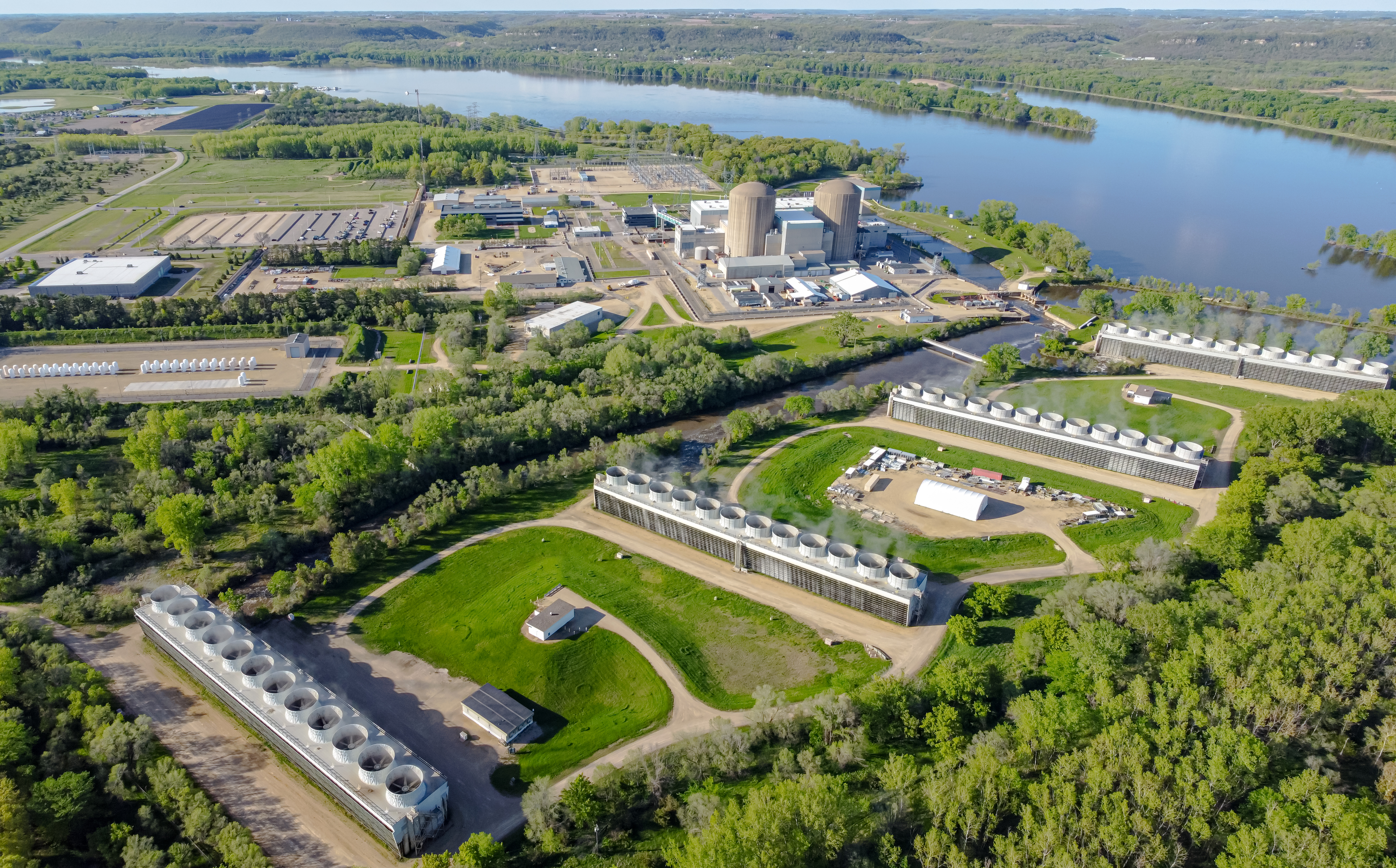
news/2026-06-26-china-export-controls-mp-usar,news/2026-06-27-hyperscaler-firm-capacity-q2-2026-tracker,news/2026-06-27-nrc-mandatory-hearings-policy-shift,news/2026-06-28-tesla-sunrun-renew-home-vpp-pjm. - Cover image: “Prairie Island Nuclear Generating Plant” by Wikideas1, Wikimedia Commons, CC0 1.0 Public Domain Dedication, May 8, 2024.