
One week after the July 4 policy sort, AI demand showed up as concrete capital and physical megawatts across nuclear, storage, and solar simultaneously. Tesla’s Q2 storage deployment landed at 13.5 GWh (+40% YoY), the cleanest single read on grid-scale demand acceleration compounding through the EV cycle. Leeward Renewable Energy took 278 MW of Google-PPA’d Oklahoma solar into commercial operation, the first clean marginal read on how fast the 216 to 240 GW safe-harbored bank starts to physically convert. Aalo Atomics became the fourth DOE pilot reactor to reach criticality, and the first pitched from day one at data-center co-location. Blue Energy and GE Vernova formalized a 2.5 GW gas-plus-nuclear hybrid at Port of Victoria with Crusoe as the anchor AI offtake. Honda and LG Energy Solution’s Ohio EV cell plant began producing stationary storage cells. Fastmarkets tallied $2.9 billion in federal rare-earths commitments across seven deals in five weeks.
The lede
Last week the story was three federal clocks striking midnight on a single date, sorting a fixed inventory of projects into policy-clean and non-eligible tranches. This week the story is what happens on the other side of the sort. The safe-harbored bank started converting into commercial-operation megawatts. Hyperscaler dollars showed up behind SMR project finance in concrete, bankable form for the first time. Storage cell manufacturing got rerouted from a paused EV line into the domestic-content-compliant stationary bid stack. Tesla’s Q2 print put a hard number on grid-scale demand acceleration. And the federal capital allocation shifted from schedule pressure toward the actual choke point in critical minerals.
Six active verticals this week (storage/lithium, nuclear, solar, critical minerals, plus the climate read-through on irradiance). Grid was quiet at the standalone level: the AEU interconnection reform scorecard from July 1 is still the operative marker, and FERC Docket RM26-4-000 remains the substantive event ahead.
The common shape across the active verticals is that the July 4 rules stopped being paper and started producing physical, capital-market, and commercial reads. Every one of them points in the same direction: AI-adjacent firm-power and storage demand is now flowing through the sorted inventory the OBBBA and DOE-authorization pathway created a week ago.
Top stories by vertical
Storage / Lithium: Tesla Q2 deployment at 13.5 GWh and Honda-LG Ohio flips from EV cells to ESS cells
Tesla’s Q2 2026 vehicle production and deliveries release, filed with the SEC on July 2, put energy storage deployment at 13.5 GWh, up more than 40 percent from 9.6 GWh in Q2 2025. The figure came in a shade below the roughly 13.8 GWh consensus, but the year-over-year slope is the material fact. Tesla’s storage business is compounding through the EV cycle, not because of it. The vehicle number (480,126 deliveries, plus 25 percent YoY) grabbed the tape; the storage number moved the thesis. (See: news/2026-07-06-tesla-q2-storage-13-5-gwh-thesis-confirm.)
Two frame points read out. First, utility-scale storage is greenfield gigawatt-hours attached to grid interconnection queues that did not exist as demand centers five years ago. Every additional Megapack shipped is incremental lithium carbonate and iron phosphate throughput at a moment when marginal capex into refining is still constrained. Second, the macro backdrop rhymes. EIA’s Short-Term Energy Outlook has developers planning 24 GW of US utility-scale battery additions in 2026, versus a record 15 GW in 2025. SEIA and Wood Mackenzie clocked Q1 2026 US storage installations at 9.7 GWh, up 32 percent year over year, so the sector was already tracking to a step-change print before Tesla’s Q2 confirmed it. For the July 22 earnings webcast, watch two things: Megapack Shanghai plus Lathrop combined output against 2026 guidance, and whether energy gross margin holds above the auto segment for a fifth straight quarter. Sustained storage margin above auto tells the market Tesla is pricing to demand, not to inventory.
The second storage story is capacity-mix rebalancing on the supply side. L-H Battery Company, the Honda and LG Energy Solution joint venture in Jeffersonville, Ohio, announced on July 1 that it has begun lithium-ion cell production. The facility was originally scoped for automotive cells for Honda EV programs. First cells off the line will now feed stationary energy storage systems built by LG ES Vertech, LG’s US system integrator. L-H CEO Chahun Ku called out storage’s structural growth as the reason for the shift, contrasting it against near-term EV demand volatility. Product coming out of Jeffersonville is being positioned as compliant with the IRA’s domestic-content requirements for the Section 48E investment tax credit, and structurally outside the tariff wall on Chinese-origin cells. (See: news/2026-07-09-honda-lg-ohio-ess-repivot.)
The read for the supply chain is clean. An EV-cell plant flipping to ESS cells is a supply-side response to a specific demand mix, not a walk-back from lithium. The cell chemistry, the manufacturing base, and the workforce all carry over. What shifts is the customer stack, from automotive OEMs on multi-year platform contracts to storage integrators on shorter, project-linked orders. It also removes one line of the “EV slowdown kills cell demand” argument that has been overweighted in generalist coverage. When idled EV-cell capacity gets rerouted to stationary applications, marginal lithium demand does not disappear; it moves. Watch for Ford, Stellantis, or Toyota JVs to follow with similar public shifts on their US cell footprint. If they do, domestic cell capacity converges on stationary storage faster than the IRA drafters expected, and US-sited integrators pick up incremental supply without waiting on new greenfield builds.
Against the storage / lithium thesis frame, both stories are thesis-confirm. Tesla on the demand-acceleration vector; Honda-LG on the supply-chain rebuild vector.
Nuclear: Aalo becomes fourth DOE pilot criticality with data-center co-location baked in, and Blue Energy prices a gas bridge to unlock SMR finance
Two nuclear stories, one on the pilot side and one on the commercial-scale side, both pointing at the same demand curve.
Aalo Atomics announced on July 7 that its Aalo-X test reactor reached first criticality in the early morning hours of July 4 at Idaho National Laboratory. Aalo is the fourth reactor to hit the milestone under the DOE Reactor Pilot Program, following Antares Nuclear, Valar Atomics, and Deployable Energy. The Aalo-X is a 10 megawatt-electric microreactor design; the commercial variant, the Aalo Pod, is a five-unit cluster rated at 50 megawatts electric. (See: news/2026-07-08-aalo-fourth-pilot-criticality-data-center.)
Two features of the announcement change the read from last week’s frame. First, the commercial product is being pitched, from day one, at data-center co-location. Aalo has stated an intent to build a co-located demonstration data center adjacent to the Aalo Pod near INL, targeting 2027. The first three pilot criticalities (Antares Mark-0, Valar Ward 250, Deployable Unity) were pathway demonstrations, useful for validating that DOE-authorized non-lab reactors could reach criticality on schedule, but not oriented toward a specific commercial customer segment. Aalo is the first pilot developer whose product design and public narrative are organized around behind-the-meter compute demand. Second, Aalo disclosed an active collaboration with Microsoft and Nvidia on an automated co-piloting system for reactor operations and safety. That is software, not a purchase agreement. It does indicate that hyperscaler engineering resources are being applied to the operational envelope problem, which is the piece of advanced-reactor deployment that lives outside licensing timelines and inside the plant’s day-to-day risk profile. The read-through from the DOE pilot program is no longer purely about licensing pathway credibility; it is now about whether first commercial deployments landing off the pilot base can be underwritten specifically as data-center firm-power supply.
The commercial-scale counterpart to Aalo landed a few days later. Blue Energy and GE Vernova this week formalized a strategic collaboration on a 2.5 GW gas-plus-nuclear hybrid at the Port of Victoria, Texas, with Crusoe Energy already lined up as the anchor customer for a co-located AI data center campus. The plan pairs approximately 1 GW from two GE Vernova 7HA.02 gas turbines with up to 1.5 GW from as many as five GE Vernova Hitachi BWRX-300 small modular reactors, phased in on separate schedules. Early site work is expected later in 2026, with an FID in 2027 and an NRC construction permit application the same year. Gas-fired power is targeted for as early as 2030. The BWRX-300 units come online as early as 2032, at which point the steam supply switches from gas to nuclear and the plant ramps to its full rating. (See: news/2026-07-11-blue-energy-victoria-gas-bridge-bwrx.)
The financing structure is the point of the announcement. Blue Energy intends to own and operate the plant under long-term PPAs with industrial offtakers, treating the combined-cycle phase as the piece that supports leveraged debt while the SMR fleet completes licensing. CEO Jake Jurewicz put it plainly: “somebody has to figure out where you can actually allocate risk,” and the gas leg is where lenders can. The company argues the model removes “at least five years” from the conventional nuclear timeline by not making the reactor the entry point for capital.
Two signals matter here beyond the plant itself. First, hyperscale AI offtake is now sitting behind SMR project finance in concrete form, not just MOUs. Crusoe and Blue Energy first tied the Victoria site to an AI data center campus in October 2025, and the GE Vernova collaboration is what turns that into a plant that can actually reach FID. Second, the gas-bridge framing is a direct answer to the capital-cycle problem: a decade-plus construction timeline is not something greenfield equity underwrites at scale, so pairing SMRs with a bankable gas island is one of the few structures that gets nuclear built inside a hyperscaler procurement window. Slot reservation for the two 7HA.02 turbines is already in place for 2029 delivery, which anchors the gas side of the schedule and gives the nuclear side a concrete date to converge on.
Against the nuclear thesis frame, both stories are thesis-confirm and stack on top of last week’s three-reactor DOE pilot completion. Three consecutive weeks now in which the timeline-compression axis of the advanced-reactor story moved down. The pilot pathway has been validated (weeks one and two) and is now producing commercial-scale, hyperscaler-anchored templates (this week).
Solar: Leeward Renewable puts 278 MW online under Google PPAs, and H1 irradiance ran 5 to 10 percent above baseline
Two solar reads, one on execution and one on resource.
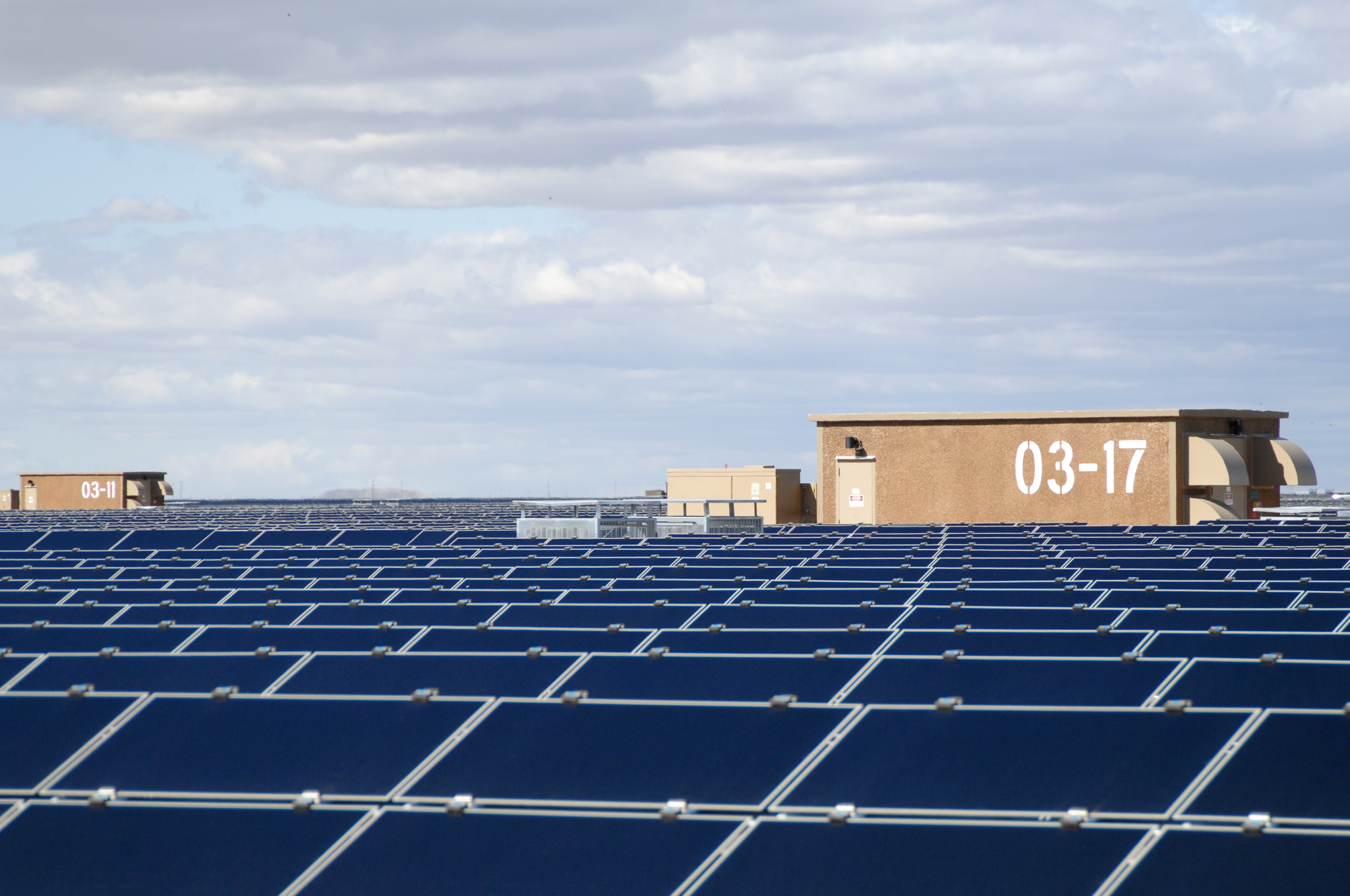
Leeward Renewable Energy said its 725 MW Oklahoma portfolio hit two milestones at once. The 125 MW Huckleberry Solar site in Mayes County and the combined 153 MW Twelvemile Solar I and II in Bryan County entered commercial operation, taking currently generating capacity to 278 MW. Salt Branch Solar I and II (145 MW), Mayes Solar (102 MW), and Twelvemile Solar III (200 MW) remain under construction, for another 447 MW behind the operational tranche. Google is the power purchase agreement counterparty across all five sites, with the developer citing roughly $1.5 billion of investment across the portfolio and $148.8 million of projected state and local tax revenue over operating lives. (See: news/2026-07-12-lre-oklahoma-google-solar-cod.)
The COD landed three days after the OBBBA’s July 4 begin-construction deadline for the Section 48E clean electricity investment credit. Wood Mackenzie’s post-deadline tally, published the same weekend, put utility-scale solar safe-harbored between mid-2024 and July 4 at 216 to 240 GW DC. That was a paper stockpile of physical-work milestones and equipment purchase orders, not commissioned megawatts. LRE’s Huckleberry and Twelvemile CODs are a first read on how fast the safe-harbored bank starts to convert. Two features are worth flagging. First, the financing is hyperscaler PPAs, not merchant or utility offtake. The pattern fits data-center demand pulling utility-scale solar into interconnection queues on shorter cycles than the utility procurement channel. Google’s PPA position covers output from all five projects, tying a data center operator’s forward power book to Oklahoma capacity through the 2020s. Second, the 278 MW that came online is Section 48E-eligible under the deadline that just closed. The 447 MW still in construction was already inside the safe-harbored window. The build-out is not affected by the July 4 cutoff either way.
The second solar story is a P50-generation tailwind. Solcast’s mid-year global solar-resource review put H1 2026 irradiance across most of Europe and the United States at 5 to 10 percent above the 2007 to 2025 baseline. France came in 13 percent above, Germany 11 percent, Finland 16 percent, and Austria’s May print hit 25 percent above normal. The upside was not universal. Canada, Mexico, South Africa, North Africa, and parts of western Russia and Central Asia sat 5 to 10 percent below baseline. Solcast attributes the redistribution to early-year atmospheric blocking and polar-vortex disruption transitioning to a developing El Nino pattern from April, layered on top of the usual regional noise from cyclones, dust, smoke, and rainfall variability. (See: news/2026-07-07-h1-irradiance-europe-us-tailwind.)
Solar generation economics are a linear function of irradiance at first order. A 5 to 10 percent surplus against the P50 assumption baked into a project’s pro forma flows through as roughly proportional upside on revenue in a merchant book and on availability payment coverage in PPAs. Utility-scale operators in the affected European countries and across most of the US will book that upside in Q2 and Q3 disclosures, even if they do not attribute the swing to the underlying atmospheric pattern. The reverse holds for Canadian and Mexican fleets. Second-half read depends on whether the El Nino pattern that drove the H1 swing consolidates or fades. The read-through for storage arrives one step downstream. Grids running above expected solar output shift storage arbitrage windows and firm up the case for four-hour and longer duration batteries to absorb midday over-generation, especially in ERCOT and CAISO where duck-curve dynamics compound.
Against the solar thesis frame, LRE Oklahoma is thesis-confirm on the safe-harbor bank as the binding source of 2027 to 2030 deployment volume, and thesis-confirm on the AI-demand vector. The Solcast read adds a P50 kicker to fleets already inside the operating window; it does not by itself change the deployment thesis.
Critical Minerals: five weeks, seven deals, $2.9 billion at magnets and processing
Fastmarkets pulled the recent federal sprint into a single frame on July 9: roughly $2.9 billion in direct federal commitments and $1.4 billion in matched private capital across seven deals between June 2 and June 26. The through-line is that the money went to magnets and processing, not to new mines. (See: news/2026-07-10-rare-earths-federal-sprint.)
The timeline, per Fastmarkets and public agency notices:
- June 2. USA Rare Earth committed a $1.2 billion private investment for a magnet manufacturing facility in South Carolina, plus roughly $204 million for French operations.
- June 3. Commerce approved up to $1.6 billion in CHIPS Act support for USA Rare Earth, split between $277 million in direct funding and $1.3 billion in loan authority.
- June 18. The Department of Defense’s Office of Strategic Capital closed two processing loans, $725 million to Energy Fuels and $500 million to Phoenix Tailings.
- June 22. ARPA-E allocated $72 million to mineral discovery and domestic magnet research.
- June 26. The Army opened long-term leases on military bases to four critical-minerals processors, the first time processing has been permitted on federal installations.
The composition matters more than the total. The refining thesis this publication has been running says the same thing about rare earths that it says about lithium: the choke point is refining and downstream conversion, not the ore body. Roughly 90 percent of neodymium-iron-boron magnet production sits inside China today. Reshoring the mine without reshoring the separation, metallization, and magnet steps leaves the strategic dependency intact. Read against that frame, the June composition is close to the right shape. USA Rare Earth and the DoD processing loans put capital into separation, metallization, and finished-magnet capacity. The Army lease decision removed a real permitting and siting drag on new processors. The R&D dollars from ARPA-E are small in absolute terms, but the mineral-discovery and next-generation magnet lines are what feed the 2028 to 2030 pipeline.
What is still open. None of the June commitments changes the two-to-four-year lag between capital deployment and first commercial output. USA Rare Earth’s Stillwater magnet plant guides to commercial magnet production in 2028, and the Energy Fuels and Phoenix Tailings facilities are on similar clocks. Heavy rare-earths separation at scale, dysprosium and terbium especially, is still the thinnest link and did not get a headline commitment in the June set. The read for portfolio positioning is unchanged: marginal capex into US-domiciled processors and magnet makers is still where the chain is rebalancing. The pace of that spend is what the June tally measures.
Against the critical-minerals thesis frame, this is thesis-confirm on the refining-and-processing choke point and thesis-confirm on the policy-money-follows-refining vector. The rare-earths capital sprint sits alongside the FEOC filter at the cell layer as the two active pieces of the US-supply-chain rebuild this month.
Framework check
Storage / Lithium (demand-acceleration vector). Resolves further in the frame’s direction. Tesla Q2 storage plus 40 percent YoY is the industry’s cleanest single read on grid-scale demand acceleration compounding through the EV cycle. The EIA 24 GW 2026 target and SEIA Q1 print at 9.7 GWh already had the sector on a step-change slope; Tesla confirms it at the operator level.
Storage / Lithium (supply-chain rebuild vector). Strengthens. Honda-LG Ohio EV-cell-to-ESS-cell repivot is a live case of idled automotive cell capacity converging on stationary demand, and the domestic-content posture keeps the output on the right side of both the FEOC filter and the 45X production credit. Watch for other US EV cell JVs (Ford, Stellantis, Toyota partners) to follow.
Storage / Lithium (risk: alt-chemistry captures grid-storage share). No movement this week. CATL-HyperStrong 60 GWh sodium-ion offtake from June remains the only weight-bearing marker. Risk stays named-but-not-active.
Storage / Lithium (risk: FEOC filter narrows cell menu). Held from last week. July 4 bright line is the discrete step. December 31 Treasury PFE-specific safe-harbor tables remain the next resolution point.
Nuclear (renaissance thesis). Strengthens further. Aalo becomes the fourth pilot criticality and the first with a data-center co-location plan and hyperscaler software collaboration attached. Blue Energy plus GE Vernova plus Crusoe puts hyperscale AI offtake behind SMR project finance in concrete form. Three consecutive weeks of supply-side timeline compression.
Nuclear (risk: DOE pilot pathway fails to scale beyond test reactors). Narrows this week. Aalo’s stated 2027 co-located data-center demonstration and the Blue Energy commercial-scale gas-plus-BWRX-300 hybrid are both concrete templates for how the pilot pathway converts into deployable commercial capacity. The statutory-extension question for DOE authority still sits behind them; the commercial templates give Congress a reason to move.
Nuclear (risk: NRC throughput stays binding). Held. No direct new NRC news this week. Blue Energy’s 2027 NRC construction permit application is the next dated milestone against the throughput question.
Solar (IRA implementation thesis). Resolves further in the frame’s direction. LRE Oklahoma is the first clean marginal read on the 216 to 240 GW safe-harbored bank converting to commissioned megawatts. Watch cadence on 8-K COD disclosures from NextEra, Invenergy, and Clearway on comparable hyperscaler-PPA’d portfolios.
Solar (AI-demand vector). Strengthens. Google PPAs covering all five LRE Oklahoma sites is another concrete data point that data-center forward power books are absorbing safe-harbored utility-scale solar. The pattern fits the same shape as the nuclear-side hyperscaler procurement build.
Solar (H1 P50 tailwind). Named this week. Solcast puts European and US irradiance at 5 to 10 percent above baseline. Utility-scale fleets in the affected regions will book the upside in Q2 and Q3 disclosures; developers underwriting new projects should still bench-mark against long-term normals.
Solar (risk: interconnection reform stalls). No relief this week. AEU scorecard from July 1 remains the operative marker. FERC Docket RM26-4-000 is still the substantive throughput event ahead.
Solar (risk: trade-remedy gaps). Narrows further with last week’s Commerce CVD finals on India, Indonesia, and Laos. AD finals scheduled July 13 remain the next dated milestone.
Critical Minerals (US supply-chain rebuild). Strengthens. Fastmarkets tally puts $2.9 billion federal plus $1.4 billion matched private capital across seven June deals, concentrated on magnet manufacturing and processing. Composition is close to the right shape against the refining-choke-point frame.
Critical Minerals (risk: heavy separation still thin). Held. Dysprosium and terbium separation at commercial scale did not get a headline commitment in the June set. Watch for the next round of federal placement.
Grid. No standalone story this week. AEU scorecard carries. FERC Docket RM26-4-000 remains the substantive event ahead.
Climate. Solcast H1 irradiance read is the operative marker. Frame intact; no policy news moved this week.
Net read: thesis intact and strengthening across all active verticals. Two risks moved down (DOE pilot commercial-scale question and the trade-remedy-gap risk). One tailwind was named for the first time (H1 solar irradiance surplus). No risk stepped up this week.
Cross-vertical thread
The thread of the week: AI demand is now showing up as concrete capital and physical megawatts across nuclear, storage, and solar simultaneously, one week after the July 4 policy sort. Last week the same infrastructure was still paper: safe-harbored megawatts sized in a Wood Mackenzie tally, a hardened FEOC bright line, and three criticalities on rated-below-two-megawatt test reactors. This week the pattern showed up in commissioned megawatts, bankable financing structures, and rerouted manufacturing capacity, all pointed at the same demand source.
For nuclear, the concrete forms are Aalo Atomics pitching its 50 MWe Pod at data-center co-location with a Microsoft-Nvidia software collaboration attached, and Blue Energy plus GE Vernova plus Crusoe structuring a 2.5 GW gas-plus-BWRX-300 hybrid at Port of Victoria with the gas leg carrying the leveraged debt while the SMR fleet completes licensing. The DOE pilot pathway got its first two commercial-scale templates in the same week. Hyperscaler engineering resources are being applied to the operational envelope problem, and hyperscaler offtake is sitting behind SMR project finance in bankable form. Neither the Aalo demonstration nor the Blue Energy commercial-scale plant meets its milestone dates before 2027, but both give the pilot pathway a customer-segment and a capital-stack template that were not there a week ago.
For storage, the concrete forms are Tesla’s Q2 deployment print at 13.5 GWh (a hard number on grid-scale demand acceleration, compounding through the EV cycle), and Honda-LG’s Ohio plant flipping a paused EV-cell line into a domestic-content-compliant stationary storage cell facility. Together they close two questions the market has been carrying since the OBBBA passed: whether demand-side deployment is actually accelerating (yes, per Tesla), and whether US-domiciled cell supply can absorb the shift toward stationary as the safe-harbored bank pulls storage attach through 2027 to 2029 (Honda-LG is a live proof it can). The FEOC filter that hardened last week now has a demand-side and supply-side capacity picture that fits it.
For solar, the concrete form is Leeward Renewable Energy taking 278 MW of Google-PPA’d Oklahoma solar into commercial operation three days after the July 4 cutoff. It is the first clean marginal read on how fast the 216 to 240 GW safe-harbored bank starts to convert. Google’s PPA position across five sites is a live case of a hyperscaler forward power book absorbing utility-scale solar on faster cycles than the utility procurement channel. The Solcast H1 irradiance read stacks a P50 kicker on top of fleets already inside the operating window.
For critical minerals, the concrete form is the June federal capital sprint, tallied by Fastmarkets: $2.9 billion in direct federal plus $1.4 billion matched private, concentrated at magnet manufacturing and processing. The composition matches the refining-choke-point frame. The rare-earths capital sprint sits alongside the FEOC cell filter as the two active pieces of the US-supply-chain rebuild this month.
Three cross-vertical observations follow from the pattern.
First, the July 4 policy sort was not the story. The story was what the policy sort makes possible on the far side. When the OBBBA’s begin-construction cutoff bound simultaneously with the FEOC bright line and the DOE pilot criticality target, the effect was to sort a fixed inventory of projects into policy-clean and non-eligible tranches. This week, the policy-clean tranche started producing physical, commercial, and capital-market outcomes. That is the sequence to underwrite: policy sort into physical build.
Second, hyperscaler procurement is now visible behind every AI-adjacent lever in the stack. Google PPAs on Oklahoma solar, Crusoe anchor offtake on the Blue Energy gas-plus-SMR hybrid, Microsoft-Nvidia operating software on Aalo’s Pod. This is the same pattern the LevelTen tracker read at 42 percent nuclear share of hyperscaler PPAs two weeks ago, showing up in commercial-scale procurement structures rather than corporate energy pledges. Every one of the concrete moves this week has a hyperscaler either signing offtake, structuring software, or both.
Third, the US-supply-chain rebuild is proceeding at the choke point, not the ore body. The June rare-earths capital tally routed dollars to magnets and processing. The Honda-LG Ohio pivot routed cell capacity to stationary. The Aalo software collaboration routed hyperscaler engineering to reactor operations. None of the marginal capital this week went to greenfield mines, greenfield turbine factories, or greenfield module lines. It went to the piece of the chain that binds throughput.
Watch list: week of july 13 to july 19, 2026
- Commerce final AD determinations on solar cells from India and Indonesia, July 13. Preliminary AD margins were 123.04 percent for all Indian producers, 35.17 percent for most Indonesian producers with the Blue Sky Solar carve-out at 94.36 percent, and 33.57 percent for Laotian producers. Watch whether Commerce holds the outsized India margins or narrows them under respondent challenge. Whether the critical-circumstances allegation is affirmed determines retroactive cash-deposit exposure back to 90 days before the preliminary. (Solar.)
- Tesla Q2 earnings webcast, July 22 (heads-up). The energy segment margin and Megapack backlog usually get their own breakout. Watch two lines: whether Megapack Shanghai plus Lathrop combined output is running ahead of 2026 guidance, and whether energy gross margin is holding above the auto segment for a fifth straight quarter. (Storage / Lithium.)
- Cell-supplier disclosures on hyperscaler-PPA’d solar-plus-storage portfolios. With Google, Meta, Microsoft, and Amazon now visibly behind utility-scale portfolios in Oklahoma, Arizona, and Texas, the disclosed cell menu is a real-time read on which US-domiciled or FEOC-compliant suppliers are winning the storage attach volume. Enlight CO Bar disclosures from last week are still open; LRE cell disclosures on Salt Branch and Twelvemile III are the next likely marker. (Storage / Lithium.)
- Next DOE Reactor Pilot Program milestone. Of the remaining pilot developers (Oklo Aurora-INL, Terrestrial Energy Project Tetra, Aalo Pod scale-up, Atomic Alchemy, Deep Fission, Last Energy, Natura Resources), watch for the next criticality or the first Pod-scale authorization filing. Both extend the pilot’s read-through from a policy win into a commercial-deployment template. (Nuclear.)
- Blue Energy plus GE Vernova on Port of Victoria FID progress. Slot reservation for the two 7HA.02 turbines is already in 2029 delivery. FID is targeted for 2027; any pre-FID financing structure disclosure, industrial offtake signing, or NRC pre-application activity in H2 2026 is the leading indicator for whether the gas-bridge model is bankable outside the demonstration case. (Nuclear.)
- Follow-on federal rare-earths commitments after the June sprint. June set focused on magnets and processing. Watch whether the next round of federal placement addresses heavy separation (dysprosium and terbium) at commercial scale, and whether DoD Office of Strategic Capital or DOE Loan Programs Office extends the pattern with another processing-focused close. (Critical Minerals.)
- FERC Docket RM26-4-000 next-step signals. AEU scorecard flagged this as the substantive throughput event still ahead. Any post-June 18 procedural motion or scheduling notice from FERC on large-load interconnection is the readout to track. (Grid.)
Clean Power Press is editorial, not advisory. Nothing here is a recommendation. Positions, prices, and projects move; we cover how to think about them.
Sourcing log
- Tesla Q2 2026 vehicle production, deliveries and deployment update, SEC 8-K filing, July 2, 2026.
- EIA Short-Term Energy Outlook, June 2026.
- SEIA / Wood Mackenzie US Energy Storage Monitor, Q2 2026.
- pv magazine, Solcast H1 2026 solar resource review, July 3, 2026.
- DatacenterDynamics, Aalo Atomics test reactor criticality announcement, July 7, 2026.
- Energy-Storage.News, L-H Battery Company Ohio ESS cell production announcement, July 1, 2026.
- Fastmarkets, US rare-earths funding surge recap, July 9, 2026.
- POWER Magazine, Blue Energy plus GE Vernova gas-bridge collaboration, week of July 7 to 11, 2026.
- Leeward Renewable Energy press release, 725 MW Oklahoma portfolio milestones, July 7, 2026 (Business Wire).
- Prior digest framework, watch list, and named risks:
posts/weekly-2026-07-05.md. - Vertical thesis frames: project file
vertical-thesis-frames. - In-period news flashes:
news/2026-07-06-tesla-q2-storage-13-5-gwh-thesis-confirm,news/2026-07-07-h1-irradiance-europe-us-tailwind,news/2026-07-08-aalo-fourth-pilot-criticality-data-center,news/2026-07-09-honda-lg-ohio-ess-repivot,news/2026-07-10-rare-earths-federal-sprint,news/2026-07-11-blue-energy-victoria-gas-bridge-bwrx,news/2026-07-12-lre-oklahoma-google-solar-cod. - Cover image: sourced from Wikimedia Commons, CC-licensed landscape photo (see
_credits.json).