
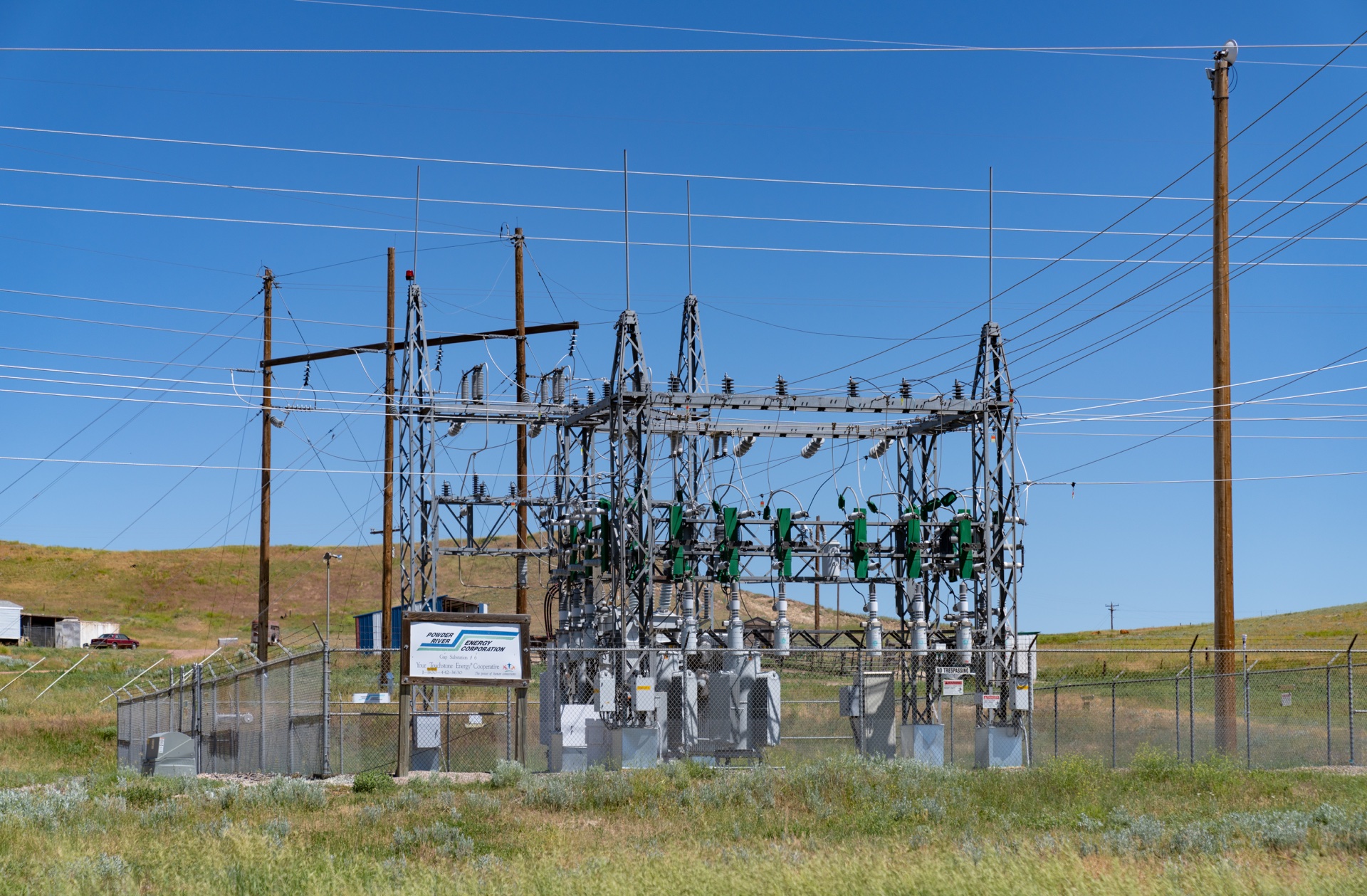
Federal and state large-load interconnection reforms opened their working windows on the same tape this week: FERC’s Section 206 informational reports from every RTO and ISO are due July 20; ERCOT’s inaugural Batch Zero utility-side deadline lands July 24. Three US sodium-ion firms cleared commercial milestones together (Peak Energy, ESS Tech, Unigrid), Eos pre-announced an $807 million zinc-halide backlog with a second US line running, and Fluence signed on 800 MWh of California hybrid storage with a full US content stack. Cypress Creek and Google broke ground on Steel River, a 2.5 GWdc Arkansas solar-plus-storage build with a near-complete US bill of materials. Wood Mackenzie put the EU’s China-inverter redirect at 28 GWdc through 2030. Last week the policy sort met hyperscaler capital; this week the pipes that carry it moved.
The lede
Last week the policy-clean tranche of the OBBBA/DOE-authorization inventory started producing physical commercial-operation megawatts and bankable SMR project finance. This week the story moved one layer down. The interconnection reforms that decide which projects can actually plug in, and the supply-side chemistries and integrators that decide what plugs in, both moved on the same tape.
The federal side: FERC’s June 18 Section 206 show-cause orders on all six RTOs and ISOs (PJM, MISO, SPP, CAISO, ISO-NE, NYISO) shifted from headline into procedural work. The July 9 intervention deadline closed. July 20 informational reports are the next hard date, with substantive tariff responses due August 17. The state side: Texas’s Batch Zero framework, approved by the PUCT on June 18, closed developer submissions on July 10 and now runs its utility-side eligibility deadline on July 24, with Phase 1 allocations due April 2027. Both are structural moves toward federal and state-jurisdictional regimes that treat hyperscaler-scale load as a portfolio problem, not a project-by-project one.
The supply side: three US sodium-ion companies (Peak Energy, ESS Tech, Unigrid) crossed commercial milestones inside a single week; Eos Energy Enterprises pre-announced Q2 with a record $807 million zinc-halide backlog and Battery Line 2 at Thorn Hill in production; Fluence signed on 800 MWh of Rexford 2 storage with a fully domestic-content-compliant stack. On the demand side, Cypress Creek and Google broke ground on Steel River, a 2.5 GWdc Arkansas solar plus 2.9 GWh storage build with a near-complete US bill of materials, and Wood Mackenzie quantified the EU’s China-inverter redirect at 28 GWdc through 2030.
Three active verticals this week (storage/lithium, solar, grid). Nuclear, critical minerals, and climate were quiet at the standalone-news level. Framework verdicts below carry those verticals forward on last week’s markers rather than adding new resolution.
Top stories by vertical
Grid: FERC’s July 20 informational reports and ERCOT’s July 24 Batch Zero utility deadline open the working windows on federal and state large-load reform
Two dated procedural events on the same tape. Individually each is a filing milestone; together they define what a federal-plus-state large-load regime is actually going to look like when it settles.
FERC’s Section 206 show-cause orders from June 18 (one to each of PJM, MISO, SPP, CAISO, ISO-NE, NYISO) moved into their working phase this week. The July 9 intervention deadline closed. Every RTO and ISO must now file a resource adequacy informational report by July 20 describing how large loads land against capacity, planning reserves, and near-term reliability under current tariffs. Substantive show-cause responses, including proposed tariff revisions where an RTO concedes a gap, are due August 17. Stakeholder comment on the substantive responses runs through September 16. (See: news/2026-07-15-ferc-206-large-load-july-window.)
The five reform categories the Commission listed give the shape of what a federal large-load regime is meant to cover, rather than a rulemaking in name only. First, application and study processes for large-load transmission service. Second, cost transparency and cost-shifting protections between large loads and existing customers. Third, terms and rates for co-location arrangements. Fourth, treatment of flexible large loads and behind-the-meter generation services. Fifth, rates for what the Commission calls “electrically proximate” large-load interconnection, with a “no more than two substations away” illustration but no numeric threshold yet. Two things to watch in the July 20 filings: how each RTO characterizes its current large-load pipeline in gigawatt terms (that number anchors the downstream capacity debate), and whether any RTO uses the July 20 report to concede a tariff gap on one or more of the five categories (which previews a real August 17 tariff revision rather than a defense of the status quo).
The Texas parallel landed on the same tape. Batch Zero, the framework the Public Utility Commission of Texas approved on June 18, is Texas’s first fully batched large-load interconnection study. Developer submissions closed July 10. Transmission and distribution utilities must file complete eligibility packages (load information forms, attestations, stability study data) with ERCOT by July 24 or the project falls out of Batch Zero. Phase 1 study results, including year-one-through-six megawatt allocations, are targeted for April 9, 2027. The framework catches any facility with 75 MW or more of combined peak demand at a single site. A subset (Large Computational Loads: data centers, crypto mines, and similar) carries extra ride-through obligations. (See: news/2026-07-18-ercot-batch-zero-utility-deadline.)
The queue pressure Batch Zero is designed to absorb is real. ERCOT reported 198 GW of large-load applications filed in Q1 2026 alone, and the running queue crossed 238,000 MW earlier this year, with data centers at roughly 77 percent of tracked load. Individual project studies were never going to clear that volume on a useful timeline. Batch Zero moves interconnection from a project-by-project bottleneck to a portfolio problem the transmission planner can solve, and ties the study to a coordinated six-year build plan on the transmission side. If it works, expect PJM and MISO to face pressure to run something structurally similar on the load side.
Against the grid thesis frame (interconnection reform is the binding gate on how fast hyperscale demand can pull power), both stories are thesis-confirm. The AEU July 1 scorecard is no longer the operative marker; the July 20 informational reports and July 24 utility eligibility packages are.
Storage / Lithium: sodium-ion crosses commercial in triplicate, Eos posts an $807M backlog with a second US line in production, and Fluence hardens the domestic-content hybrid default
Three separate storage stories, three different pieces of the same US-supply picture.
The first is that non-lithium chemistries booked commercial manufacturing on the same week. Three US sodium-ion companies (Peak Energy, ESS Tech, Unigrid) posted commercial milestones between July 8 and 10. Peak disclosed a Sacramento facility on July 8, $71 million capital investment and scoped for 4 GWh of annual production, with previously signed offtake covering up to 4.75 GWh with Jupiter Power, 1.5 GWh with Energy Vault, a 3.1 MWh RWE Americas pilot in Wisconsin, and a prototype cell partnership with General Motors. ESS Tech launched ESS Bridge on July 8, a modular container-format sodium-ion BESS in 1.2 MWh blocks stackable to 4.8 MWh in a 20-foot footprint, targeting utilities, data centers, and C&I. Unigrid delivered first-generation 9.25 kWh Na+Casa residential units on July 8, with current output of 200 MWh per year ramping to 2 GWh per year in 2027. (See: news/2026-07-13-us-sodium-ion-manufacturing-scales.)
The scale still sits below the lithium noise line: Peak’s 4 GWh plant is meaningful next to SEIA’s 9.7 GWh Q1 2026 US BESS print, but not yet at nameplate; ESS Tech and Unigrid are an order of magnitude smaller. Cell-level pricing remains roughly $70 per kWh at commercial scale versus $40 to $50 for LFP, per industry estimates carried in the June CATL coverage. What the July 8-10 cluster changes is the counting on the published sodium-ion risk vector. The Alsym-Juniper 500 MWh California integration (May 12) and CATL’s 60 GWh HyperStrong offtake (June 8) were the two prior data points. This is the first US-manufacturing counterpart, and the first week where three separate US firms crossed from pilot to commercial delivery on the same chemistry.
The second story is that a non-lithium US-domiciled long-duration storage supplier finally cleared the scale threshold offtake counterparties actually price on. Eos Energy Enterprises pre-announced Q2 on July 15: preliminary revenue of $68 to $69 million (a company record, more than three times prior-year shipment volume), first-half 2026 revenue already past all of 2025, backlog of approximately $807 million (up roughly 25 percent quarter-over-quarter), and cash of about $364 million with customer collections of about $78 million exceeding revenue. Battery Line 2 at Thorn Hill in Turtle Creek, Pennsylvania started commercial production this quarter. The company reiterated a 4 GWh annual run-rate target by year-end. (See: news/2026-07-16-eos-preliminary-q2-backlog-807m.)
The composition of the backlog tells the demand story better than the print. The 2 GWh firm-capacity reservation with Frontier Power USA (the Cerberus developer joint venture) produced its first purchase order last month: 100 MW / 400 MWh for the Redbird project. That is the mechanism turning backlog into revenue on a predictable cadence rather than deal-by-deal. Chemistry-wise, Eos is zinc-halide aqueous: no lithium, no cobalt, no nickel, no critical minerals covered by the FEOC rules under Section 45X. For projects trying to qualify for Section 48E investment credits with adjusted-percentage domestic content, an American zinc-halide option changes the pricing dynamic on longer-duration bids (4 to 8 hours), which is where grid-scale demand is going as duck-curve dynamics compound in ERCOT and CAISO.
The third story locked in the domestic-content hybrid as the modal California utility-scale build. Fluence Energy signed on July 13 for turnkey EPC on Rexford 2, an Avantus hybrid in Tulare County: 200 MW solar plus 200 MW / 800 MWh storage, under a 20-year PPA with Clean Power Alliance, targeted for late-2028 COD. Fluence disclosed that Smartstack cells, modules, enclosures, and thermal management for Rexford 2 ship from US plants in Utah, South Carolina, and Texas. That is the specific content list that Section 45X and Section 48E bonus-credit calculations weight most heavily, and it lands the developer roughly ten adjusted-percentage points of extra ITC (the difference between a marginal and a bankable project at current LFP cell prices). (See: news/2026-07-19-fluence-avantus-rexford-2.)
Two secondary features are worth pulling out. First, the hybrid is not solar with a storage adder; it is a single interconnection point at a 1.0 power ratio and 4.0 energy ratio. That configuration is the modal California utility-scale build because CCAs and other load-serving entities shifted from paying for peak megawatt-hours to paying for shaped, dispatchable capacity. Second, the buyer is a community choice aggregator, not an investor-owned utility. CCAs have been the fastest-growing procurement channel for California storage over the last three years because they can sign 20-year PPAs without the rate-case optics that slow IOU procurement.
Against the storage / lithium thesis frame: the demand-acceleration vector holds from Tesla’s Q2 print last week. The supply-chain rebuild vector strengthens meaningfully, with three sodium-ion firms at commercial, Eos at run-rate, and Fluence’s Smartstack stack anchoring the California hybrid default inside FEOC and 45X. The alt-chemistry risk moves up from “named” to “counting up on the vector,” now at five data points in sixty days.
Solar: Steel River breaks ground as the largest US solar-plus-storage build ever, with an almost entirely US bill of materials, and Wood Mackenzie quantifies the EU’s China-inverter redirect
Two solar stories, one execution and one policy-driven redirect.
Cypress Creek Energy and Google broke ground on July 14 on Steel River Energy Center in Mississippi County, Arkansas. At full buildout, 2.5 GWdc of solar plus 2.9 GWh of battery storage across three phases through 2029, positioned as the largest US solar-plus-storage facility ever built. Google’s PPA covers phases one and two: 1.6 GWdc of solar and 1.9 GWh of storage. Cypress Creek estimates annual output from the completed project at roughly 315,000 Arkansas homes’ worth of demand. Phase three (0.9 GWdc, 1.0 GWh) is scheduled for 2029 completion. (See: news/2026-07-17-steel-river-google-anchor.)
The signal is not the megawatt count. It is the bill of materials. Every major structural and generating component is US-sourced: 100 percent First Solar modules (US thin-film manufacturing), over 142,000 tons of structural steel from U.S. Steel’s Big River facility in Osceola, Arkansas (roughly 30 miles from the site), over 400,000 steel piles from PACO Steel for phases one and two, Nextpower trackers on domestically produced steel, and LG Energy Solution Vertech battery systems assembled in the US with North American cells. Two thesis threads converge on the announcement. Hyperscaler PPAs continue to underwrite utility-scale solar plus storage at scales the merchant market alone would not support (1.9 GWh of storage against 1.6 GWdc of DC solar in phases one and two is close to a one-to-one energy ratio). And the IRA-era domestic-content stack is now deep enough to build at unprecedented scale without offshore modules or foreign steel: First Solar modules, Big River steel, LG Vertech systems collectively map the near-complete US bill of materials for utility-scale solar-plus-storage in 2026.
The second solar story is a policy-driven European redirect. Wood Mackenzie quantified the European Commission’s decision to freeze Chinese inverters out of EU-funded clean energy projects: 28 GWdc of PV inverter demand at risk through 2030 (14 percent of forecast EU solar PV demand), 12 percent of forecast storage deployments exposed, and roughly 4 to 5 GW per year of demand redirected away from Chinese vendors. Chinese suppliers accounted for over 80 percent of inverter shipments to Europe in 2025, so the starting share is what makes the shift consequential. Cost impact on affected projects lands between 2 and 8 percent depending on segment. Romania, Bulgaria, Czechia, the Baltics, and Greece are the most exposed markets, because EU grant funding is a larger share of project financing there. Current scope covers only EU-funded projects; pending revisions to the EU Cybersecurity Act could extend the same restrictions to all EU inverters and storage power-conversion systems, which would materially expand the addressable redirect. (See: news/2026-07-14-eu-china-inverter-ban.)
The frame read is that supply-chain rebalancing has now landed on the component tier in Europe (inverters and power electronics) the same way US policy rebalanced on the refining tier under IRA FEOC. Both are working from the same premise: concentration risk on Chinese hardware is a policy constraint, not a market one. For US-domiciled inverter and power-electronics names, the ceiling on non-Chinese share is being reset upward across two of the largest solar markets in the world. Enphase, SolarEdge, and the European incumbents (SMA, Fronius) are the direct beneficiaries on paper, though the price gap versus Chinese equipment is wide enough that share gains will not be automatic.
Against the solar thesis frame: Steel River is thesis-confirm on the IRA-implementation vector (the safe-harbored bank has both physical CODs and greenfield 2.5 GWdc groundbreakings inside a two-week window) and thesis-confirm on the AI-demand vector (hyperscaler PPAs at record scale). The EU inverter ban is thesis-confirm on the trade-remedy-gap risk narrowing further, this time in Europe rather than the US.
Framework check
Storage / Lithium (demand-acceleration vector). Held from last week’s Tesla Q2 print at 13.5 GWh. No new demand-side print this week; Tesla July 22 webcast is the next scheduled read.
Storage / Lithium (supply-chain rebuild vector). Strengthens materially. Eos at $807M backlog with Battery Line 2 in production, Fluence with a fully domestic Smartstack stack on Rexford 2, and Peak Energy at 4 GWh Sacramento capacity, three separate signals in a single week that non-Chinese, mostly non-lithium US-sited capacity is booking real orders and building manufacturing.
Storage / Lithium (risk: alt-chemistry captures grid-storage share). Moves up from “named-but-not-active” to “counting up on the vector.” Five data points in sixty days on sodium-ion (Alsym-Juniper May 12, CATL-HyperStrong June 8, Peak, ESS Tech, Unigrid July 8-10), plus Eos zinc-halide at commercial run-rate. The frame still says lithium remains the substrate of the demand curve, but the risk-vector is no longer dormant. Watch for a US utility or hyperscaler naming sodium-ion in a procurement RFP or long-term supply agreement in 8-K or 10-Q disclosures this quarter, and Treasury guidance on Section 45X and Section 48E treatment of sodium-ion cells for domestic-content parity.
Storage / Lithium (risk: FEOC filter narrows cell menu). Held. July 4 bright line remains the discrete step. December 31 Treasury PFE-specific safe-harbor tables remain the next resolution point. Rexford 2’s Smartstack disclosure is a live data point that non-Chinese cell supply is available inside the perimeter for California hybrid builds.
Nuclear (renaissance thesis). Held. No standalone nuclear news this week. Blue Energy plus GE Vernova plus Crusoe at Port of Victoria and Aalo’s data-center co-location pitch remain the operative commercial-scale templates. Three prior weeks of supply-side timeline compression carry.
Nuclear (risk: DOE pilot pathway fails to scale beyond test reactors). Held. Aalo’s stated 2027 co-located data-center demonstration and Blue Energy’s 2027 FID target still frame the answer, no new movement this week.
Nuclear (risk: NRC throughput stays binding). Held. No direct new NRC news this week.
Solar (IRA implementation thesis). Strengthens further. Steel River groundbreaking (2.5 GWdc, US bill of materials, Google-anchored) confirms the safe-harbored bank has both physical CODs (LRE Oklahoma last week) and new greenfield US-content builds inside the same two-week window. Watch for follow-on 8-K COD or groundbreaking disclosures from NextEra, Invenergy, Clearway, and other developers on comparable hyperscaler-PPA’d portfolios.
Solar (AI-demand vector). Strengthens. Google’s Steel River anchor is the largest single hyperscaler solar-plus-storage anchor on record, and pairs with Google’s PPA position on LRE Oklahoma last week. The pattern that put nuclear at 42 percent of hyperscaler PPAs in the June LevelTen tracker continues on the solar-plus-storage side.
Solar (H1 P50 tailwind). Held. Solcast H1 read from July 3 remains the operative marker. Second-half read still depends on whether the El Nino pattern that drove the H1 swing consolidates or fades.
Solar (risk: interconnection reform stalls). Moves down substantially. FERC July 20 informational reports and August 17 substantive tariff responses now define the federal calendar in filed-tariff terms; ERCOT July 24 utility eligibility deadline defines the Texas one. FERC Docket RM26-4-000 is no longer the sole substantive throughput event; the Section 206 six-RTO working docket is the leading indicator.
Solar (risk: trade-remedy gaps). Narrows further with the EU inverter ban’s Wood Mackenzie quantification. US-side, Commerce final AD determinations from July 13 landed and are being absorbed by developers this quarter; no new procedural signal this week beyond the finals.
Critical Minerals (US supply-chain rebuild). Held. Fastmarkets June tally ($2.9B federal plus $1.4B matched) remains the operative marker. Watch for follow-on federal placement addressing heavy separation (dysprosium and terbium).
Critical Minerals (risk: heavy separation still thin). Held. No new commitment this week.
Grid. Moves substantively for the first time in weeks. FERC July 20 informational reports and August 17 substantive tariff responses; ERCOT July 24 utility eligibility deadline. Both are the substantive throughput events ahead, replacing the AEU July 1 scorecard as the operative marker.
Climate. Held. No new policy or resource read this week.
Net read: thesis intact and strengthening across storage, solar, and grid. Two risks moved down (solar interconnection reform is now in filed-tariff working phase, trade-remedy gaps narrowed further). One risk moved up (storage alt-chemistry is now counting on the vector rather than dormant). Nuclear and critical minerals verticals held; climate held.
Cross-vertical thread
The thread of the week: hyperscaler capital and policy-clean megawatts met the plumbing. Last week the sequence was policy sort into physical build. This week the sequence sat one layer down: policy sort into the interconnection queue and the supply-side chemistries and content stacks that let projects actually plug in with credit stacking intact.
The federal-plus-state large-load moves are the queue side. FERC’s Section 206 six-RTO working docket and ERCOT’s Batch Zero are structurally the same shape at different jurisdictional levels: replace the project-by-project study with a portfolio process that ties the study to a coordinated build plan. FERC’s five reform categories (application and study processes, cost transparency and cost-shifting protections, co-location terms and rates, flexible-load and BTM treatment, and rates for electrically proximate interconnection) map onto the same problems ERCOT is trying to solve through Low Power Consumption and Maximum Power Consumption allocations at the state level. Both are the queue-side answer to the volume the LevelTen tracker, the ERCOT 226 GW disclosure, and Wood Mackenzie’s 216 to 240 GW safe-harbor tally have put on the tape over the last month.
The storage supply-side moves are the chemistry side. Sodium-ion crossed commercial in triplicate on US soil, Eos posted an $807M backlog on a chemistry that carries no lithium, cobalt, nickel, or FEOC-covered critical minerals, and Fluence signed on 800 MWh of California hybrid storage with a fully US content stack. The common shape: US-sited manufacturing on non-Chinese, and in two of the three cases non-lithium, chemistries is booking real backlog and integrating into the modal hybrid build. The FEOC filter that hardened on July 4 now has multiple compliant supply options across chemistries, not just LFP.
The solar demand-side moves are the bill of materials. Steel River’s 2.5 GWdc groundbreaking with First Solar modules, Big River steel, PACO piles, Nextpower trackers, and LG Vertech systems is the first record-scale US solar-plus-storage project with a near-complete domestic content stack, and it is Google-anchored. The EU’s inverter ban is the same rebalancing on Europe’s component tier: 28 GWdc redirected off Chinese vendors through 2030.
Three cross-vertical observations follow.
First, the plumbing catches up to the capital. When the OBBBA cutoff bound with the FEOC bright line and the DOE-authorization criticality target on July 4, the effect was to sort a fixed inventory of projects into policy-clean and non-eligible tranches. Last week the policy-clean tranche started producing physical outcomes. This week the systems that carry them (interconnection queues, cell chemistries, integrator stacks) began their own reset. Both were downstream of the July 4 sort; both are now the leading indicators of how fast the sorted inventory converts.
Second, hyperscaler procurement is now visible behind every AI-adjacent lever on both the demand side and the plumbing side. Google’s Steel River anchor is the largest single hyperscaler solar-plus-storage PPA on record. Google, Meta, Microsoft, and Amazon are the counterparties visible behind the ERCOT 238,000 MW queue that Batch Zero is designed to sort. The queue reforms are, structurally, procurement infrastructure at the RTO level.
Third, the US-supply-chain rebuild is proceeding at the choke points, not the ore bodies. The chemistry-diversification move (sodium-ion at three firms, Eos zinc-halide at run-rate) is a supply-side response to the FEOC filter at the cell layer. The Steel River bill of materials is a demand-side response to the Section 48E adjusted-percentage domestic-content bonus. The FERC Section 206 and ERCOT Batch Zero windows are policy responses to the interconnection queue as the binding gate on how fast the sorted inventory can turn into deliverable megawatts. None of the marginal capital or policy motion this week went to greenfield mines or greenfield rare-earth ore bodies. It went to the plumbing.
Watch list: week of july 20 to july 26, 2026
- FERC Section 206 informational reports, July 20 (all six RTOs and ISOs). How each of PJM, MISO, SPP, CAISO, ISO-NE, and NYISO characterizes its current large-load pipeline in gigawatt terms will anchor every downstream capacity and planning-reserve debate. Look for RTOs that concede a tariff gap in one or more of the five reform categories, which previews a real August 17 tariff filing rather than a defense of the status quo. ERCOT’s 226 GW Q1 disclosure sets the scale of what a normalized federal accounting could reveal in other footprints. (Grid.)
- ERCOT Batch Zero utility-side eligibility packages, July 24. Miss the window and the project falls out of Batch Zero. The completeness ratio (how many of the developer-submitted projects survive the utility filing) is the first execution read on whether the framework can actually clear 198 GW of Q1 applications. If the drop-off is heavy, the March 1, 2027 executed-agreement cliff becomes a more binding gate on when Texas-sited AI demand can actually pull power. (Grid.)
- Tesla Q2 earnings webcast, July 22. Energy storage margin and Megapack backlog usually get their own breakout. Watch two lines: whether Megapack Shanghai plus Lathrop combined output is running ahead of 2026 guidance, and whether energy gross margin holds above the auto segment for a fifth straight quarter. Also watch for any explicit LFP-versus-sodium-ion commentary given the July 8-10 US sodium-ion cluster. (Storage / Lithium.)
- Eos Energy Enterprises full Q2 results (previously scheduled call). Gross margin at the new run-rate, composition of the incremental $161 million of backlog added this quarter, and Frontier Power USA purchase-order cadence. If Frontier POs continue at the current pace, second-half 2026 revenue guidance becomes the more interesting number than the Q2 print. (Storage / Lithium.)
- Follow-on hyperscaler solar-plus-storage anchor deals in MISO South and PJM. Steel River’s near-complete US bill of materials (First Solar, Big River steel, LG Vertech) is the template. Watch for Meta, Microsoft, or Amazon PPAs at comparable scale (1 GW-plus solar with matched storage) with disclosed domestic-content stacks, and whether structural steel from the Big River mill in Osceola pulls into follow-on projects. (Solar.)
- EU Cybersecurity Act rulemaking calendar (Brussels, fall 2026). If revisions extend the current EU-funded-only inverter scope to all EU solar PV and storage power-conversion systems, the addressable Chinese-vendor redirect expands materially past the 28 GWdc Wood Mackenzie estimate. Any pre-fall procedural signal from the Commission on scope extension is the leading indicator. (Solar.)
- DOE Reactor Pilot Program follow-on (next criticality or first Pod-scale filing). Of the remaining pilot developers (Oklo Aurora-INL, Terrestrial Energy Project Tetra, Aalo Pod scale-up, Atomic Alchemy, Deep Fission, Last Energy, Natura Resources), the next criticality or first Pod-scale authorization filing extends the pilot’s read-through into commercial-deployment territory. Blue Energy plus GE Vernova on Port of Victoria pre-FID financing structure disclosure is the commercial-scale parallel to watch. (Nuclear.)
Clean Power Press is editorial, not advisory. Nothing here is a recommendation. Positions, prices, and projects move; we cover how to think about them.
Sourcing log
- Energy-Storage.News, US sodium-ion Peak / ESS Tech / Unigrid cluster, July 10, 2026.
- Wood Mackenzie press release, EU inverter ban demand impact estimate, week of July 13 to 17, 2026.
- McGuireWoods client alert, FERC Section 206 show-cause order procedural calendar, June 2026 update.
- Eos Energy Enterprises preliminary Q2 investor release, July 15, 2026.
- Cypress Creek Energy Steel River groundbreaking release, July 14, 2026.
- Keentel Engineering, ERCOT Batch Zero large-load interconnection guide, July 2026.
- Fluence Energy press release, Rexford 2 EPC award, July 13, 2026.
- Prior digest framework, watch list, and named risks:
posts/weekly-2026-07-12.md. - Vertical thesis frames: project file
vertical-thesis-frames. - In-period news flashes:
news/2026-07-13-us-sodium-ion-manufacturing-scales,news/2026-07-14-eu-china-inverter-ban,news/2026-07-15-ferc-206-large-load-july-window,news/2026-07-16-eos-preliminary-q2-backlog-807m,news/2026-07-17-steel-river-google-anchor,news/2026-07-18-ercot-batch-zero-utility-deadline,news/2026-07-19-fluence-avantus-rexford-2. - Cover image: Wikimedia Commons, CC BY 2.0 (see
_credits.json).