
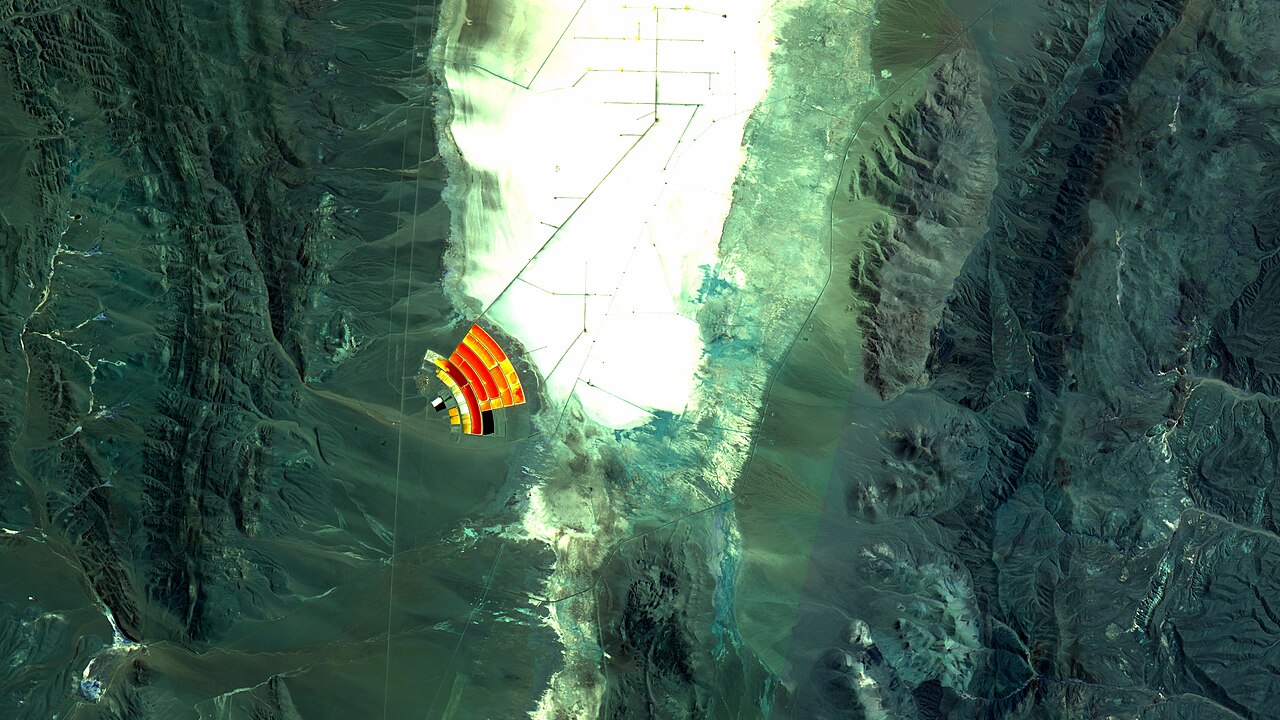
Lithium Argentina (NYSE: LAR / TSX: LAR) reported Q1 2026 results pre-market on May 12. The headline numbers: revenue $168 million, net income $7.5 million swinging from a $7.2 million loss in Q1 2025, realized lithium-carbonate price $16,818 per tonne versus roughly $9,000 in Q4 2025, production 9,660 tonnes at 97% of nameplate for a second consecutive quarter, and cash operating cost $5,391 per tonne, among the lowest globally. Adjusted EBITDA reached $106 million, up from $30 million in the prior quarter. Full-year production guidance held at 35,000–40,000 tonnes, with management noting capacity could expand four-to-five-fold over time funded by operating cash flow.
This is the third leg of the rebalance signal flagged in the May 10 weekly. Albemarle’s Q1 print confirmed it from the western-supply side. Ganfeng’s Q1 confirmed it from the China side. Cauchari-Olaroz is the Argentine-brine confirmation: different geology, different cost frame, different currency, same shape: price up, volume sustained at nameplate, margin expanding on top.
The cost number is the part that matters more than the headline EBITDA jump. Brine economics at sub-$5,400/t cash cost mean the rebalance is durable inside the cost stack, not just spot-driven. Margin can hold even if spot gives back. Compare that to a hard-rock concentrator running on tolling agreements, where margin compression starts the moment realized prices turn.
Why this matters in our frame
The thesis claims supply is the constrained variable and that integrated low-cost producers compound their advantage across a cycle. The Q1 prints from three different geographies are now showing exactly that: three different inventory positions, three different policy regimes, one consistent operational read. The marginal-capex story we have been tracking is no longer a forecast. It is a margin print at the operator level.
Demand-side commentary in the call leaned on the same vector mix the thesis prioritizes: grid storage and battery-energy-storage capacity additions cited alongside EV. BESS gross additions are tracking ~300 GWh in 2026, which is the structural driver doing real work in the offtake books. EV is the visible story; storage is the rebalance fuel.
What we are watching next
- SGML Q1 on May 15. Brazilian hard-rock concentrate. Different cost frame from brine; useful for triangulation against the integrated-incumbent set.
- SQM Q1 (~May 26–27). The redundancy check from the Chilean brine side. If SQM confirms the same shape, the rebalance is consensus, not signal, and the alpha in being early gets thinner.
- AMG Bitterfeld mid-year ramp. The first western refining print at scale. Refining is where the chokepoint sits, and a clean Q2 read there would extend the rebalance story up the supply chain rather than just at the mine gate.
- Chinese carbonate spot. Domestic demand absorbing supply at current levels reduces near-term odds of dumping pressure on US-bound product, which softens the second risk named in the published thesis. Watch the tape for a break either direction.
The frame holds. The next read worth pricing in is whether refining margin follows mining margin, or whether the chokepoint shifts that compound away from the integrated set.