
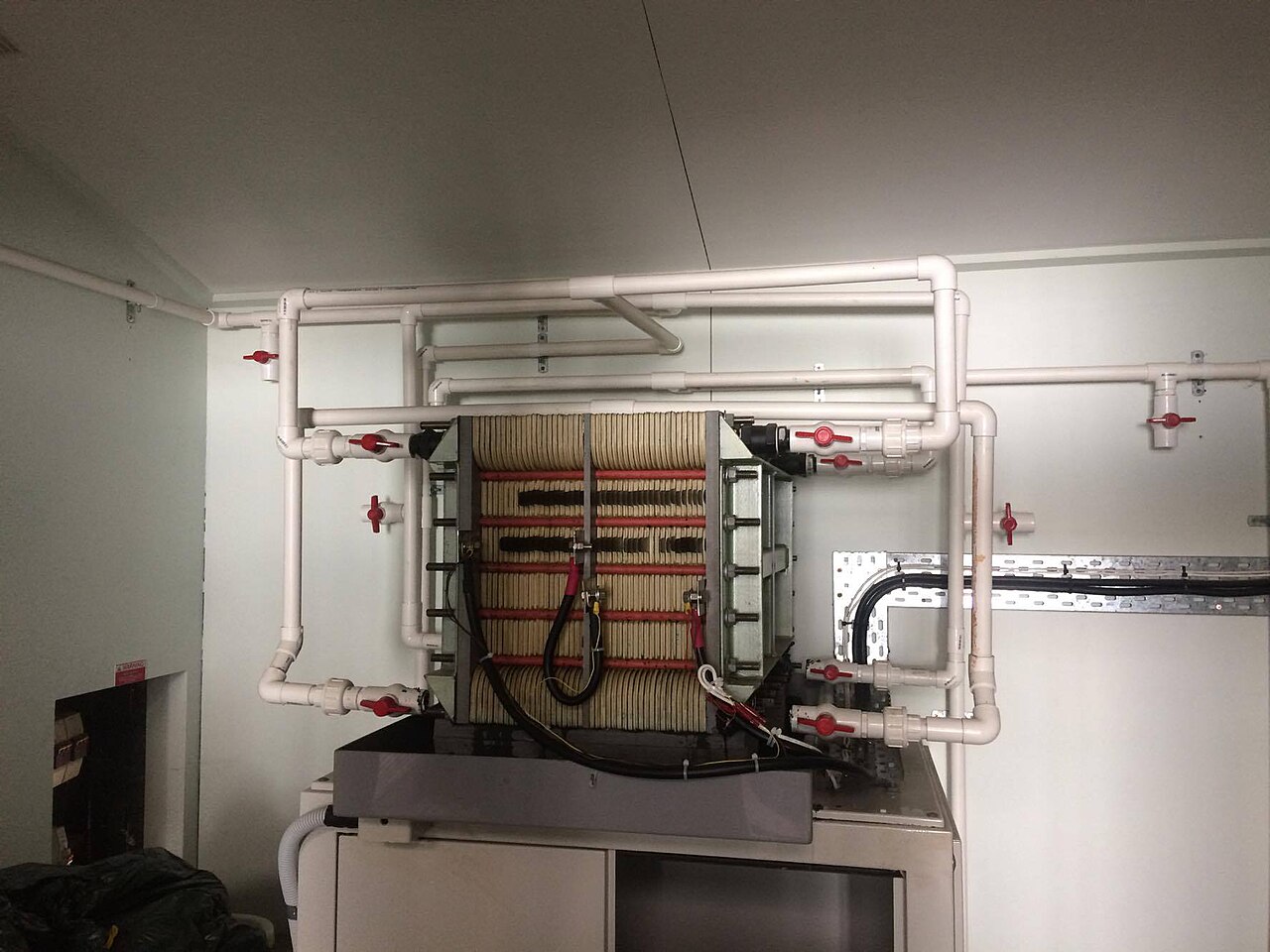
Eos Energy Enterprises (NASDAQ: EOSE) and Cerberus Capital Management announced Frontier Power USA before market open on May 13: an independent power producer (IPP) capitalized to build, own, and operate long-duration battery storage projects using Eos’s zinc-bromide Z3 / Znyth chemistry. Cerberus is anchoring with a $100 million equity commitment. Eos is funding its share through a pro-rata rights offering targeting approximately $150 million. Ariel Green is contemplating a 15-year non-cancellable Technology Performance Insurance framework with multi-year total policy capacity up to ~$1.5 billion. Frontier opens with a firm 2 GWh capacity reservation from Eos and a multi-GWh project pipeline, targeting utility-scale, commercial and industrial, and AI-data-center deployments at 4-to-16-hour durations.
This is not a lithium event. It is a deliberate capital structure built around a non-lithium chemistry attacking the duration band where lithium economics are weakest. Z3 is an aqueous zinc-bromide system: readily available non-precious-earth components, factory-built modules, manufactured at Eos’s Pennsylvania line. The thesis the IPP is selling its capital partners on is that 4-to-16-hour storage is a different economic problem than 2-to-4-hour storage, and that the chemistry built for the longer end wins the longer end.
Why this matters in our frame
The published thesis names four risks. Risk #4 reads: “Storage demand grows but lithium doesn’t capture as much as expected, flow batteries, gravity, or thermal alternatives capture grid-scale share.” Until today that risk was a watch-item with no marker capital behind it. Cerberus committing $100 million as anchor (not a research grant, not a venture round, an IPP-grade equity anchor) is the first institutional capital event we have logged in that column. The 15-year insurance framework is the more telling structural detail. A multi-billion-dollar performance-warranty backstop signals that a sophisticated capital allocator believes the technology risk is underwritable at scale, and that grid customers will require that underwriting to procure at scale. Both reads cut the same way.
Two notes on weight. First, 2 GWh of firm capacity is real but small against the broader 2026 BESS pipeline (BNEF tracks ~301 GWh of gross additions for the year). At current trajectory this announcement carves out roughly 0.5 to 1 percent of incremental US storage build over the deployment window, concentrated in the long-duration band where lithium share was always going to be smaller. The framework absorbs this without breaking. Second, RFP-conversion is the gate that matters more than the headline reservation. An IPP with $100M of anchor capital and an insurance wrap still has to win utility tariffs and developer offtakes against an entrenched lithium incumbent set with its own falling cost curve. The capital is real. The share take is not yet decided.
What we are watching next
- Frontier’s first RFP wins. Utility procurement decisions in CAISO, ERCOT, and PJM that pair Frontier with Eos’s Z3 modules at 6-to-12-hour duration tell us whether the procurement side believes the underwriting. RFP wins, not press releases, decide the share question.
- Lithium-incumbent long-duration responses. Whether the integrated lithium set (Tesla, Fluence, BYD-adjacent integrators) responds with explicit 6-to-12-hour offerings or chooses to defend the 2-to-4-hour band and let alt-chemistry have the long-duration end. A defensive posture would confirm the risk-#4 share-loss is real at the duration margin.
- Other alt-chemistry capital events. Form Energy iron-air, ESS Inc iron-flow, Energy Vault gravity, and the thermal-storage operators sit in the same risk column. One institutional capital event is a data point. Three in a quarter would be a reweight.
- The lithium-cost response. Hard-rock concentrate and brine producers compete on the long-duration band through cost-per-kWh delivered. Continued cash-cost compression at the integrated incumbents (LAR sub-$5,400/t Q1 print as the recent reference) is the offensive response that keeps the share question open.
Framework verdict. Risk #4 stays a watch-item, with weight raised one notch from “named but unfunded” to “named and partially funded.” The thesis frame holds. Grid storage is still the primary demand vector. US-domiciled IRA-eligible integrated lithium producers still have a structural advantage in the 2-to-4-hour band, and the supply constraints in lithium are unchanged. What today’s announcement does is mark the long-duration end of the storage curve as genuinely contested. We will price that in as a modest haircut on lithium addressable storage demand, concentrated at the 6-hour-plus duration band, and revisit on RFP outcomes rather than press releases.