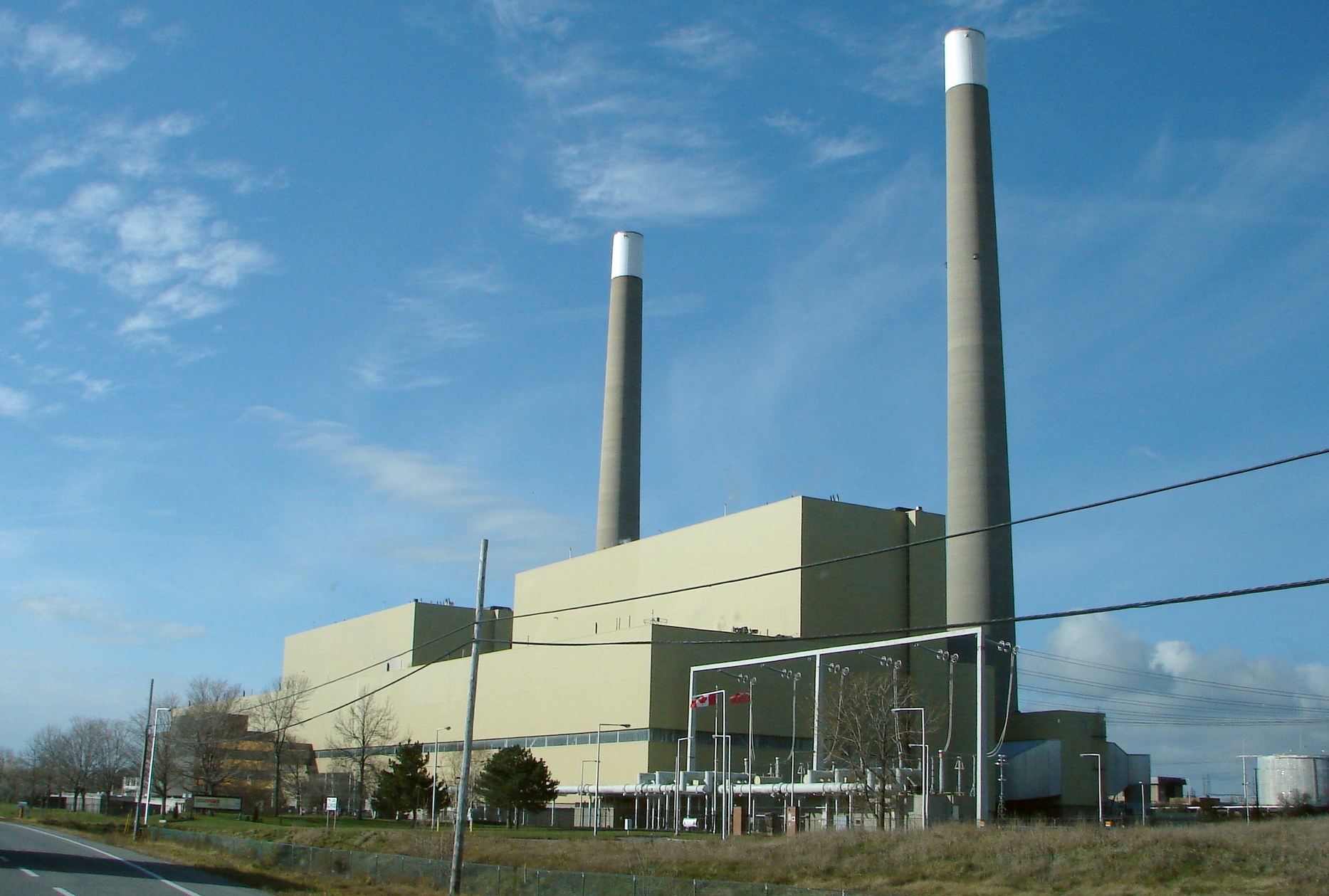
Hydrostor announced the Quinte Energy Storage Centre on May 13: an advanced compressed-air energy storage (A-CAES) project in Greater Napanee, Ontario, sited adjacent to Ontario Power Generation’s Lennox Generating Station. The full project envelope is 500 MW / 8,000 MWh (16 hours of duration). The first build phase is 4 GWh, with subsequent phases scaling to 8 GWh and 16 GWh, targeting first-phase commercial operation in the early 2030s and an anticipated 50-year operational life.
The project is being submitted into the Independent Electricity System Operator’s (IESO) long lead-time RFP, which is structured for 40-year contracts and targets up to 800 MW of long-duration storage. The Mohawks of the Bay of Quinte are an equity partner. Baker Hughes is the announced equipment partner (disclosed January 2026). Canada Growth Fund is supporting the developer through a previously disclosed convertible loan facility. Hydrostor estimates the project will contribute more than CA$1.4 billion to Canadian GDP.
A-CAES, in operating terms, compresses air during charging, stores it in a purpose-built underground cavern, captures the heat of compression in a separate thermal store, and recombines the two streams through a turbine on discharge. The chemistry is not chemistry. There is no lithium, no cobalt, no nickel, no vanadium electrolyte. The capital intensity sits in the cavern, the compressor, and the heat exchanger. The duration curve sits where the cavern volume sits, which is why 16-hour scale is the natural deployment unit rather than the 2-to-4-hour band that defines the lithium storage market.
Why this matters in our frame
The published thesis names four risks. Risk #4 reads: “Storage demand grows but lithium doesn’t capture as much as expected, flow batteries, gravity, or thermal alternatives capture grid-scale share.” The May 17 weekly digest reweighted risk #4 from “named but unfunded” to “named and partially funded” on the basis of two events in five days: the Alsym + Juniper 500 MWh sodium-ion procurement in the Mojave on May 12, and the Cerberus + Eos Frontier Power USA zinc-bromide IPP structure on May 13. Quinte is the third event on the same risk vector inside eight days, and it lands at the longest duration of the three (16 hours, against Frontier’s 4-to-16-hour band and Alsym’s 4-hour profile).
Three notes on weight.
First, this is a Canadian utility procurement, not a US one. The thesis frame is US-domiciled and IRA-anchored. Quinte does not directly take share from a US lithium project. But the IESO LLT contract structure (40 years, capacity-payment-based, awarded against a single technical envelope) is exactly the procurement form that US RTOs are being asked to design for long-duration. If A-CAES wins a 40-year contract at 16-hour duration in Ontario, it is the cleanest existing template for what a CAISO or NYISO LDES procurement would look like, and it is the procurement form lithium loses on at the long end.
Second, three events on the same risk in eight days is enough to revisit cadence on the watch list. The May 17 digest set Frontier’s first RFP wins and a second meaningful US sodium-ion procurement as the next two procurement-side gates. Add to that list: any IESO LT2 / LLT award decision, and any US RTO LDES procurement that takes Ontario’s contract structure as its template.
Third, the duration band where the contest is now genuinely live is 6-to-16 hours. Lithium-ion’s economic moat at 2-to-4-hour duration is unchanged and remains the modal grid-storage application. The framework haircut on lithium addressable storage demand stays concentrated at the long-duration end, and stays modest. The discipline is to mark the change without overcorrecting.
What we are watching next
- IESO long lead-time RFP award decision. The contract issuance window for the prior LT2 round was structured for Q1 2026; the new long lead-time procurement is the structurally important one for 16-hour A-CAES. Award or shortlist signals would be the first procurement-side validation for non-lithium 16-hour storage at IPP scale.
- Hydrostor’s Willow Rock (California) and Silver City (Australia) status. Hydrostor’s prior 5 GW pipeline includes a 500 MW / 4,000 MWh project at Willow Rock in Kern County, California, which is the cleanest US-domiciled A-CAES read. Any CPUC or CAISO procurement update there is the closest US analogue to today’s Ontario news.
- Form Energy, ESS Inc, Energy Vault. Iron-air, iron-flow, and gravity-storage operators sit in the same risk #4 column. One US institutional capital or procurement event in the next ninety days from this set would be the fourth marker on the vector and force a more material reweight than today’s data point alone justifies.
- Lithium-incumbent long-duration responses. Whether Tesla, Fluence, or BYD-adjacent integrators announce explicit 6-to-12-hour offerings, or defend the 2-to-4-hour band and let alt-chemistry have the long-duration end. A defensive posture would confirm the risk-#4 share-loss is real at the duration margin.
Framework verdict. Thesis intact. Risk #4 stays weighted at “named and partially funded,” with the underlying capital and procurement-design evidence now resting on three events rather than two. The demand frame is unchanged, the supply frame is unchanged, the policy frame is unchanged. What today’s data point does is tighten the cadence on the long-duration share question, and set Ontario IESO’s LLT round as the first procurement-side test of whether 40-year capacity contracts can be awarded to non-lithium 16-hour storage at IPP scale. Lithium share in the 2-to-4-hour band remains the modal case. The contest is at the long end, and it is now being run with real money on the table from three different chemistry corners.