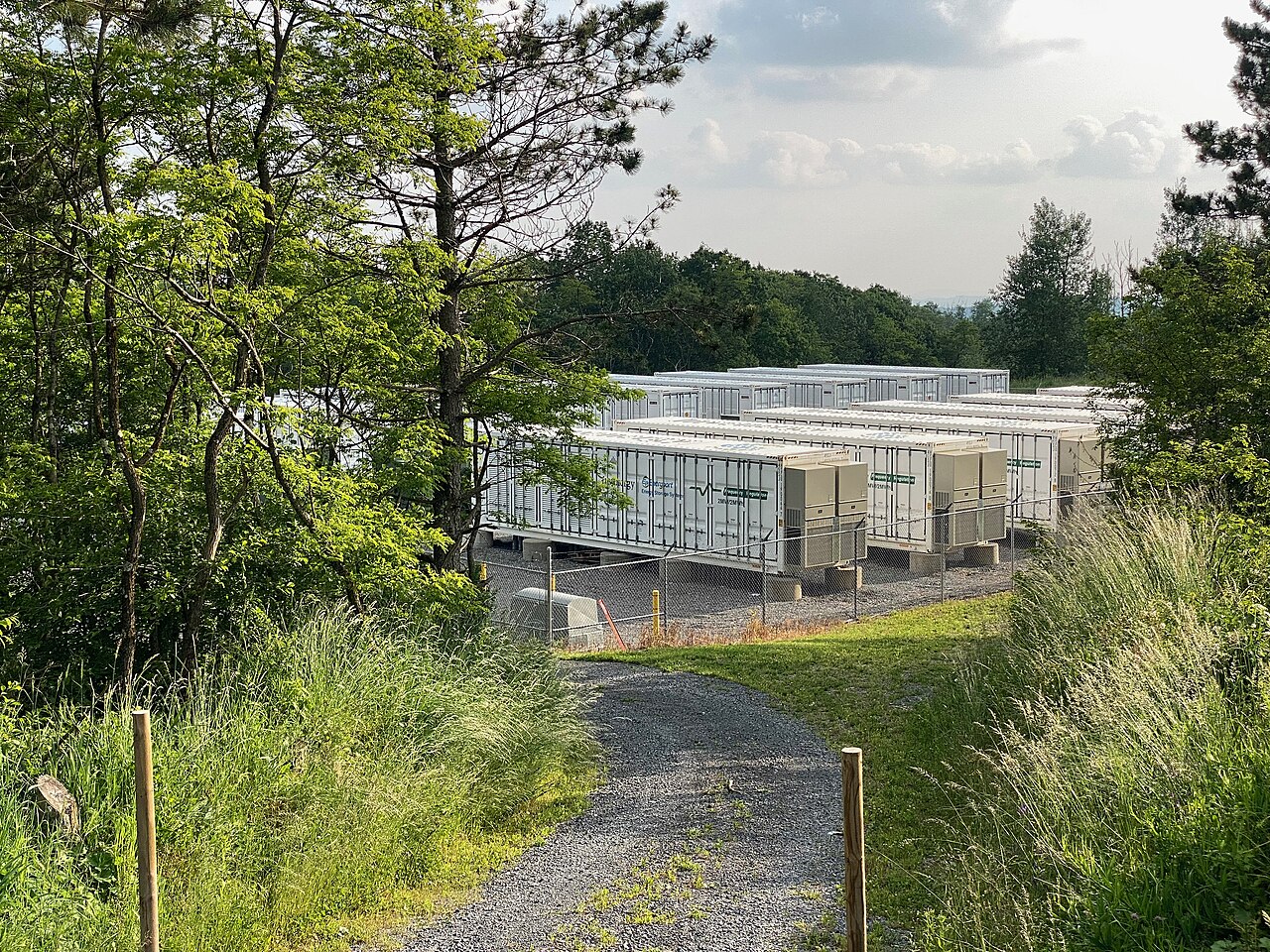
Alsym Energy and California developer Juniper Energy disclosed an integration agreement on May 12 to deploy 500 MWh of Alsym’s Na-Series sodium-ion battery storage systems, primarily across California, with the first sites flagged for the Mojave Desert. The companies did not publish operational dates, capex per kWh, or a phasing schedule.
The chemistry sits inside the named thesis risk. The published risk frame names sodium-ion and solid-state as the leading candidates to take share from lithium-ion in grid storage, with medium probability and large impact. This is the cleanest single data point on that risk vector logged in 2026 to date. The volume is meaningful at a single-project line (500 MWh is roughly two large four-hour BESS sites), and the offtaker is a US developer pulling the chemistry into the IRA tax-credit envelope rather than a lab demonstrator.
The Mojave geography is the read, not the headline. Alsym CEO Mukesh Chatter framed the Na-Series as “high-performance, fast-charging storage that doesn’t require complex cooling,” and Juniper founder Keith McDaniels named “safe, US-produced battery” eligibility for clean-energy tax credits as the deal driver. Both quotes land in the same place: the Na-Series wins on passive cooling in high-ambient-temperature deployments and on domestic non-FEOC sourcing. Those are real edges in the Mojave and in any tariff-sensitive procurement, and they are real edges that lithium-ion does not match cheaply. They are also bounded edges. Sodium-ion’s volumetric energy density still trails lithium-ion materially, and the manufacturing scale gap between the two chemistries is several orders of magnitude.
Why this matters in our frame
Grid-scale storage is the number-one demand vector in the published thesis. If lithium-ion captures the bulk of incremental utility BESS additions through the next decade, the supply-constraint story in lithium gets the demand pull the operator-confirmed Q1 prints already started to reflect. If sodium-ion or other alternatives take a meaningful share of that incremental, the lithium demand curve flattens regardless of supply discipline. The Alsym-Juniper deal is the marker for which way that read is bending in 2026.
The right read here is geographic and tariff-driven, not chemistry-replacement. Sodium-ion is booking a niche where lithium-ion’s economics are worst: desert heat plus FEOC-sensitive procurement. That is exactly the niche the published thesis flagged as the most likely first beachhead. It is not yet evidence of broader displacement. US utility-scale BESS additions in 2026 are running at a pace that puts a single 500 MWh sodium-ion procurement inside the noise of the lithium-ion deployment number. The question is whether the next twelve months produce one such deal or twenty.
What we are watching next
- Follow-on sodium-ion procurement announcements through Q3 2026. A second meaningful US deal in the next ninety days would shift the read from “single-project niche” toward “tracked second chemistry.” Absence would confirm the niche framing.
- Alsym, CATL, BYD sodium-ion factory utilization disclosures. Manufacturing scale gates the displacement curve. Watch capacity utilization at announced sodium-ion lines as the leading indicator.
- FEOC enforcement guidance on lithium-ion BESS imports. Tariff posture sets the price wedge between domestic non-FEOC sodium-ion and import-dependent lithium-ion. Tighter enforcement widens the wedge.
- Lithium-ion price floor through Q2 prints. The operator-confirmed rebalance signature in Q1 from ALB, Ganfeng, LAR, and SGML put a floor under realized lithium prices. If the floor holds into Q2, the incremental sodium-ion cost edge narrows.
The frame holds. Sodium-ion has booked a real niche. The thesis-break threshold is a second-order question about whether the niche compounds or stays bounded.