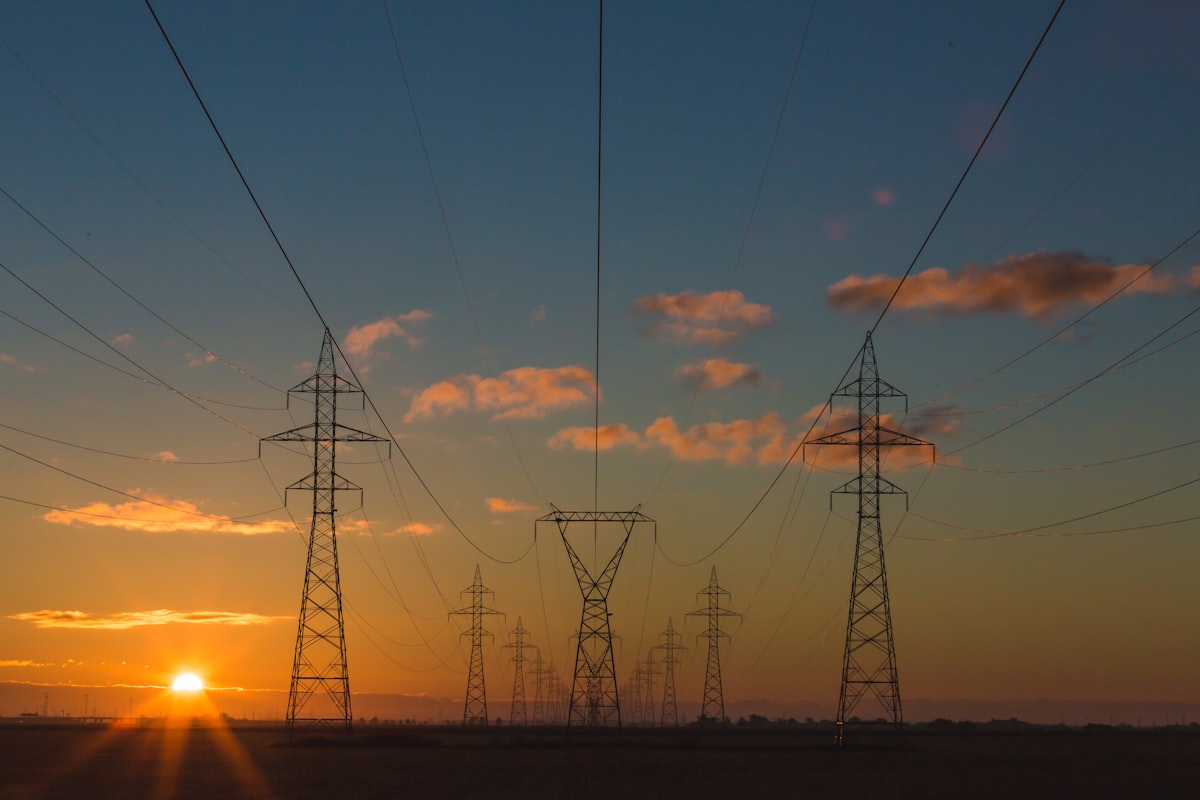
FERC approved PJM's Expedited Interconnection Track on June 9, opening a narrow lane for up to ten 250 MW-plus projects per year that can come online within three years. The carveout sits next to the still-pending large-load rule and tilts the queue toward state-backed incumbents.
·pv magazine USA, June 10 reporting on DoD restricted-parties update·feocus-supply
The Department of War published its expanded Section 1260H list of Chinese military companies on June 8, growing the roster from roughly 130 to 188 entities and pulling in solar majors JA Solar and Trina Solar alongside battery cell makers EVE Energy and CALB. The direct DoD contracting ban under the FY2024 NDAA takes effect at the end of June, with the indirect (third-party) prohibition layering in twelve months later. The action does not block commercial sales into the US market, but it formalizes a federal-procurement bright line that compounds with IRA Prohibited Foreign Entity rules and tilts US-strategic offtake further toward non-Chinese cells and modules.
The One Big Beautiful Bill Act left battery storage with the qualification flexibility it stripped from solar and wind. Standalone storage retains both the physical-work test and the 5 percent cost safe-harbor at any project size, and the Section 48E phase-out timeline that pins solar and wind to a 2027 placed-in-service backstop does not apply to energy storage technology. Storage developers now have a structurally easier path to credit certainty than solar developers racing the July 5 begun-construction deadline.
FERC committed in April to act by the end of June on Docket RM26-4-000, the rulemaking covering how 20-MW-plus loads, mostly AI data centers, attach to the transmission system. The Commission's June 18 open meeting is now the most likely venue, with a Sunshine Notice due no later than June 11 under the seven-day rule.
American Clean Power's Q1 2026 quarterly report shows utility-scale solar and battery storage absorbing nearly all new grid additions, while wind installs continue to slide. Texas is on track to be the first state past 100 GW of clean capacity, and California led storage adds with 1.1 GW.
China's largest battery maker has agreed to supply 60 GWh of sodium-ion cells to its largest BESS integrator, the first commercial-scale offtake commitment for the chemistry. The deal does not unseat lithium iron phosphate in 2026 at roughly $70/kWh versus $40 to $50/kWh for LFP, but it is the manufacturing scale signal sodium-ion needed. Treat it as a thesis-risk data point for the lithium supply chain, not a regime change.
Because generalist coverage buries the supply-chain and policy texture. A permitting decision on a transmission project, a DOE loan commitment to a lithium refinery, an NRC licensing milestone for an SMR, a FERC rulemaking on interconnection reform: these move capital in ways that earnings coverage misses. Clean Power Press is built for the people who track those signals.
Is this for traders or long-horizon investors?+
Long-horizon. The thesis is a multi-decade buildout. The daily briefs work for tactical positioning, but the analytical frame is structural: supply-chain, policy, project-pipeline. If you're trading micro-moves on spot prices, this isn't your tool.
What verticals do you cover and how do they connect?+
Energy storage and lithium, solar, nuclear and SMRs, grid and transmission, and critical minerals. Climate policy is the connective tissue. The verticals are separate editorial frames but they share a common insight: the bottleneck on every one of them is permitting, supply-chain concentration, and policy implementation, not the underlying technology.
What's your stance on climate change?+
Climate change is established science. We don't give false balance to fossil-fuel-industry framing on the science. Our editorial stance is climate-forward: the clean energy transition is necessary, urgent, and one of the most consequential investment stories of the next several decades. That's not advocacy. We report facts, cover setbacks as well as progress, and don't oversell the pace of transition.
What's your analytical frame across verticals?+
Track marginal, watch policy, ignore most price noise. The marginal capex dollar, the marginal project entering permitting, the marginal regulatory decision: these are where the structural story moves. Average inventory levels, spot price tapes, and quarterly headlines follow later and with lower signal value.
Get the brief
The weekly Clean Power Press brief.
One Sunday email, ~10 minutes to read. The week's signal-to-noise picks across energy storage, solar, nuclear, and clean power policy. What moved, what changes positioning, what's worth doing about it.