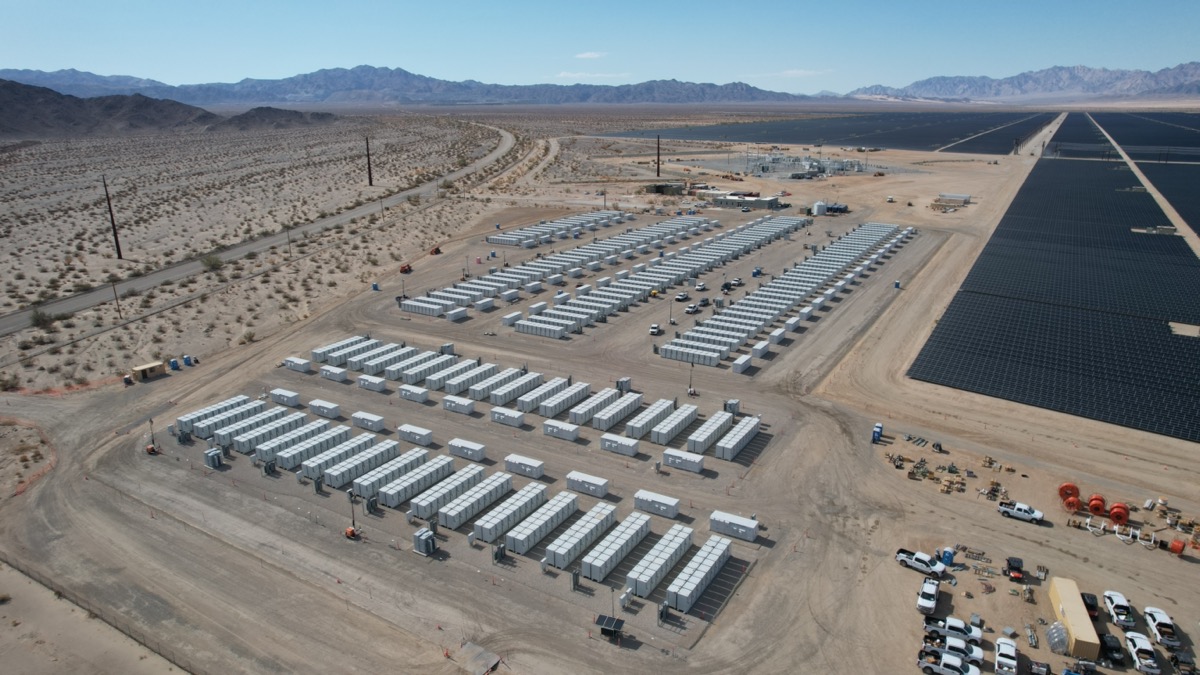
American Clean Power's Q1 2026 quarterly report shows utility-scale solar and battery storage absorbing nearly all new grid additions, while wind installs continue to slide. Texas is on track to be the first state past 100 GW of clean capacity, and California led storage adds with 1.1 GW.
China's largest battery maker has agreed to supply 60 GWh of sodium-ion cells to its largest BESS integrator, the first commercial-scale offtake commitment for the chemistry. The deal does not unseat lithium iron phosphate in 2026 at roughly $70/kWh versus $40 to $50/kWh for LFP, but it is the manufacturing scale signal sodium-ion needed. Treat it as a thesis-risk data point for the lithium supply chain, not a regime change.
US solar manufacturer T1 Energy is buying BESS engineering firm KORE Power for roughly $32 million in equity, cash, and assumed debt, with closing targeted for Q2 2026. The centerpiece is KORE's NRI division, a 50-year integrator with about 1,100 utility-scale storage deployments and an existing book of US Government, National Lab, and utility customers. The move is small in dollars and large in positioning: a vertically integrated US-domiciled solar-plus-storage offer aimed at hyperscaler and utility load.
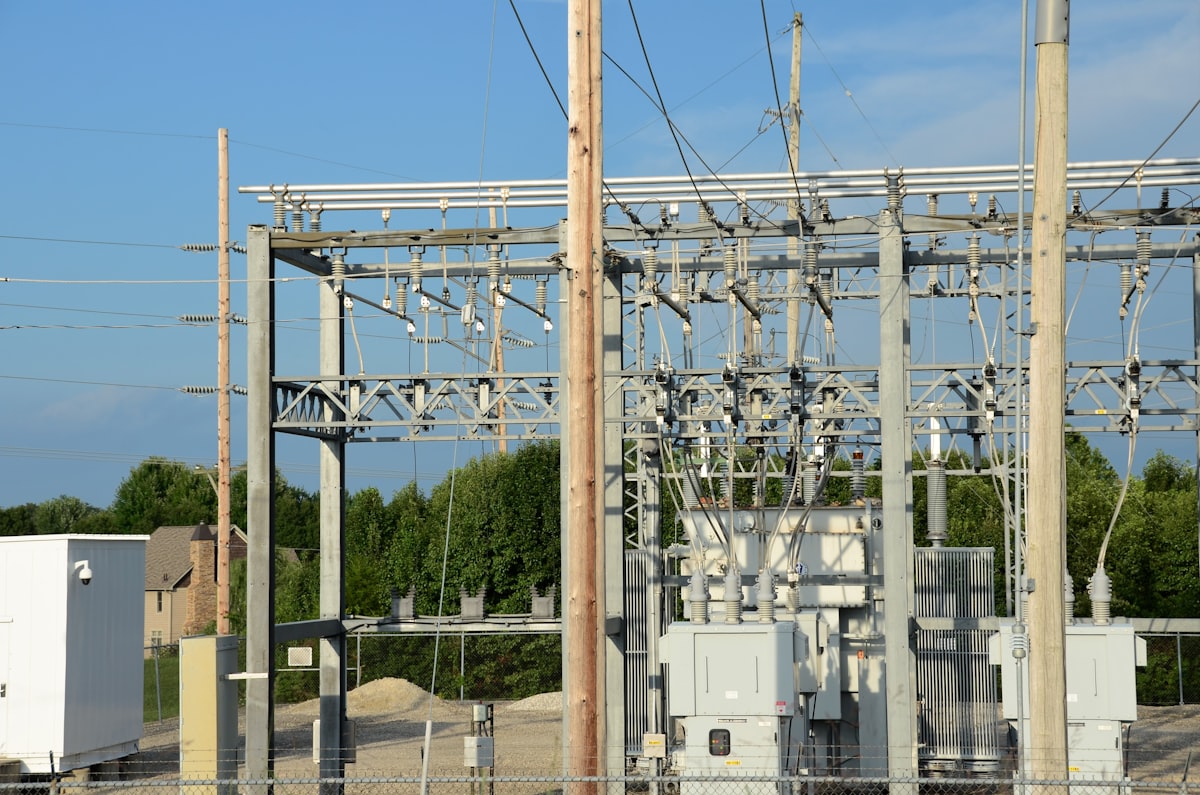
The largest US grid operator by footprint will submit its FERC Order 1920 regional transmission planning compliance on June 12, embedding a long-range load forecast that puts peak demand at 163 GW by 2035, a 35% increase over 2025, with data centers carrying most of the growth.
USA Rare Earth said on June 2 that it will build a $1.2 billion sintered NdFeB magnet and refined metals operation in Cherokee County, South Carolina, with first production targeted for April 2028. Nameplate is 6,400 metric tons of magnets and 5,000 metric tons of heavy rare earth strip-cast, metal, and alloy per year. The site is the company's third US build and is positioned as a non-China supply line for aerospace, defense, semiconductors, and data center customers.
·City of Painesville, EPA Climate Pollution Reduction Grants announcement·us-supplyira
Construction begins this month on a 10 MW battery and 35 MW solar installation that will replace a retired municipal coal generator in northeast Ohio. The grant comes from EPA's Climate Pollution Reduction Grants program, IRA-obligated funds that continue to flow regardless of the current administration's posture. The interesting detail is the template: small municipal coal units sited on brownfields, replaced with utility-owned storage on the same parcel.
Because generalist coverage buries the supply-chain and policy texture. A permitting decision on a transmission project, a DOE loan commitment to a lithium refinery, an NRC licensing milestone for an SMR, a FERC rulemaking on interconnection reform: these move capital in ways that earnings coverage misses. Clean Power Press is built for the people who track those signals.
Is this for traders or long-horizon investors?+
Long-horizon. The thesis is a multi-decade buildout. The daily briefs work for tactical positioning, but the analytical frame is structural: supply-chain, policy, project-pipeline. If you're trading micro-moves on spot prices, this isn't your tool.
What verticals do you cover and how do they connect?+
Energy storage and lithium, solar, nuclear and SMRs, grid and transmission, and critical minerals. Climate policy is the connective tissue. The verticals are separate editorial frames but they share a common insight: the bottleneck on every one of them is permitting, supply-chain concentration, and policy implementation, not the underlying technology.
What's your stance on climate change?+
Climate change is established science. We don't give false balance to fossil-fuel-industry framing on the science. Our editorial stance is climate-forward: the clean energy transition is necessary, urgent, and one of the most consequential investment stories of the next several decades. That's not advocacy. We report facts, cover setbacks as well as progress, and don't oversell the pace of transition.
What's your analytical frame across verticals?+
Track marginal, watch policy, ignore most price noise. The marginal capex dollar, the marginal project entering permitting, the marginal regulatory decision: these are where the structural story moves. Average inventory levels, spot price tapes, and quarterly headlines follow later and with lower signal value.
Get the brief
The weekly Clean Power Press brief.
One Sunday email, ~10 minutes to read. The week's signal-to-noise picks across energy storage, solar, nuclear, and clean power policy. What moved, what changes positioning, what's worth doing about it.